US vs Russia: Who rules under oceans? Know as Trump moves nuclear submarines after Medvedev's provocative warning

&imwidth=600&imheight=450&format=webp&quality=medium "US vs Russia: Who rules under oceans? Know as Trump moves nuclear submarines after Medvedev's provocative warning")
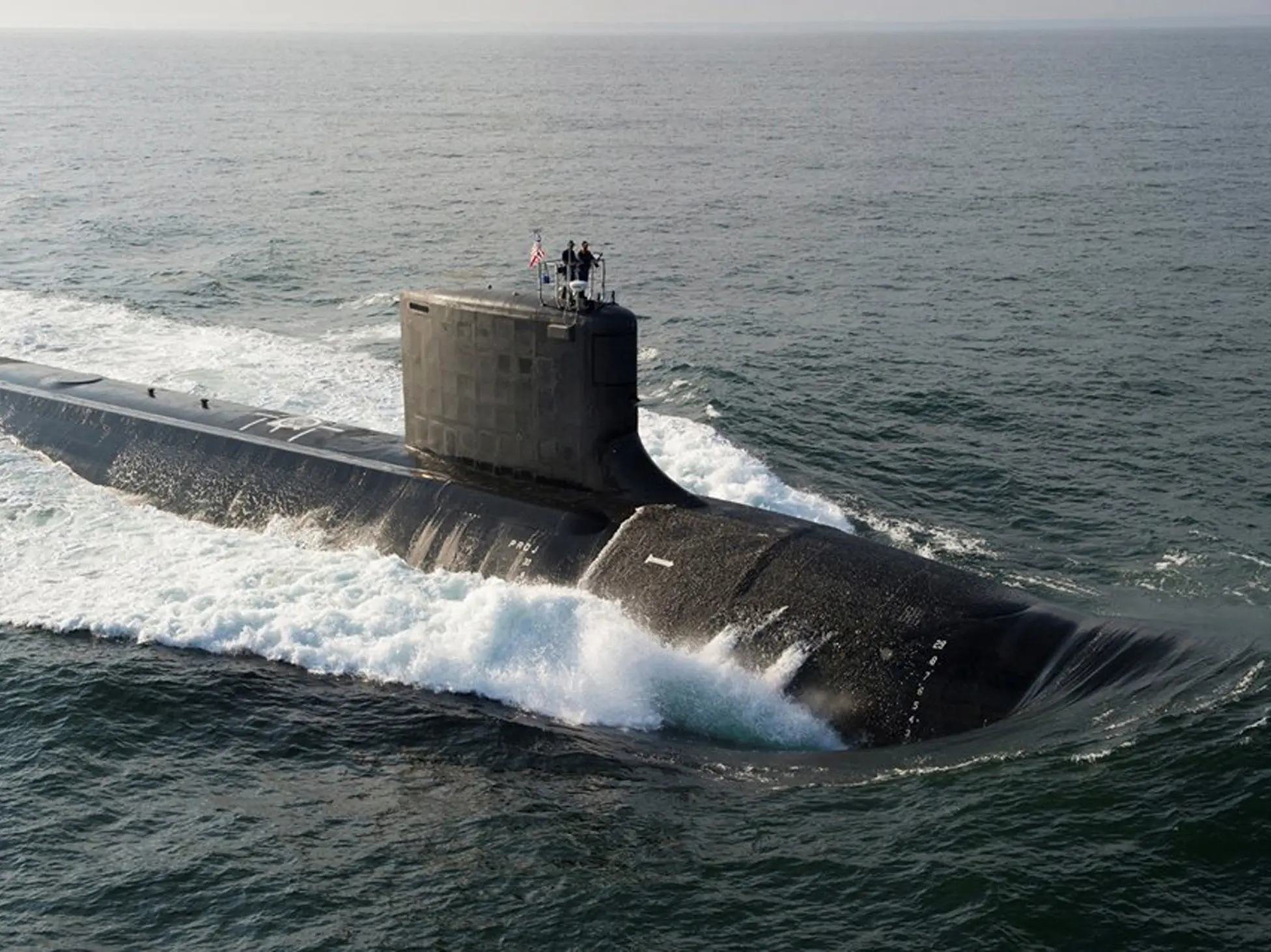
US nuclear submarine Photograph: (Reuters)
Both Russia and the US rely strongly on ballistic missile submarines to maintain their nuclear deterrent. These submarines are called "boomers" and serve a major purpose: to stay hidden long enough to retaliate in case of a nuclear war.
The United States has moved two nuclear submarines to strategic positions on Friday after former Russian President Dmitry Medvedev's response to US President Donald Trump's "dead economy" remark. Medvedev warned Trump of the "dead hand" tactic, which is referred to as a Cold War era automatic or semi-automatic nuclear weapons control system capable of launching a nuclear counterstrike even if the country's leadership had been wiped out.
Russia has not responded to Trump's decision to move nuclear submarines; however, a senior Russian lawmaker, Viktor Vodolatsky, warned that they have more nuclear submarines in the world's oceans to tackle those ordered to move near Russia.
"The number of Russian nuclear submarines in the world's oceans is significantly higher than the American ones, and the subs that US President Donald Trump ordered to be redirected to the appropriate regions have long been under their control," he said.
The US operates around 70 submarines, while Russia has approximately 63–64, according to GlobalFirePower data from 2025 (cited by 1945).
Both Russia and the US rely strongly on ballistic missile submarines to maintain their nuclear deterrent. These submarines are called "boomers" and serve a major purpose: to stay hidden long enough to retaliate in case of a nuclear war.
Now, for better clarity, let's see how many and what kind of submarines Russia and the US possess.
Trending Stories
)
)
)
)
&im=FitAndFill=(700,400))
)
)
)
)
)
)
)
)
)
)
)
)
)
)
)
)
)
&im=FitAndFill=(700,400))
)
)
)
)
)
)
)
US submarine fleets
American Ballistic Missile Submarines (Ohio-class)
The American Navy's Ohio-class Ballistic Missile Submarines (SSBNs), known for their stealth capability and precise delivery of nuclear warheads, can operate for 15 years between major overhauls. There are at least 14 SSBNs, which are currently operational. These can carry up to 20 submarine-launched ballistic missiles (SLBMs).
American Fast Attack Submarines
Currently, the US operates three classes of nuclear-powered attack submarines (SSN), including the Virginia-class, Seawolf-class, and Los Angeles-class (also known as 688 class). These submarines are designed to target and destroy enemy vessels. Moreover, they can also carry out intelligence, surveillance, and reconnaissance operations.
If we look at the data, the US has 24 Virginia-class SSNs, three Seawolf-class submarines and the 688-class built the backbone of the US submarine force, while at least 24 of these are in service.
Russian Submarines
Russian Ballistic Missile Submarines
According to reports, Russia has one of the world's largest submarine fleets, with around 64 vessels. Out of which, about 14 ballistic missile submarines are central to its strategic mechanism.
Notably, the Russian Navy has eight Borei class SSBNs, equipped with 16 Bulava SLBMs and six 533mm torpedo launchers. However, the Boreis will replace the Delta IV-class submarines. Currently, at least six of the Deltas are in service.
Russian Fast Attack Submarines
The Russian Navy has four Yasen-class nuclear attack submarines, shorter and requiring a smaller crew than their predecessors.
Next comes the Akula-class, the Russian Navy's silent killing machine. Also known as Shark (akula in Russian translates to shark), there are about five of these currently in service.
