Millions at risk: Major Chinese cities sinking under their own weight, finds study

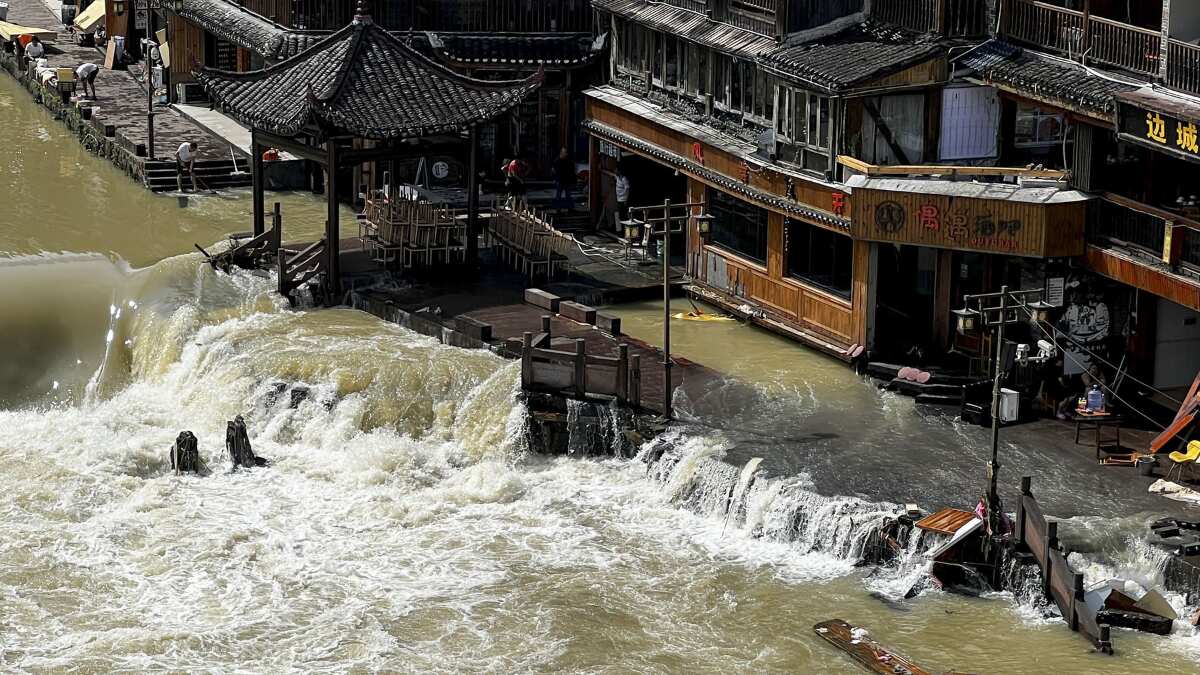
China floods/ file photo
A new research reveals that the ground beneath millions in China's major cities is subsiding due to human activities.
This sinking land is worsening the risk of flooding and sea level rise in the country's coastal regions. The study, published on Thursday (April 18) in the journal Science, indicates that nearly half of China's urban areas, which house 29 per centof the population, are sinking at a rate exceeding 3 millimetres (approximately 0.12 inches) per year.
This phenomenon affects around 270 million people residing on sinking land.

Meanwhile, 67 million people are living on land that is subsiding faster than 10 millimetres (0.4 inches) each year.
China’s extensive groundwater withdrawal is one of the main factors for subsidence, researchers said. Cities have been drawing water from underground aquifers faster than it can be refilled, a situation intensified by climate change-fueled drought. Excessive pumping out of water lowers the water table and causes the overlying land to sink.
)
Nigeria: Protesters take to the streets, police fire shots
)
US-Iran war: Tehran draws red lines — seven demands before any peace talks
)
Russia-Europe tensions: Polish PM warns Russian attacks could test NATO's unity
&im=FitAndFill=(700,400))
‘Not the US or China’: These are the countries leading the world in arable land
)
Mark Carney mimics Trump in hilarious moment over C$70 billion clean-energy investment; room erupts in laughter
)
Pentagon revives mandatory testosterone testing for male troops aged 30 and above
)
‘End of my career...’: NSA Doval recalls tense Sikkim mission when China captured Indian intelligence team
)
Trump defends AI amid growing alarm, announces new 'AI force' and promises an 'AI czar'
)
Iran sets 7 conditions to end war with US: What are Tehran’s demands?
)
Trump announces ‘AI Force’ as debate grows over AI risks and regulation
)
China may have gained access to US's classified F-35 jets; parts meant for repairs diverted to Hong Kong, sparking Pentagon inquiry
)
Gaza under attack: Health chief's son killed in IDF strikes
)
Inspired by podcasts and Meghalaya murder case: How Siya allegedly planned Ketan Agarwal’s Lohagad fort murder
)
Arvind Kejriwal, family members, Delhi CM Rekha Gupta get SIR notices
)
Cochin shipyard starts building Indian Navy's next-gen missile vessels
)
Saudi vs Houthis: Houthis claim missiles & drones used in attack on key Saudi sites
)
Ed Sheeran addresses Macklemore's removal, Gaza conflict during Philadelphia concert: 'I cannot hide how I feel'
)
Brigitte Bardot’s private collection set for Paris auction; key items and prices revealed
)
‘Will go to any extent’: Pakistan vows to defend Saudi Arabia amid Houthi attacks
66 years of the Indus Waters Treaty: How India and Pakistan settled a bitter river dispute
)
The Verdict | When precision fails: US commits war crime in Minab school strike, UN finds
)
9 women found dead near Johannesburg: South Africans rally, demand 'enough' to femicide
)
Trump wants to rename ‘Artificial Intelligence’, gives 3 options: Which one would you pick?
)
US-Iran war: Tehran sets seven conditions to re-engage in talks with US
)
Reacher star Alan Ritchson opens up about alleged blackmail, suicide attempt during difficult period
)
Africa is splitting, and a lot sooner than estimated, giving way to a new ocean
)
Flying cars in UAE: Ras Al Khaimah signs deal with Chinese company to test new transport
)
Trump bans CNN, MS NOW and Politico from White House over ‘FAKE NEWS’
)
Trump 2.0: Dark days ahead for America’s ‘imperial presidency’
&im=FitAndFill=(700,400))
How many F-35s does Britain, Japan and Israel have?
)
Harry Brook targets long reign at top of T20I rankings after Sri Lanka sweep
)
Russia's deadly Ukraine strikes kill 2 in Sumy, hit Dnipro mall
)
Russia holds first parliamentary elections since the beginning of the Ukraine war
&im=FitAndFill=(700,400))
Meet top 5 Indian batters with fastest T20I centuries
)
Raphinha hat-trick powers Barcelona to 3-1 win over Sevilla in La Liga
)
The land in China is also sinking due to the growing weight of the cities themselves. Soil can compactnaturally from the weight of sediments building up over time and from heavy buildings pressing down on the ground, causing the land to steadily sink.
Land subsidence is a global threat, not just a regional one. Coastal cities around the world face this challenge, including metropolises like New York in the US.
The Netherlands battles with vast swathes of land sinking below sea level, affecting a quarter of its entire territory. Mexico City holds a grim record, subsiding at an alarming rate of up to 50 centimetres a year – almost 20 inches. The consequences are terrible, especially in coastal regions.
Sinking land coupled with rising sea levels creates a double whammy, exposing more people, property, and land to devastating floods.
The study says roughly a quarter of China’s coasts will be lower than sea level because of subsidence and projected sea level rise, leading the area to colossal damage and putting lives at risk.
According to the study, Tianjin, Shanghai and areas around Guangzhou are significantly exposed to both issues.
(With inputs from agencies)