Armenia and Azerbaijan accuse each other of violating 'fragile' truce

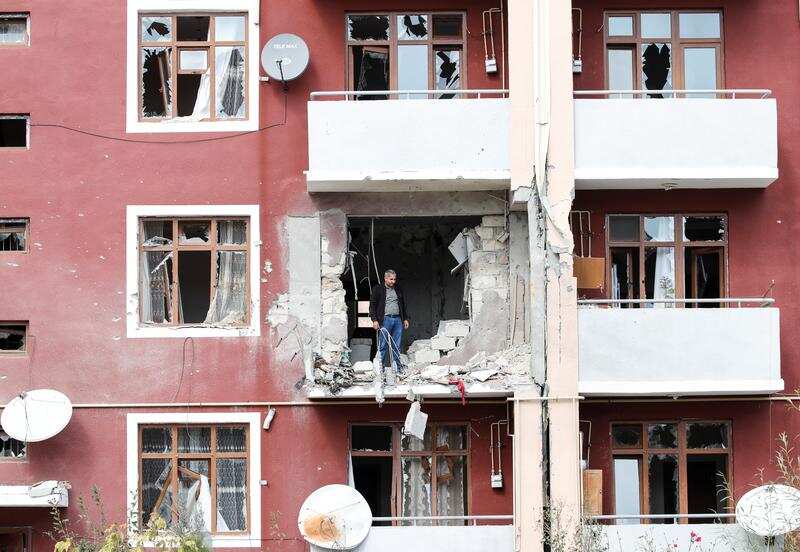
Armenia and Azerbaijan continue war
Armenia and Azerbaijan accused each other ofseriously violating the terms of a ceasefire in Nagorno-Karabakh, within minutes of the truce taking effect -- raising questions about how meaningful it would turn out to be.
Fresh explosions rocked the capital of the disputed Nagorno-Karabakh region on Saturday despite theceasefire.
The leader of the disputed Nagorno-Karabakh region described hostilities with Azerbaijan as calmer on the second day of a ceasefire brokered by Russia, but said that the truce was "fragile".

"It seems that since this morning it is calmer, but that can change very quickly," Arayik Harutyunyan told journalists in the regional capital Stepanakert, despite reports earlier Sunday of shelling on civilian areas by both sides.
Azerbaijan said Sunday that shelling by Armenian forces on the country's second largest city had left seven people dead, one day after a ceasefire between the two sides had been due to take effect.
A "new nightly missile attack by Armenian forces on (a) residential area of Ganja," left seven dead and 33 wounded including children, Azerbaijan's foreign ministry wrote on Twitter.
)
The Royals enter the Doctor Who universe: King Charles and Queen Camilla beam into Commonwealth Games in TARDIS
)
'Agitation cannot justify lathi-charge': CJI Surya Kant's BIG response to police brutality against protesting students
)
India avoids higher US tariff, secures lower 10% rate. Here's how
)
Hidden in British archives: Scientists decode 200-year-old Indian scroll that helped sailors cross one of the world's toughest seas
)
He predicted COVID-19 and 2008 economic crisis, was labeled fearmonger. Now he has another dire warning
)
'House raided, father picked up': UP man Mohd Junaid alleges crackdown after CJP protest; Police deny claims
)
Trump's latest rant is about a 'massive television outage' that never happened
)
RSS backed Jantar Mantar student protest? Mohan Bhagwat's 'question authority' remark resurfaces
)
Oil tanker explodes in the Strait of Hormuz after hitting a naval mine
)
ChatGPT invoked God, told pastor not to worry about his symptoms. Then pulmonary embolism hit
)
NEET Protests riddled with misinformation? Delhi Police blocks 480 Pakistan-based handles spreading 'fake news' since Operation Sindoor
)
Delhi Police issues BIG statement on viral 'don't leave national capital without permission' notice | FACT CHECK
)
'They’re afraid right now...': Netanyahu reacts for first time after Mamdani threatens arrest over ICC warrant
)
Trump says Iranian school bombing photos could be AI-generated - 'I don’t think...'
)
Lock Upp elimination takes dramatic turn as Shivangi Joshi's candid admission grabs attention
)
Google ends Play Services Support, likely to stop these Android phones from downloading apps & games
&im=FitAndFill=(700,400))
New OTT releases this week (July 27-August 2, 2026): The Devil Wears Prada 2, Batman, Demon Slayer- 5 titles coming on Netflix, Prime Video and more
)
Will Iran war last months or even years? Here's what new poll shows about what most Americans think
)
US says Turkey still barred from F-35 program until it gives up Russian S-400 system: Report
)
Bihar wants 'backless Saturday’ in govt schools as official notice misspells 'bagless'
)
'Broader struggle for democracy...': Greta Thunberg joins Indian students protest in London - What she said
)
'We didn't stop them...: Union Finance Minister Nirmala Sitharaman's first reaction on student protests
&im=FitAndFill=(700,400))
Why US fighter jets use seamless bubble canopies compared to Russian jets
)
What we know about Seattle mass shooting: 3 dead, suspect arrested and one at large
)
Berlin Pride attack suspect shot dead by police; incident classified as ‘Islamist terror’ attack
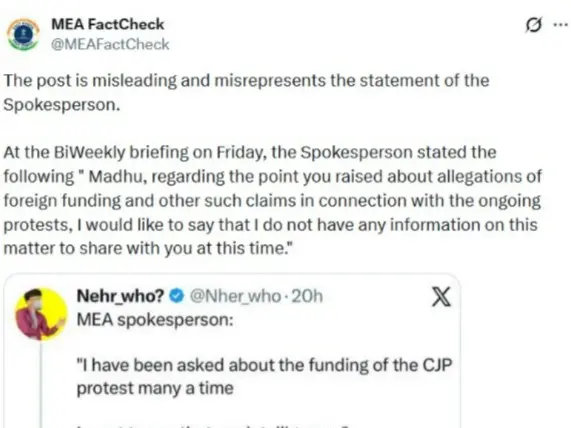)
India's foreign ministry debunks viral claim made during last week's protests
The agreed halt to fighting that has raged for two weeks entered into force at noon on Saturday and was approved by Armenian and Azerbaijani foreign ministers in marathon Russia-brokered talks in Moscow.
Thetalks were the first diplomatic contact between the two since fighting over the mountainous enclave erupted.The most recent fighting since September 27 has been the heaviest since the 1990s war, with more than 450 people reported dead, thousands forced to flee their homes and fears the fighting could escalate into a devastating all-out conflict.
The enclave is internationally recognised as part of Azerbaijan, but is populated and governed by ethnic Armenians.
The Armenian defence ministry accused Azerbaijan of shelling a settlement inside Armenia, while ethnic Armenian forces in Karabakh alleged that Azeri forces had launched a new offensive five minutes after the truce took hold and killed two civilians.
Azerbaijan said enemy forces in Karabakh were shelling Azeri territory and that one civilian had been killed. Both sides have consistently denied each others' assertions in what has also become a war of words accompanying the fighting.
Azeri Foreign Minister Jeyhun Bayramov said the truce would last only for as long as it took for the Red Cross to arrange the exchange of the dead.
Speaking at a briefing in Baku, he said Azerbaijan hoped and expected to take control of more territory in time.
Armenia's foreign ministry said it was using all diplomatic channels to try to support the truce, while Nagorno-Karabakh's foreign ministry accused Azerbaijan of using ceasefire talks as cover to ready military action.
Russian Foreign Minister Sergei Lavrov, who had mediated over 10 hours of talks, earlier said in a statement early on Saturday the ceasefire had been agreed on humanitarian grounds.
The International Committee of the Red Cross said it stood ready to facilitate the handover of bodies of those killed in action and the simultaneous release of detainees.
Lavrov said Armenia and Azerbaijan had also agreed to enter into what he called substantive peace talks.
Those talks would be held under the auspices of the Organisation for Security and Co-operation in Europe's (OSCE) Minsk Group, he said. The group is co-chaired by France, Russia and the United States.
The ceasefire deal was announcedby Russian Foreign Minister Sergei Lavrov. He said the truce had been agreed "on humanitarian grounds" and would allow for exchanges of prisoners and bodies.
The Red Cross offered to act as a "neutral intermediary" to facilitate the handover of bodies and detainees.
The Russian ministry said Saturday evening that Lavrov had spoken to his counterparts in Armenia and Azerbaijan who "confirmed their commitment" to the deal and "stressed the need for its strict observance on the ground."
Renewed fighting in the decades-old conflict has raised fears of a wider war drawing in Turkey, a close ally of Azerbaijan, and Russia, which has a defence pact with Armenia.
The clashes have also increased concern about the security of pipelines that carry Azeri oil and gas to Europe.
The fighting is the worst since a 1991-94 war that killed about 30,000 people and ended with a ceasefire that has been violated repeatedly.
Lavrov said that Armenia and Azerbaijan had agreed at the Moscow talks to "substantive negotiations" on resolving the dispute over Karabakh, with France, Russia and the United States continuing as longtime mediators.
France called for the ceasefire to be strictly respected "in order to create the conditions for a permanent cessation of hostilities."
Karabakh's declaration of independence has not been recognised by any country -- even Armenia -- and the international community regards it as part of Azerbaijan.
The return of fighting has stoked fears of a full-blown war embroiling Turkey, which strongly backs Azerbaijan, and Russia, which has a military treaty with Armenia.
Turkey said the ceasefire agreement was an important first step but that Armenia had a "last chance" to withdraw from Karabakh.
Since the conflict restarted both sides have accused the other of shelling areas populated by civilians and thousands of people have been displaced by the clashes.
The Azeri and Turkish foreign ministers also spoke by phone on Saturday.
(with inputs from agencies)