'Which capital is next?': Iran slams Israel for attack on Syria; Qatar, Turkey calls it 'breach of international law' - How other countries reacted

&imwidth=600&imheight=450&format=webp&quality=medium "'Which capital is next?': Iran slams Israel for attack on Syria; Qatar, Turkey calls it 'breach of international law' - How other countries reacted")
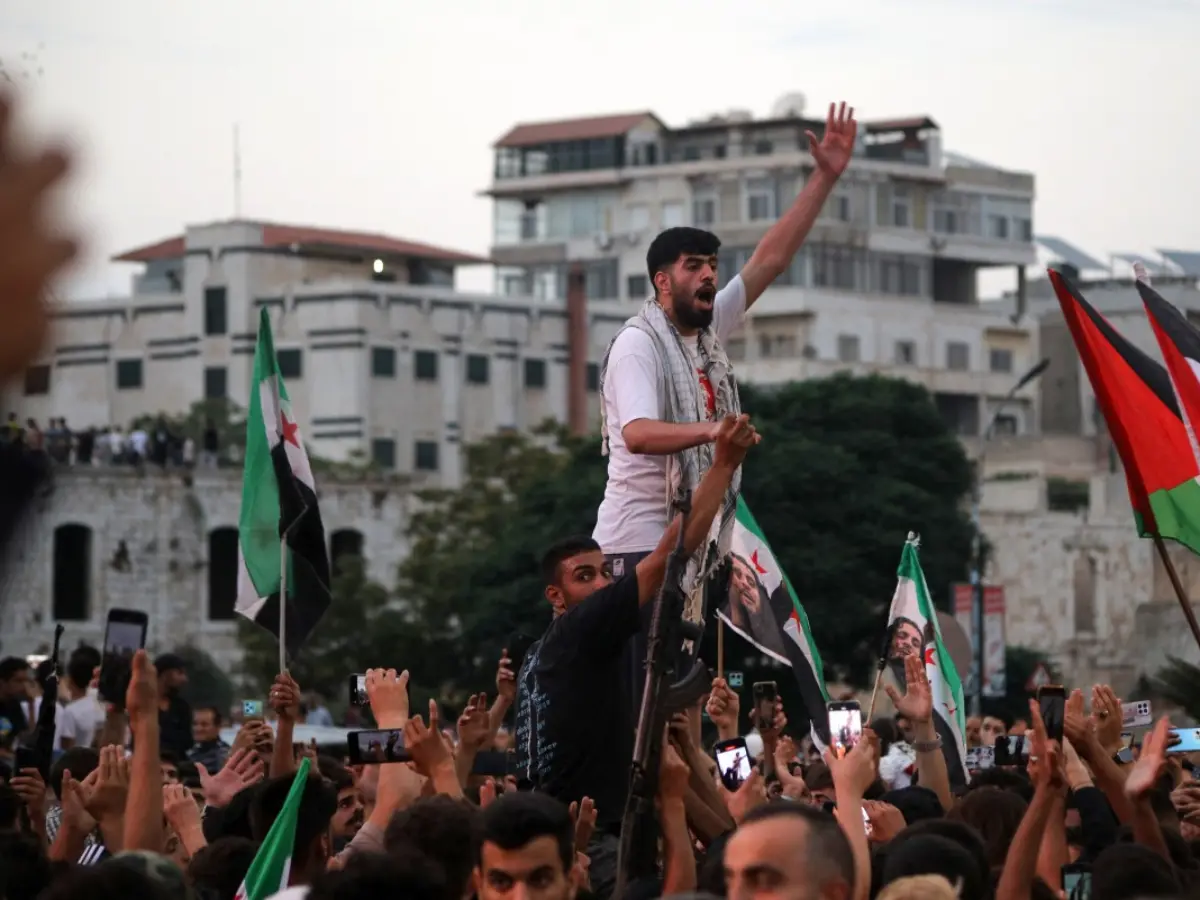
Syria-Israel war Photograph: (AFP)
Israel's attack on Syria to protect Druze minorities drew regional backlash. Iran backed Syria's sovereignty, Qatar condemned the attack as a legal breach, and Turkey denounced Israel's strikes across the region, labeling its Gaza offensive as genocide.
As Israel attacked Syria to protect the Druze minorities in Sweida province, several West Asian countries have reacted. Iran said that it supports the sovereignty and territorial integrity of Syria, and will always stand with the Syrian people. In a statement, Qatar condemned the attack by Syria and called it a “serious breach of international law.” Turkey also condemned Israel's strikes against other regional countries, including Lebanon, Iran and Syria, while calling its military assault on Gaza a genocide.
Iran' reaction
Taking to X, the Iranian foreign minister Seyed Abbas Araghchi said slammed Israel and said that Israeli regime knows no bounds. “Unfortunately, this was all too predictable. Which capital is next? The rabid Israeli regime knows no bounds and only grasps one language. The world, including the region, must unite to end its unhinged aggression. Iran supports the sovereignty and territorial integrity of Syria, and will always stand with the Syrian people,” he added.
Qatar's reaction
In a statement, Qatar said, “The State of Qatar condemns the attacks carried out by the Israeli occupation against the sisterly Syrian Arab Republic, considering them a blatant violation of Syria's sovereignty, a serious breach of international law and the Charter of the United Nations, and a manipulation of the security and stability of the region. The Ministry of Foreign Affairs affirms that the repeated attacks by the occupation on the new Syria clearly reflect its challenge to the international will that supports Syria's reconstruction and revival, and the establishment of peace in the region. In this context, the Ministry calls on the international community to take decisive actions against the occupation to deter its aggressive policies and irresponsible actions, which pose a serious threat to regional and international security. The Ministry reiterates the State of Qatar's full support for the sovereignty, independence, territorial integrity of Syria, and the aspirations of its brotherly people for a dignified life.”
Turkey's reaction
Speaking to state media in New York, Turkey's Foreign Minister Hakan Fidan said he was in close contact with Tom Barrack, US Special Envoy for Syria and the US ambassador to Turkey, adding he had discussed the issue in phone calls with his Syrian, Jordanian, and Saudi Arabian counterparts. "At the same time, we have conveyed our own views on the matter to the Israelis via our intelligence agency, that we do not want an instability here," Fidan said, and added Syria's new government could not solve the conflict without measures to ensure security in the region.
How did the current conflict in Syria begin?
The Syrian Observatory for Human Rights, a UK-based war monitor, said the clashes started after members of a Bedouin tribe in Sweida province set up a checkpoint where they attacked and robbed a Druze man, leading to tit-for-tat attacks and kidnappings between the tribes and Druze armed groups. Government security forces deployed to restore order, but were seen as taking the side of the Bedouin tribes against Druze factions. The Syrian military entered the Druze strongholds, triggering fears of attack on minorities and prompting Israeli strikes.
Trending Stories
)
)
)
)
)
)
)
)
)
)
)
)
)
)
)
)
)
)
)
)
)
)
)
)
)
)
)
)
&im=FitAndFill=(700,400))
)
)
)
)
)
)
)
)
)
)
&im=FitAndFill=(700,400))
)
)
The Syrian government's demand for disarmament is being met with scepticism by the Druze community, as they have not completely forgotten Ahmed al-Sharaa's past involvement with al-Qaeda. Syria’s religious and ethnic communities are worried about their place in Syria’s new system. Moreover, the Druze in Sweida province have not forgotten the past traumas when as many as 200 members of the community were attacked by the Islamic State group in 2018, and more than two dozen were taken hostage.

