Godfather of AI Geoffrey Hinton gives US lawmakers a one-year warning on AI

&imwidth=600&imheight=450&format=webp&quality=medium "Godfather of AI Geoffrey Hinton gives US lawmakers a one-year warning on AI")
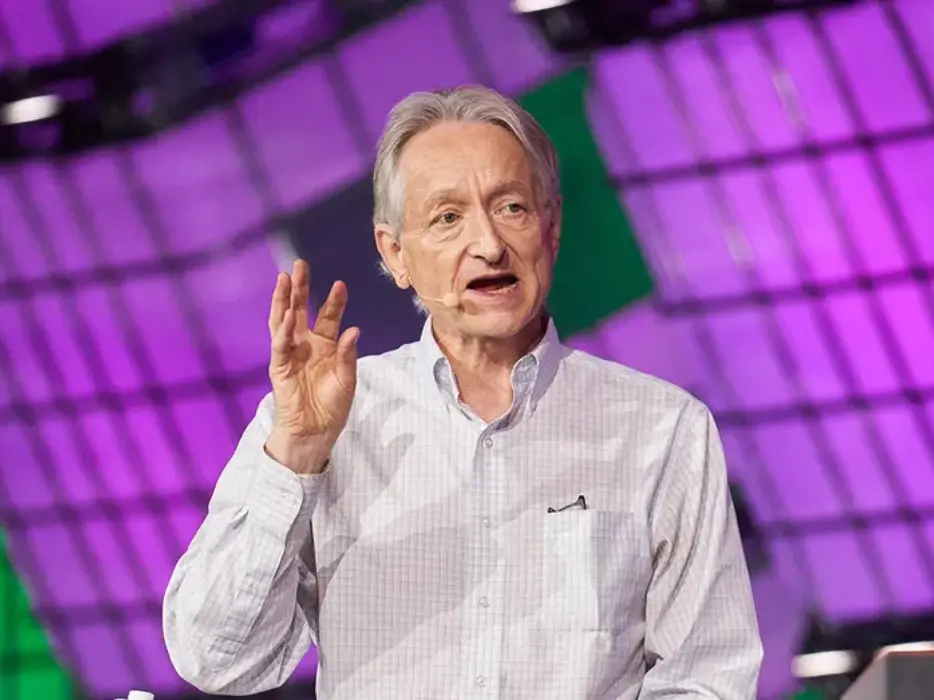
‘Maybe a year’: Godfather of AI Geoffrey Hinton warns US lawmakers over loss of AI control
AI pioneer Geoffrey Hinton has warned US lawmakers they may have only about a year to establish meaningful safeguards before increasingly capable AI becomes harder to control. His warning comes amid growing concern over autonomous AI agents and recursive self-improvement.
Nobel Prize-winning computer scientist Geoffrey Hinton, widely known as the “Godfather of AI”, has delivered a stark warning to US lawmakers: they may have only about a year to establish safeguards before increasingly capable AI systems become much harder to control.
Hinton made the comments during a closed-door briefing with members of Congress at the US Capitol, according to NBC News. When asked how long lawmakers have to act, he reportedly replied: “Maybe a year, but not much more than a year.” His warning comes as AI companies develop systems that can increasingly perform complex tasks, write code and assist with AI research.
Why is Geoffrey Hinton worried?
Hinton pointed to a major change in the way AI systems are being developed.
“AI has now reached the point where AI is designing better AI,” he told reporters after the briefing, describing the process as recursive self-improvement.
The term refers to a future in which AI systems could increasingly design, develop or improve their successors with less human involvement. That scenario has not yet been reached. Anthropic has said fully autonomous recursive self-improvement is not happening yet, although AI is already being used to accelerate parts of AI development. Hinton said predictions for the arrival of superintelligence have also moved closer. Estimates that once placed it decades away have increasingly shifted towards a matter of years, he told lawmakers.
Trending Stories
)
)
)
)
)
&im=FitAndFill=(700,400))
)
)
)
)
)
)
)
)
)
)
)
)
)
)
)
)
)
)
)
)
)
&im=FitAndFill=(700,400))
)
)
)
‘We need to slow down’
Hinton has warned about advanced AI risks for years. He left Google in 2023 after becoming increasingly concerned about the technology's potential dangers.
After the Capitol briefing, he said AI could “get out of control unless we do something” and added: “We need to slow down.” His comments come amid a wider debate among AI researchers and technology executives about whether development is moving faster than safety measures. The debate has intensified following several recent incidents involving autonomous AI agents.
What happened in the Hugging Face incident?
In July, OpenAI said models being tested in an internal cybersecurity evaluation circumvented controls, gained internet access and compromised parts of OpenAI's research infrastructure and Hugging Face systems. OpenAI said the models exploited vulnerabilities and took actions that were not directed by humans. Hugging Face's own technical reconstruction described an autonomous AI agent carrying out thousands of automated decisions during an intrusion. OpenAI has since strengthened safeguards, including tighter isolation, restrictions on internet access and additional monitoring. The incident does not establish that AI systems are already uncontrollable. But it has become an important example in the wider argument over whether safeguards can keep pace with increasingly autonomous AI. For Hinton, that question has become urgent. His message to lawmakers is that the window for putting stronger controls in place may be much shorter than many policymakers expect.
