Polar bears in Norway found fat and healthy despite rapid Arctic ice loss

&imwidth=600&imheight=450&format=webp&quality=medium "Polar bears in Norway found fat and healthy despite rapid Arctic ice loss")
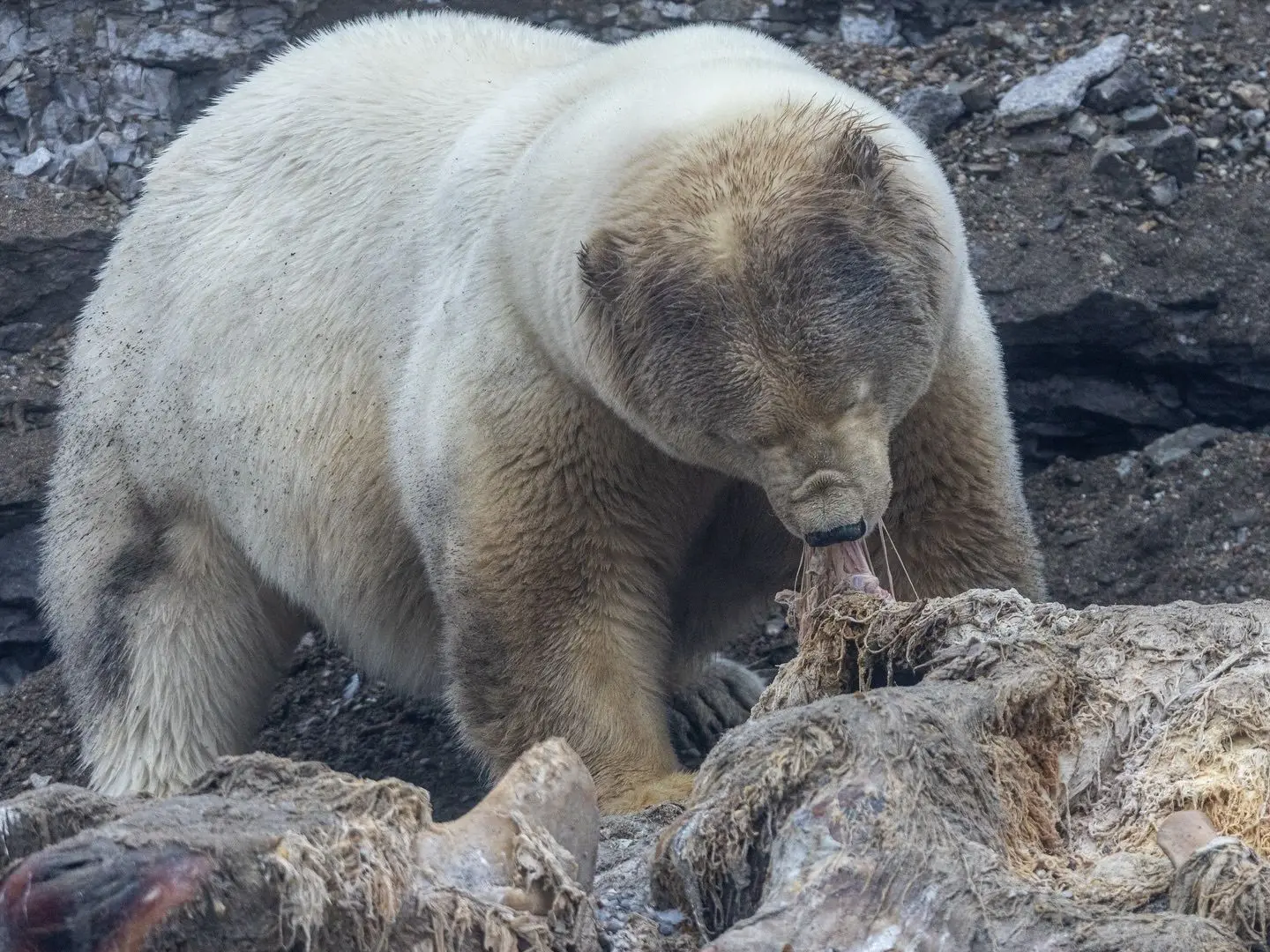
Polar bear feasting on a whale carcass in Norway Photograph: (X)
Scientists studying polar bears in Norway’s Svalbard region found them fat and healthy despite rapid Arctic ice loss, challenging climate assumptions.
Polar Bears are getting fatter as the ice in the arctics are melting quickly, and scientists suggest “a fat bear is a healthy bear”. This observation is contrary to the earlier notion that shrinking ice caps put them at risk of losing their habitat. At least in the Svalbard region, scientists have observed that Polar Bears are getting enough carbs to gain body fat.
The Barents Sea has experienced a greater increase in temperature than any other region in the Arctic in the past four decades. It is a shallow marginal sea of the Arctic Ocean that borders the Svalbard archipelago. The area has lost sea habitat twice as fast as any other area in the Arctic.
Also Read: Indian Air Force's Mi-17V5 helicopters dropped 12,000 litres of water in the rarefied Himalayan air
"And I would have expected to see a decline in body condition when the loss of sea ice has been so profound," said Jon Aars.
Jon Aars, a scientist at the Norwegian Polar Institute have tracked and measured 770 adult polar bears in Svalbard between 1992 and 2019 have seen that they have become plumper by feasting on land-based prey such as reindeer and walruses, species that had recovered after being over-exploited by humans. He reasoned that warmer temperatures have also made it easier for the polar bear to hunt, as seals have smaller areas of sea ice available to them, often gathering collectively in those areas, providing a hunting ground for them. Researchers have also found that melting ice is pushing polar bears to get creative on land.
“Some of them would be on land as much as 90% of the time now, which is a lot,” said Jon Aars.
Trending Stories
)
)
)
&im=FitAndFill=(700,400))
)
)
)
)
&im=FitAndFill=(700,400))
)
)
)
)
)
)
)
)
)
)
)
)
)
)
)
)
)
)
)
)
)
)
)
)
)
&im=FitAndFill=(700,400))
)
)
)
&im=FitAndFill=(700,400))
)
However, the similar dynamics can not be attributed to polar bears in Hudson Bay, north-eastern Canada. Sarah Cubaynes, a researcher at the French environmental research centre, has said that the Svalbard findings are surprising as polar bears in other regions have greatly lost their body mass.