Not from this world? Scientists discover mysterious 'alien plant' fossil near Utah's ghost town

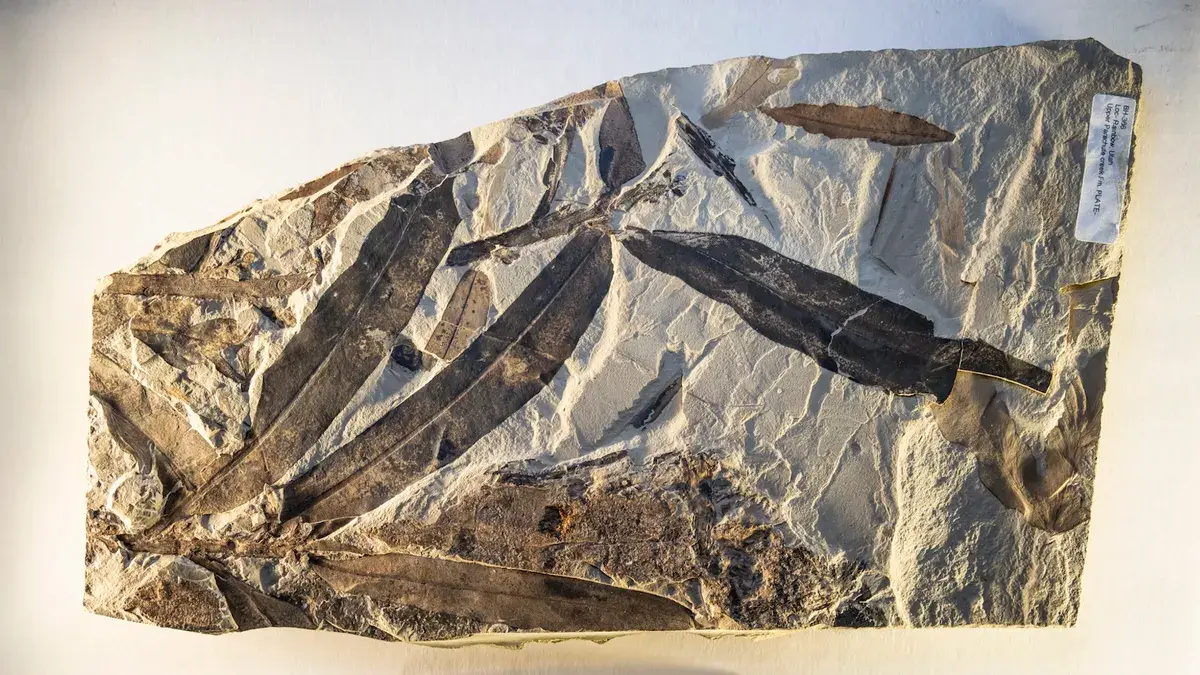
Around 47 million years ago, the region was a lake ecosystem near active volcanoes. The combination of lake sediments and volcanic ash preserved the remains of fish, reptiles, birds, and plants.
Scientists have determined that a fossilised plant first discovered near a ghost town in Utah 55 years ago does not belong to any currently known plant family, either living or extinct. The plant, namedOthniophyton elongatum, was initially identified in 1969 when researchers found fossilised leaves and believed it could be related to ginseng.
A recent study has challenged this hypothesis. Steven Manchester, curator of palaeobotany at the Florida Museum of Natural History, came across a well-preserved plant fossil in the University of California, Berkeley’s palaeobotany collection. The fossil originated from the same area as the Othniophyton leaves. Manchester’s research team analysed the specimen and concluded it belonged to the same species. Their findings were published on 9 November in the Annals of Botany.
Also read: 'Invisible space bomb': Asteroid YR4 to disappear in April, leaving Earth defenceless until 2028
Both fossils were excavated from the Green River Formation in eastern Utah, near the now-abandoned town of Rainbow. Around 47 million years ago, the region was a lake ecosystem near active volcanoes. The combination of lake sediments and volcanic ash preserved the remains of fish, reptiles, birds, and plants.
Unlike the original fossil, the specimen at UC Berkeley contained leaves, flowers, and fruits. The researchers compared its physical features with existing plant families but found no match. The structure differed significantly from ginseng-related plants, leading scientists to discount the previous classification.
Also read: 'Metal foam': ISRO's Bhartiya Space Station to get an upgrade from the researchers of IIT-Madras
Trending Stories
&imwidth=280&imheight=210&format=webp&quality=medium)
&imwidth=280&imheight=210&format=webp&quality=medium)
&imwidth=280&imheight=210&format=webp&quality=medium)
&imwidth=280&imheight=210&format=webp&quality=medium)
&imwidth=280&imheight=210&format=webp&quality=medium)
&imwidth=280&imheight=210&format=webp&quality=medium)
&imwidth=280&imheight=210&format=webp&quality=medium)
&imwidth=280&imheight=210&format=webp&quality=medium)
&imwidth=280&imheight=210&format=webp&quality=medium)
&imwidth=280&imheight=210&format=webp&quality=medium)
&imwidth=280&imheight=210&format=webp&quality=medium)
&imwidth=280&imheight=210&format=webp&quality=medium)
&imwidth=280&imheight=210&format=webp&quality=medium)
&imwidth=280&imheight=210&format=webp&quality=medium)
&imwidth=280&imheight=210&format=webp&quality=medium)
&imwidth=280&imheight=210&format=webp&quality=medium)
&imwidth=280&imheight=210&format=webp&quality=medium)
&imwidth=280&imheight=210&format=webp&quality=medium)
&imwidth=280&imheight=210&format=webp&quality=medium)
&imwidth=280&imheight=210&format=webp&quality=medium)
&imwidth=280&imheight=210&format=webp&quality=medium)
&imwidth=280&imheight=210&format=webp&quality=medium)
&imwidth=280&imheight=210&format=webp&quality=medium)
&imwidth=280&imheight=210&format=webp&quality=medium)
&im=FitAndFill=(700,400)&imwidth=280&imheight=210&format=webp&quality=medium)
&im=FitAndFill=(700,400)&imwidth=280&imheight=210&format=webp&quality=medium)
&imwidth=280&imheight=210&format=webp&quality=medium)
&imwidth=280&imheight=210&format=webp&quality=medium)
&imwidth=280&imheight=210&format=webp&quality=medium)
&imwidth=280&imheight=210&format=webp&quality=medium)
&imwidth=280&imheight=210&format=webp&quality=medium)
&imwidth=280&imheight=210&format=webp&quality=medium)
&imwidth=280&imheight=210&format=webp&quality=medium)
&imwidth=280&imheight=210&format=webp&quality=medium)
&imwidth=280&imheight=210&format=webp&quality=medium)
The Florida Museum of Natural History later used advanced microscopy and artificial intelligence technology to study the fossil further. They identified micro-impressions of developing seeds and stamens that remained attached to mature fruits, a characteristic not observed in modern plants.
Attempts to link Othniophyton elongatum to any known extinct plant families were also unsuccessful. This discovery follows previous findings from the Green River Formation, where fossilised fruits and leaves of unidentified plants have led to the recognition of extinct groups. Scientists continue to examine these fossils to understand the region’s ancient plant diversity.