Mars will deliver a violent death to its own Moon sooner than expected

&imwidth=600&imheight=450&format=webp&quality=medium "Mars will deliver a violent death to its own Moon sooner than expected")
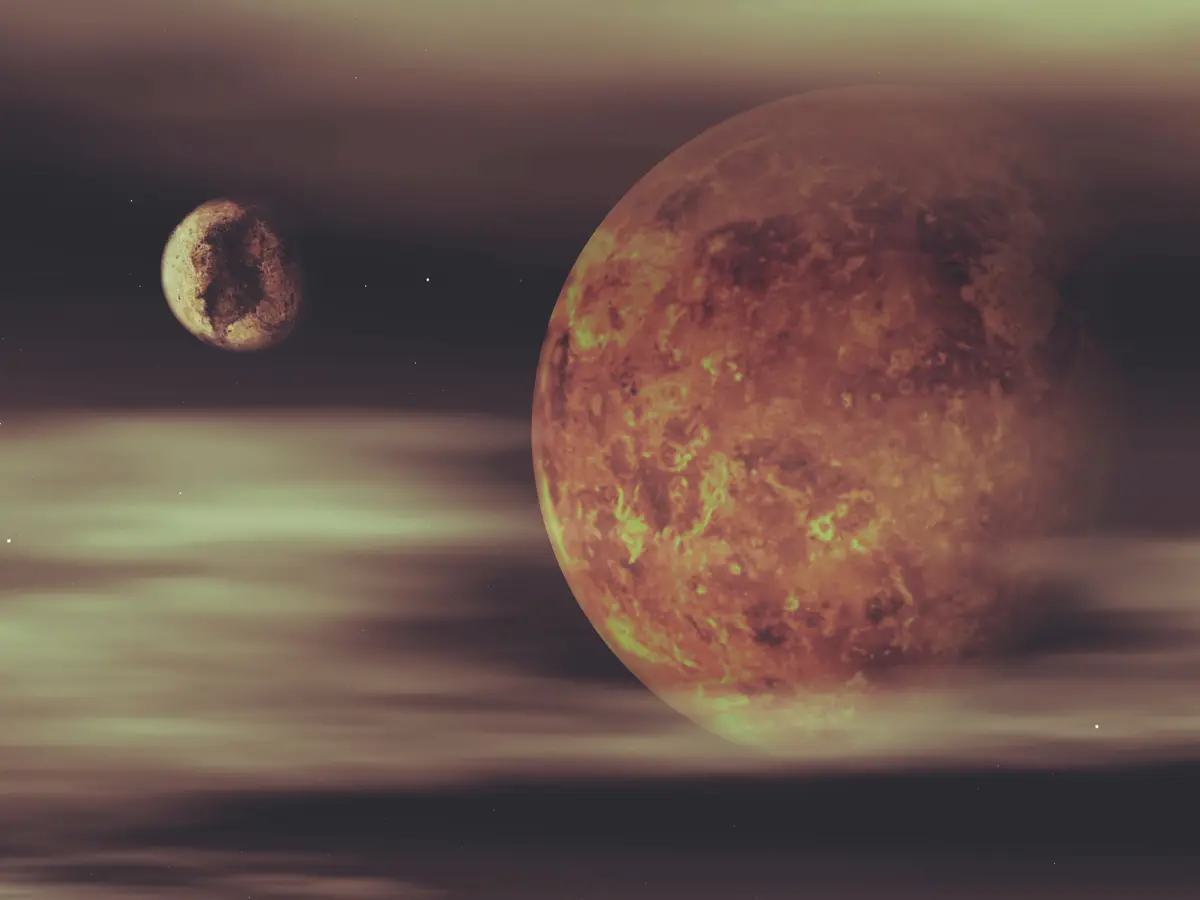
Mars moon Phobos will be shredded in 20 to 50 million years. Photograph: (Freepik)
Phobos, the closer of the two Martian Moons, is being pulled towards the planet and is one day expected to be completely obliterated by the tidal forces. However, this will happen much sooner and will be extremely brutal.
Scientists have long known that Phobos, one of the moons of Mars, will eventually die as the tidal effects of the planet suck its orbital energy, leading it to turn into a debris disk. This is expected to happen when it passes inside the Roche Limit - the minimum distance to which a moon, comet, or asteroid can approach a larger primary body. In the case of Mars and Phobos, this limit is around 1.6 times the radius of the Red Planet (RM), or approximately 3,600 to 5,500 km. However, a new analysis has shown that Phobos will start to shred and break apart long before it reaches this limit. Harrison Agrusa and Patrick Michel, researchers at the Observatoire de la Côte d’Azur, France, say that Phobos' shape and the fact that it is merely a pile of rubble will play a role in this event.
Also Read: No Mars, no moolah: Musk's appraisal directly tied to settling 1 million people on Red Planet
Scientists determined the fate of Phobos using two approaches. One was the simple mathematics behind the tidal strain at decreasing distance from Mars, and its shape, along with the cohesive strength of Phobos. The second was a computer simulation looking at the moon as a rubble pile, tracking how each separate particle will react as Phobos spirals inward. Both of them threw up similar results - that death awaits Phobos sooner than expected.
Also Read: NASA just saved a precious drill stuck on Mars since 8 months from 212 million kilometres away
How and when will Phobos die?
Phobos will start undergoing mass shedding from two points - one closest to Mars and the other farthest from the planet. The gravitational pull is strongest at the part nearest to it, while the outwards-flinging centrifugal force is greatest on the far side. The shedding will start when Phobos is at an orbital distance of about 2.25RM. It will greatly increase at around 2.15RM and 2.13RM. Material from Phobos will start flowing in two huge streams at around 2.09RM, destabilising it and ultimately spelling doom. However, the end could come much before it even reaches this last limit. The material pulled from Phobos will enter Mars' orbit and then smash again into the Moon at high speeds. This would lead to a "sesquinary catastrophe", finishing off Phobos.
Trending Stories
)
)
)
&im=FitAndFill=(700,400))
)
)
)
)
)
)
)
)
)
)
)
)
)
)
)
)
)
)
)
)
)
)
)
)
)
)
&im=FitAndFill=(700,400))
)
)
)
&im=FitAndFill=(700,400))
)
Phobos is not going to die for another 20 to 50 million years. Meanwhile, humans are working to quench their curiosity as Japan gets ready to launch the Japanese Martian Moons eXploration (MMX) mission this year. It is designed to study the interior structure and material strength of Phobos, giving a closer estimate of its demise.