Sarnath gets UNESCO World Heritage status: Know all about the ancient Buddhist site

&imwidth=600&imheight=450&format=webp&quality=medium "Sarnath gets UNESCO World Heritage status: Know all about the ancient Buddhist site")
Photograph: (ANI)
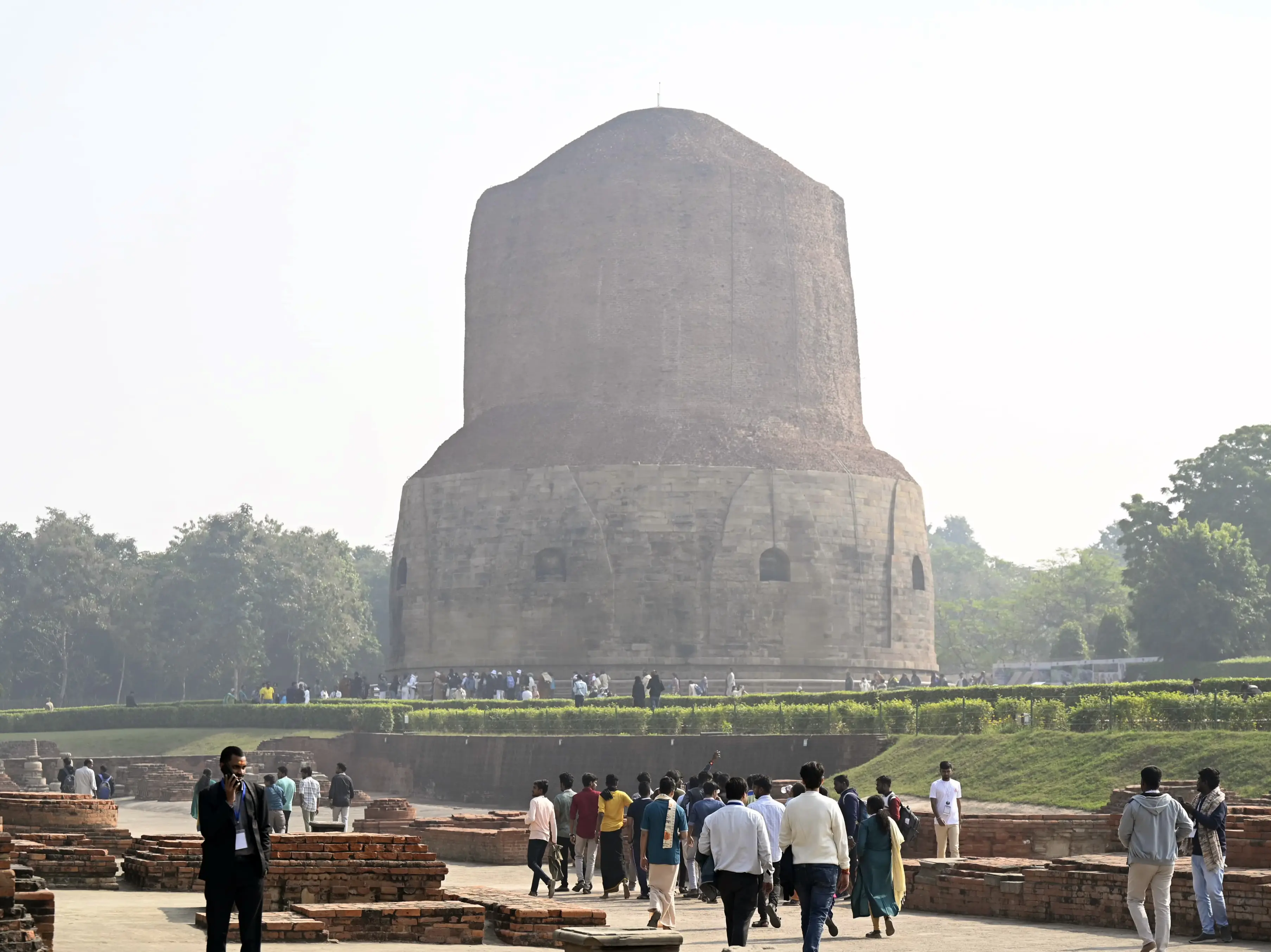
Sarnath has joined the UNESCO World Heritage List as India's 45th site, recognising its importance as a major Buddhist pilgrimage and heritage centre.
India's ancient Buddhist site of Sarnath in Uttar Pradesh has been inscribed on the UNESCO World Heritage List, making it the country's 45th site to receive the prestigious recognition.
The decision was taken on Saturday during the ongoing 48th session of the UNESCO World Heritage Committee in Busan, South Korea.
UNESCO announced the inscription in a post on X, saying, "BREAKING! New inscription on the @UNESCO #WorldHeritage List: Ancient Buddhist Site of Sarnath, #India".
Prime Minister Narendra Modi welcomed the recognition and described it as a proud moment for every Indian. He highlighted Sarnath's deep connection with Lord Buddha and his message of wisdom, compassion and harmony.
"A proud moment for every Indian! Delighted that Sarnath in Uttar Pradesh has been inscribed on the UNESCO World Heritage List," Modi said in a post on X.
The Prime Minister said Sarnath has a close association with Lord Buddha, whose timeless message of wisdom, compassion and harmony inspires people across the world.
"This recognition celebrates India’s profound civilisational and spiritual heritage. It will also inspire more people across the world to come to Sarnath and connect with the ideals of Lord Buddha," he said.
Also Read: 'Direct democracy, straight from streets': Sonam Wangchuk hails Dharmendra Pradhan's resignation
Why Sarnath is significant
Located around 10 kilometres from Varanasi, Sarnath is among the four most sacred pilgrimage sites linked to the life of Buddha.
According to Buddhist tradition, Gautama Buddha delivered his first sermon at Sarnath after attaining Enlightenment. The event is known as the Dharmachakra Pravartana, or Setting in Motion of the Wheel of Dharma. It was also here that he established the Buddhist Sangha.
Trending Stories
)
)
)
&im=FitAndFill=(700,400))
)
)
)
)
)
)
)
)
)
)
)
)
)
)
)
)
)
)
)
)
)
)
)
)
)
)
&im=FitAndFill=(700,400))
)
)
)
&im=FitAndFill=(700,400))
)
The archaeological remains at the site date from the 3rd century BCE to the 12th century CE. They include stupas, monasteries, temples, remains of the Ashokan pillar and several other structural and sculptural remains.
The Dhamekh Stupa and Dharmarajika Stupa are among Sarnath's most prominent monuments.
The Lion Capital that once stood atop Ashoka's pillar at Sarnath was later adopted as India's National Emblem.
Sarnath received patronage from the Maurya, Kushana and Gupta dynasties over the centuries and grew into an important centre of Buddhist religious activity. Its sculptures, particularly those from the Gupta period, are considered outstanding examples of Indian Buddhist art.