Opinion: The problem of plastic pollution and what you & I can do about it

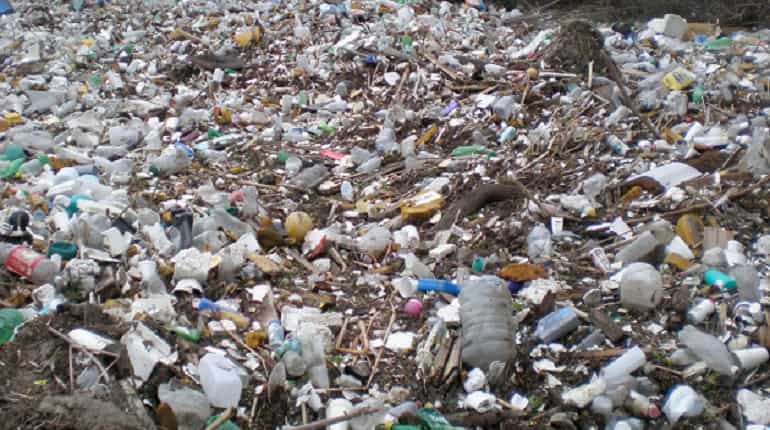
Bangladesh capital awash with plastic-coated posters
The problem started with the individual. But that also means she and he can also help set it right
By Arabella Seebaluck
World Environment Day this year (today) will focus on the thorny plastic pollution issue. Social media feeds every day offer users with something or other that plastic is destroying or polluting. Long gone are the days where everyone would applaud the benefits of the cheap petrochemical byproduct. Plastic is on the wanted list, it’s like a weapon of mass destruction… only one that every single one of us uses on a daily basis.
The horror stories abound media in its entirety. The most recent example is the tragic end of a whale in Thailand because she ate 80 plastic bags. The contents of her stomach were even beamed on every screen to show the public how real, how lethal, plastic garbage is. We read about how this material clogs rivers, pollutes oceans and beaches, kills fauna and flora. Many magazine covers have with a single photo expressed the urgency of the situation: whether the plastic bag-cum-iceberg or the seagull caught within a plastic bag, standing helplessly. Basically, we’ve heard about the harm plastic does to all living entities — be it humans, animals or plants — and have been shown all of its negative effects. We subscribe to environmental events, pledges, online petitions and other trendy initiatives to "beat plastic pollution". But what is our own, personal, individual contribution to it? What do we do in our daily lives to reverse harmful plastic proliferation? Truth be told, for most of us, absolutely nothing. Zilch. Nada.

Ironically, this is the best place to start: I, me, the individual… that one single person. To understand better the power of the individual, a good place to understand how this dynamic works is the other end of the spectrum. What caused the pollution in the first place? How did it begin? It began with one person. One person thought it was OK to throw away a plastic bottle on the ground. One person thought it was OK to dispose of plastic bags in the nearby river. One person was watched by another person, then another, then another… and the result is the heaps and mountains of plastic we encounter everyday… whether we’re driving to work or trying to walk on a sidewalk to the ATM or the market. There is plastic litter along every step of the way… at least in India’s metropolitan cities.
There’s a particular mindset in most of India metros… that of "mindlessness". Which can be defined by someone not particularly caring about how a situation is going to be resolved after they have been served. No need to venture very far to see how this works. Many religious institutions in our local neighbourhoods give out "offerings". These are usually food in single-use or disposable plastic or styrofoam containers. What happens to these utensils after their single use is often this: dumped at the very place where the person or persons stood to eat them. Not in a waste bin, and much less taken home to be responsibly disposed of. Each one of us often mindlessly disposes of plastic bottles, cutlery and straws. Each one of us have refillable water bottles at home — but how often do we buy disposable ones? How many of us feel responsible about where the plastic we use ends up?
This brings us to the next word of interest: responsibility. Even though we are aware that a single-use plastic spoon or straw will take a 100 years or so to disintegrate naturally, how many of us refuse one when offered? What about going to the fruit and vegetable seller down the street — how many of us carry our own bags so we avoid getting even more plastic out on the street? How many of us shop with plastic consciousness: looking at products that use more eco-friendly or very scant packaging? How many of us have thought of a zero-waste lifestyle? How many of us even know what that is?
)
No Pandya as Auqib Nabi earns maiden ODI call-up; Mayank returns for WI T20Is| check full squads
)
Chiefs tight end Travis Kelce named one of the victims in $35 million ponzi scheme
)
Trump praises India’s Opium crackdown, hails anti-drug efforts
)
Sydney Sweeney defends provocative ad choice, the internet is still not impressed
)
Former India player Diana Edulji wants Smriti Mandhana to replace Harman as skipper at the earliest
)
Trump calls Canada-EU associate membership plan ‘laughable’ and threatens 'very serious tariffs'
)
Protests erupt over migrant housing plan in Piddington
)
Shahzad Bhatti Network declared terrorist organisation under UAPA: Govt order
)
Europe wants a common playbook for security threats, seeks security beyond NATO
)
Formula One reveals the 2027 race calendar; Monaco to host sprint race for the first time
)
All Indian goods to get duty-free access to New Zealand
)
Bigg Boss 20: Mahhi Vij reveals she lost Yuva role to Kareena Kapoor; 'didn’t work out in my favour'
)
Lionel Messi for 2026 Ballon d’Or over Mbappe and Yamal, says Diego Simeone
)
US House votes 417-3 to pass Ratepayer Protection Act targeting AI data center electricity costs
)
Hong Kong unveils 11 new measures to boost birth rates, offers higher cash bonuses and housing perks
)
Former OpenAI researcher warns of growing risks from Artificial Intelligence
)
Veteran actor Anant Nag honoured with Indian cinema’s highest award
)
AUS vs SA: Steve Smith still gets 'little flashbacks' from sandpaper gate
)
Pakistan naval vessel returns to harbour with 'severe damage' after collision with Indian warship in Arabian Sea
)
Fed raises rates for first time in 3 years, Kevin Warsh defies Trump as inflation mounts
)
Katrina Kaif’s postpartum weight is not the problem; your gaze is
)
Taiwan seeks deeper India ties as direct flights restart soon and chip projects advance
)
Daayra movie review: Kareena Kapoor, Prithviraj Sukumaran shine in Meghna Gulzar’s cop-versus-cop crime thriller
)
Saudi Vs Houthis: Yemeni military rebels clash with Houthis
)
Pak batter Rizwan's petition against being questioned by cyber crime agency rejected by court
)
US trade tariff: 100% tariff targets Russian buyers amid trade tensions
)
Pakistan: Imran Khan's sons Kasim & Sulaiman claim their father is 'tortured' in jail
&im=FitAndFill=(700,400))
New OTT releases this week (September 14-20, 2026): Lust Stories 3, Waiting Hai, Irumudi- 5 new titles coming on Netflix, Prime Video and more
)
Trump gets new power to hit India, China with up to 100% tariffs as US Senate clears Russia sanctions bill
)
Prime Minister Narendra Modi's birthday: Italian PM Meloni sends birthday wishes
)
‘Imagine 50 AI fighters cornering one manned jet’: India’s mobbing doctrine eyes a new era of air warm
)
Saudi vs Houthis: Riyadh claims to have shot Houthi drone targeting Mecca
)
US Treasury rallies global financial institutions for Op Economic Outcast to isolate Iran
)
India breaks silence on US Russia sanctions bill, 100% tariff threat: ‘Committed to energy security’ for 1.4 billion
)
Pakistan boycotts chess match against Israel at Olympiad
)
Want to get married within a year? Why 18 lakh people rush to Jaipur for ‘sacred henna’
&im=FitAndFill=(700,400))
Suriya and Jyothika say ‘I do’ again after 20 years! See their dreamy wedding pics
)
Abhishek Sharma rises to No. 2 in T20Is; ENG’s Robinson 3rd after record Pakistan Tests
)
The Early Spring season 2 is happening, but fans have one request - 'don't change the actors'
The problem is that plastic is so embedded in our lifestyles, we seldom take the time to ponder how we can manage without it. Yet, about 50 years ago, our parents and grandparents had a mostly plastic-free lifestyle. Milk would not come in pouches, but directly from the milkman's large cans… vegetables were carried in baskets or cloth bags… water was drunk out of mugs or fountains. Examples of the waste-free lifestyle are countless. And we have gold mines of information if we turn to our elders and ask them: how did you do that back in the day?
But instead, we are riding the plastic wave. Beating plastic pollution is just going to be the latest fad theme, the Facebook profile picture we’ll change into a logo or the HR event we’ll attend courtesy of the company we work at. On June 6, the day after the much-heralded "World Environment Day", we’ll all pretty much go back to how things were.
Meanwhile, plastic will continue seeping its way down the gullets of the animals which scavenge through refuse for food. Or those in our coastal waters who mistake it for an organism they normally feed on. That’s what happened to the whale previously mentioned, and turtles, fish and lots of marine animals… but also our neighbourhood cows and goats, and even our precious pets can be thus harmed. The danger in that is that we choose to be unaware of the hazards of plastic in our ecosystem and on our own health.
Right now, in India, plastic is a proliferating industry… with a planned growth of double the current amount over the next decade. It is aided by the government which sees in it a means of encouraging business and creating jobs. So if on one side there is the "Beat Plastic Pollution" rhetoric, on the other side there is a real economic need that has to be met. So although authorities try to green the country, they also have to allow ways for mouths to be fed... after all, this is politics.
But politics aside, what is currently happening outside of India? When did the problem begin? A starting point is usually the 50's, when the world’s population was about 2.5 billion people. We’re now at nearly 7 billion people in the world and 320 million tonnes of plastic are being produced worldwide yearly. In India alone, this figure averages 18 million tonnes a year, for a population which currently represents about 18% of the planet’s inhabitants. It’s established that production and consumption of plastics in India is tremendous. In terms of management of the plastic waste, this is where it becomes overly daunting. Despite the plastic bans in at least 17 states in the country, local agencies are unable to implement legislation. There is a critical lack of manpower and perhaps even willpower in some institutions to translate the letter of the law to ground reality when it comes to plastic pollution. One would be tempted to think that it’s an entirely separate issue from waste. Nothing could be further from the truth.
A lot of plastic waste ends up in oceans. So this a good illustration of how massive the problem is. Right now, researchers and NGOs agree that anything between 60-90% of marine debris is plastic. These are mostly fishing nets, but are also single-use items such as straws and cutlery. The problem is such that plastic debris has been found in one of the deepest underwater trench, the Marianas Trench. There is a patch of plastic in the pacific which is roughly twice the size of the state of Rajasthan. In the same Pacific Ocean, an entire uninhabited island called Henderson island has been found covered with plastic waste. This is because 1.8 trillion pieces of plastic litter our ocean…
There is so much consciousness and apparent publicity around the problem of plastic pollution that one would think it is near being resolved. But with an increasing world population and equally increasing plastic production, this isn’t likely to happen. If each individual were however to change their plastic consumption, that would definitely turn the tide around. Mindfulness is key in creating the awareness of how each single plastic straw, spoon or bag we use is going to impact the environment in which our children are going to live. Mindfulness means we care about what happens around us and what will happen after we’re gone. Being mindful of our own individual plastic use and disposal would be our single biggest contribution to protecting life on Earth.
(Disclaimer: The opinions expressed above are the personal views of the author and do not necessarily reflect the views of ZMCL)