'Small But Smart': Sweden Positions Itself as Ideal Match for India's AI Ambitions

&imwidth=600&imheight=450&format=webp&quality=medium "'Small But Smart': Sweden Positions Itself as Ideal Match for India's AI Ambitions")
'Small But Smart': Sweden Positions Itself as Ideal Match for India's AI Ambitions
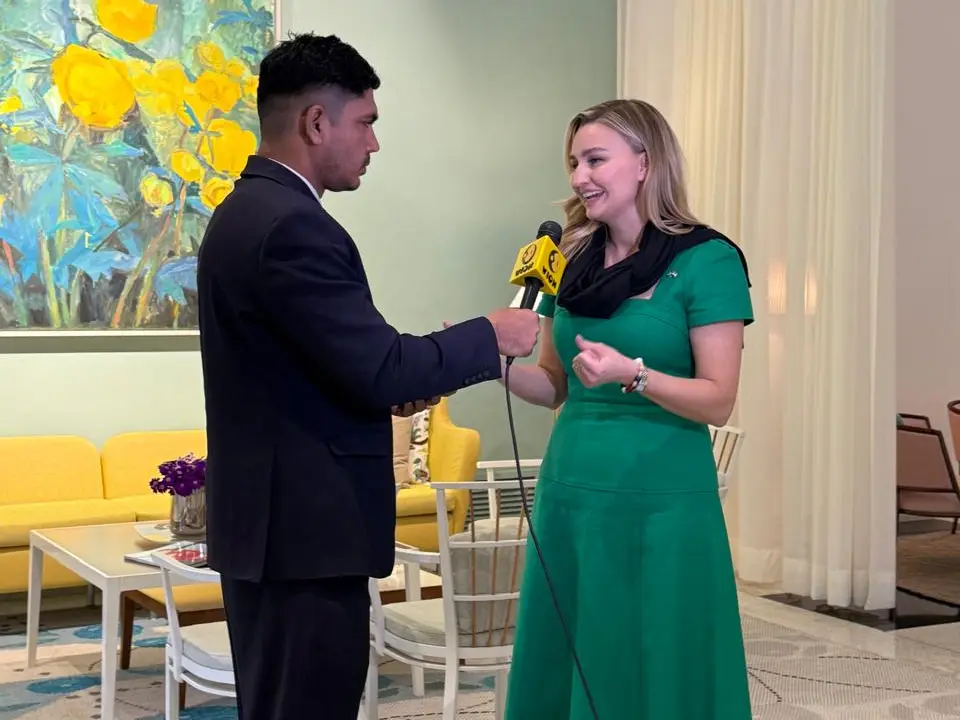
Sweden's Deputy Prime Minister Ebba Busch positioned Sweden as a complementary partner, citing its innovation ranking, often among the world's top one, two or three, despite its small size.
New Delhi: Sweden's Deputy Prime Minister Ebba Busch has hailed India's leadership in artificial intelligence, emphasising the need for "trusted AI systems" as she attended the India AI Impact Summit 2026 in New Delhi. Speaking to WION's Sidhant Sibal, Busch praised Prime Minister Narendra Modi's vision for responsible AI development, on the summit, which runs from 16-20 February at Bharat Mandapam and draws global leaders, policymakers, and industry figures to discuss AI governance, innovation, and societal impact,
"It's not a coincidence that the meeting is taking place in New Delhi, that it is India now taking leadership when it comes to AI," she said.
"And very much support Prime Minister Modi's trajectory when he's pointed out that we need to build trusted AI systems, and I think that Sweden can definitely provide and help out with that."
Busch, who also serves as Minister for Energy, Business and Industry, arrived in the Indian capital accompanied by a large Swedish business delegation focused on AI, innovation, and technology collaboration.
In turbulent times, she stressed strategic partnerships: "We are now choosing our partners very carefully, our friends very carefully. And speaking for the Swedish government, India is definitely such a partner that we'd like to work with long term for the next generation."
Highlighting economic links, she noted the presence of around 300 Swedish companies in India, indirectly supporting 2.5 million jobs, and expressed interest in reciprocal investments. "We'd like to do more of that, and we'd like to see more investments from India, also in Sweden," she added.
Trending Stories
&imwidth=280&imheight=210&format=webp&quality=medium)
&imwidth=280&imheight=210&format=webp&quality=medium)
&imwidth=280&imheight=210&format=webp&quality=medium)
&imwidth=280&imheight=210&format=webp&quality=medium)
&imwidth=280&imheight=210&format=webp&quality=medium)
&imwidth=280&imheight=210&format=webp&quality=medium)
&imwidth=280&imheight=210&format=webp&quality=medium)
&imwidth=280&imheight=210&format=webp&quality=medium)
&imwidth=280&imheight=210&format=webp&quality=medium)
&imwidth=280&imheight=210&format=webp&quality=medium)
&imwidth=280&imheight=210&format=webp&quality=medium)
&imwidth=280&imheight=210&format=webp&quality=medium)
&imwidth=280&imheight=210&format=webp&quality=medium)
&imwidth=280&imheight=210&format=webp&quality=medium)
&imwidth=280&imheight=210&format=webp&quality=medium)
&imwidth=280&imheight=210&format=webp&quality=medium)
&imwidth=280&imheight=210&format=webp&quality=medium)
&imwidth=280&imheight=210&format=webp&quality=medium)
&imwidth=280&imheight=210&format=webp&quality=medium)
&imwidth=280&imheight=210&format=webp&quality=medium)
&imwidth=280&imheight=210&format=webp&quality=medium)
&imwidth=280&imheight=210&format=webp&quality=medium)
&imwidth=280&imheight=210&format=webp&quality=medium)
&imwidth=280&imheight=210&format=webp&quality=medium)
&imwidth=280&imheight=210&format=webp&quality=medium)
&imwidth=280&imheight=210&format=webp&quality=medium)
&imwidth=280&imheight=210&format=webp&quality=medium)
&imwidth=280&imheight=210&format=webp&quality=medium)
&im=FitAndFill=(700,400)&imwidth=280&imheight=210&format=webp&quality=medium)
&imwidth=280&imheight=210&format=webp&quality=medium)
&imwidth=280&imheight=210&format=webp&quality=medium)
&im=FitAndFill=(700,400)&imwidth=280&imheight=210&format=webp&quality=medium)
&imwidth=280&imheight=210&format=webp&quality=medium)
&imwidth=280&imheight=210&format=webp&quality=medium)
&imwidth=280&imheight=210&format=webp&quality=medium)
Busch commended India's agile approach to AI regulation. "It's very interesting to see India now moving both at pace, daring to improve, maybe sort of an innovative improvement in the way you doing legislation for a technology that is one thing today, but that will have developed and will be something else in just a few months. I think Sweden can learn from that."
She positioned Sweden as a complementary partner, citing its innovation ranking, often among the world's top one, two or three, despite its small size. "Although we're a small country, we're a very smart country. And I think that's also a good match for India."
The deputy prime minister pointed to mutual learning opportunities, including India's rapid 5G rollout and digital payment systems that empower small entrepreneurs. "There is a lot to learn from this as well, but India has some cutting edge competences in specific areas where Sweden and India can complement each other."
She called for closer university and higher education ties to bolster joint strength in AI. "We need to make sure our universities, our higher education, really work closely in the years to come, and make sure that we stand strong in the area of AI together."
Broader context includes the recent EU-India Free Trade Agreement, which Ms Busch described as a milestone beyond trade. "It is such a token of strength, I think, both for India, but also for the European Union that finally we got to sign the Free Trade Agreement... This is a matter of building value chains with countries with whom we share the same values."
