Trump admin launches review of US troops' withdrawal from Afghanistan: Timeline from 9/11 attack to end of '20-year-war' | WION Explains

Trump admin launches review of US troops' withdrawal from Afghanistan: Timeline from 9/11 attack to end of '20-year-war' | WION Explains Photograph: (Combination created using images from Reuters)
Hegseth said that he has concluded that a "comprehensive review" was needed to ensure that a "complete picture is provided to the American people". What happened during the US withdrawal from Afghanistan? From the 9/11 attack to the end of US' 20-year war, here's a timeline
The Donald Trump administration has launched a Pentagon investigation into the 2021 withdrawal of US forces from Afghanistan.
In a memo, Defence Secretary Pete Hegseth said that he has concluded that a "comprehensive review" was needed to ensure that a "complete picture is provided to the American people".
Pentagon chief Defence Secretary Pete Hegseth, in his memo, said that the review would ensure that accountability for the troop withdrawal was met.
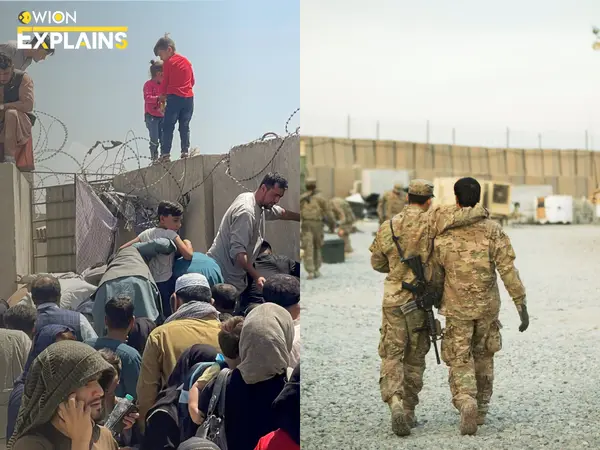
“On August 26, 2021, President Biden's administration led a chaotic withdrawal of U.S. military and embassy officials from Afghanistan that led to the deaths of 13 U.S. service members and 170 civilians in a suicide bombing at the Kabul International Airport's Abbey Gate.”
"I have concluded that we need to conduct a comprehensive review to ensure that accountability for this event is met and that the complete picture is provided to the American people," stated the memo.
What happened during the US withdrawal from Afghanistan? Here's the timeline.
Trending Stories
&imwidth=280&imheight=210&format=webp&quality=medium)
&imwidth=280&imheight=210&format=webp&quality=medium)
&imwidth=280&imheight=210&format=webp&quality=medium)
&imwidth=280&imheight=210&format=webp&quality=medium)
&imwidth=280&imheight=210&format=webp&quality=medium)
&imwidth=280&imheight=210&format=webp&quality=medium)
&imwidth=280&imheight=210&format=webp&quality=medium)
&imwidth=280&imheight=210&format=webp&quality=medium)
&imwidth=280&imheight=210&format=webp&quality=medium)
&imwidth=280&imheight=210&format=webp&quality=medium)
&imwidth=280&imheight=210&format=webp&quality=medium)
&imwidth=280&imheight=210&format=webp&quality=medium)
&imwidth=280&imheight=210&format=webp&quality=medium)
&imwidth=280&imheight=210&format=webp&quality=medium)
&imwidth=280&imheight=210&format=webp&quality=medium)
&imwidth=280&imheight=210&format=webp&quality=medium)
&imwidth=280&imheight=210&format=webp&quality=medium)
&imwidth=280&imheight=210&format=webp&quality=medium)
&imwidth=280&imheight=210&format=webp&quality=medium)
&imwidth=280&imheight=210&format=webp&quality=medium)
&imwidth=280&imheight=210&format=webp&quality=medium)
&imwidth=280&imheight=210&format=webp&quality=medium)
&imwidth=280&imheight=210&format=webp&quality=medium)
&imwidth=280&imheight=210&format=webp&quality=medium)
&imwidth=280&imheight=210&format=webp&quality=medium)
&im=FitAndFill=(700,400)&imwidth=280&imheight=210&format=webp&quality=medium)
&im=FitAndFill=(700,400)&imwidth=280&imheight=210&format=webp&quality=medium)
&imwidth=280&imheight=210&format=webp&quality=medium)
&imwidth=280&imheight=210&format=webp&quality=medium)
&imwidth=280&imheight=210&format=webp&quality=medium)
&imwidth=280&imheight=210&format=webp&quality=medium)
&imwidth=280&imheight=210&format=webp&quality=medium)
&imwidth=280&imheight=210&format=webp&quality=medium)
&imwidth=280&imheight=210&format=webp&quality=medium)
&imwidth=280&imheight=210&format=webp&quality=medium)
&imwidth=280&imheight=210&format=webp&quality=medium)
&imwidth=280&imheight=210&format=webp&quality=medium)
11 September 2001
The US is devastated by a massive terrorist strike. Four commercial airliners were hijacked by Al-Qaeda operatives, who then crashed three of them into the World Trade Centre in New York. The fourth one crashed into a field in Pennsylvania thanks to brave passengers.
Around three thousand people died in the terror attack.
In the aftermath, US President George W. Bush vowed to "win the war against terrorism".
Nineteen hijackers were involved in the attack, none of them Afghan citizens.
The Bush government zeroed in on Al-Qaeda and its leader, Osama bin Laden, who was located in Afghanistan. The US called on the Taliban regime to "deliver to the United States authorities all the leaders of al-Qaeda who hide in your land" or share in their fate.
18 September 2001
President George Bush signed into law a joint resolution authorising the use of force against the terrorists involved in the 9/11 attack.
7 October 2001
With British support, the US launched "Operation Enduring Freedom" and began a bombing campaign against Taliban forces. In the early phase, the US mainly carried out air strikes on al-Qaeda and Taliban forces. 12 days later, the first wave of conventional ground forces arrives.
November 2001
In a series of losses, the Taliban regime starts to unravel rapidly, with their strongholds crumbling.
14 November 2001
The UN Security Council (UNSC) passes Resolution 1378, calling for a "central role" for the United Nations in establishing a transitional administration and inviting member states to send peacekeeping forces to promote stability and aid delivery.
December 2001
Following the fall of Kabul in November 2001, with UN backing, major Afghan factions signed the Bonn Agreement and installed Hamid Karzai as the interim administration head and created an international peacekeeping force to maintain security in Kabul. Following this, UNSC Resolution 1386 on December 20 establishes the International Security Assistance Force, or ISAF.
December 2001
Taliban collapse and the fall can be tied to the surrender of Kandahar.
March 2002
The US launches its first major ground assault, called Operation Anaconda, against 800 al-Qaeda and Taliban fighters in the Shah-i-Kot Valley south of the city of Gardez (Paktia Province).
April 2002
President Bush calls for the reconstruction of Afghanistan.
Speaking at the Virginia Military Institute, he said, “By helping to build an Afghanistan that is free from this evil and is a better place in which to live, we are working in the best traditions of George Marshall.”
Between 2001 and 2009, the US Congress granted $38 billion in humanitarian and reconstruction assistance.
1 May 2011
Al-Qaeda leader Osama bin Laden was killed in Pakistan by US forces. Following this, the then-President Barack Obama prepared to announce the withdrawal of US troops from Afghanistan but was met with arguments for sustained military engagement.
22 June 2011
President Obama outlines a plan to withdraw thirty-three thousand troops by the summer of 2012—the surge troops sent in December 2009—including ten thousand by the end of 2011.
November 2011
The US marks ten years of war in Afghanistan. The war toll includes casualties of 1,800 US troop members and $444 billion in spending.
June 2013
Following peace talks, Afghan forces take the lead in security responsibility nationwide. The US-led coalition, meanwhile, switches to military training and special operations-driven counterterrorism. Talks continued in Doha, Qatar, between the Taliban and the US.
27 May 2014
President Obama announces a timetable for US troop withdrawal – to be completed by the end of 2016. The first phase of the plan calls for 9,800 troops to remain in Afghanistan, conducting operations against al-Qaeda and training Afghan forces.
September 2014
Newly elected Afghan president Mullah Abdul Ghani Baradar, a top Taliban official, and his chief opponent Abdullah Abdullah signed a power-sharing agreement.
21 August 2017
US President Donald Trump, in an address to troops in Arlington, Virginia, signals a prolonged Afghan war. He said that though his "original instinct was to pull out",
He will instead press on with an open-ended military commitment aimed at preventing the emergence of "a vacuum for terrorists".
29 February 2020
The US and the Taliban sign an agreement paving the way for peace in Afghanistan and the drawdown of US troops from Afghanistan. The agreement includes guarantees from the Taliban that the country would not be used for terrorist activities.
17 November 2020
Before the inauguration of President-elect Joe Biden, the then-acting US Defence Secretary Christopher C. Miller announced that the number of troops in Afghanistan would be halved to 2,500 by mid-January.
14 April 2021
Newly inaugurated President Joe Biden announces the US will withdraw all its troops by 11 September 2021. "It's time to end America’s longest war," he said.
15 August 2021
Taliban takeover of Kabul and the presidential palace. Leaders of the terror group say they will hold talks with Afghan officials to form an "open, inclusive Islamic government".
26 August 2021
12 members of the US military are killed and 18 are injured in an attack outside the Kabul airport amid "chaotic" troop withdrawal. At least 170 Afghans were also killed. The Islamic State in Khorasan claims responsibility, and several days later, the United States launches an air strike targeting a suspected plotter from the group.
30 August 2021
After twenty years of war, the last of the US military departs from Afghanistan, leaving the nation under its Taliban rulers.

