Among Muslim nations, how many have nuclear weapons? Saudi–Pak defence pact explained

&imwidth=600&imheight=450&format=webp&quality=medium "Among Muslim nations, how many have nuclear weapons? Saudi–Pak defence pact explained")
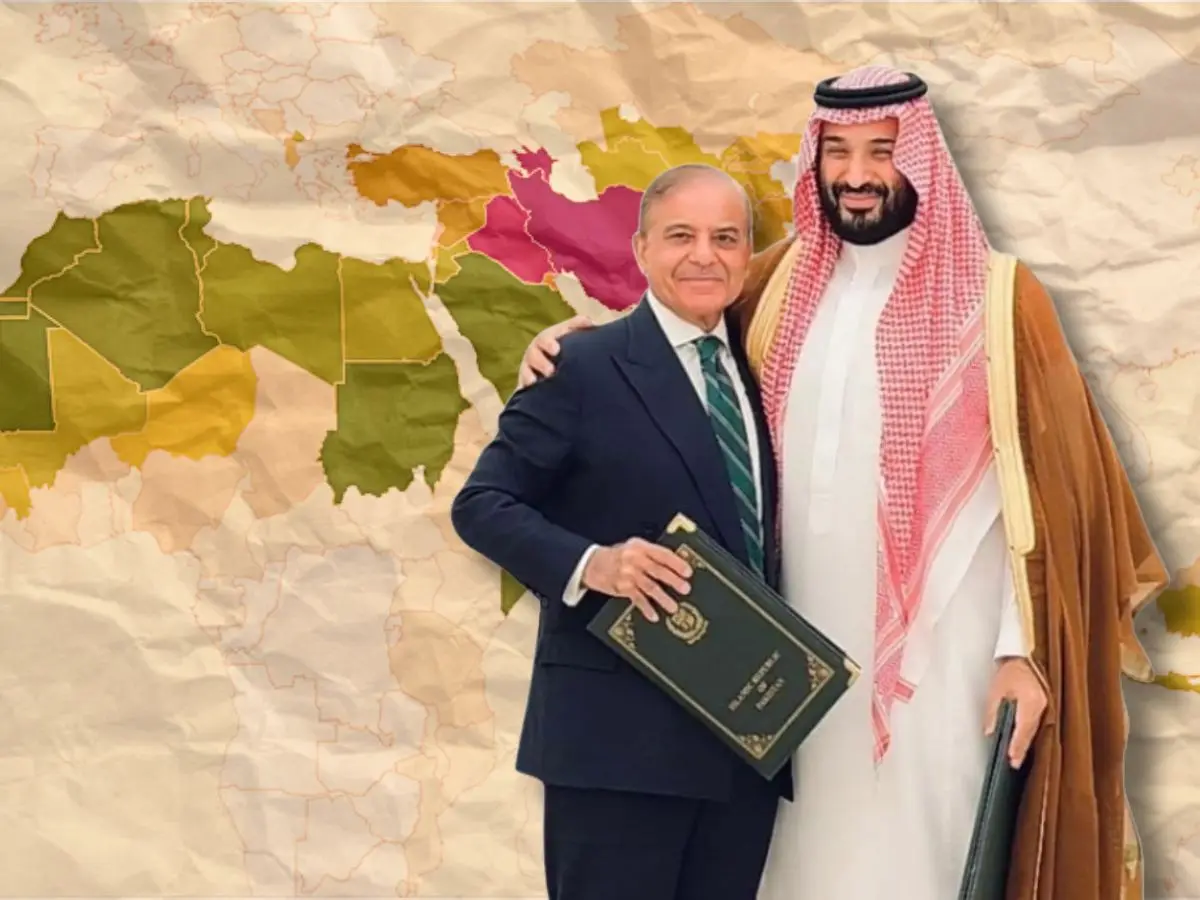
Among the 57 countries where Islam is the predominant religion, only one possesses nuclear weapons: Pakistan Photograph: (Wikimedia Commons, X/@CMShehbaz)
The arrangement allows Saudi Arabia to enjoy protection without possessing the weapons itself. Pakistan’s missiles, including the Shaheen-III with a range of 2,750 kilometres, provide the Kingdom with a credible deterrent capable of reaching virtually anywhere in its territory.
In a world where nuclear capabilities are often seen as symbols of power and deterrence, the Muslim-majority nations present a unique case. This fact stands in stark contrast to the global proliferation of nuclear arms and raises questions about the dynamics of power, security, and international relations within the Muslim world. On Wednesday, Saudi Arabia and nuclear-armed Pakistan signed a mutual defence pact, reinforcing a decades-old security partnership just a week after Israel’s strikes on Qatar reshaped regional diplomacy. Under the agreement, Pakistan is now committed to providing Saudi Arabia with a nuclear umbrella. “This is a comprehensive defensive agreement that encompasses all military means,” a Saudi official told Reuters.
The nuclear dimension has long been a central element of this relationship. In the 1970s, as Pakistan’s scientist AQ Khan developed the country’s secret nuclear programme, Project-706, Saudi funding supported much of it, covering up to 60 per cent of the main Kahuta facility. The arrangement allows Saudi Arabia to enjoy protection without possessing the weapons itself. Pakistan’s missiles, including the Shaheen-III with a range of 2,750 kilometres, provide the Kingdom with a credible deterrent capable of reaching virtually anywhere in its territory.
Pakistan: The Sole Nuclear-Armed Muslim Nation
Pakistan's journey to nuclear capability began in the early 1970s, driven by regional security concerns and the desire to establish a strategic deterrent. On May 28, 1998, Pakistan conducted its first nuclear tests, Chagai-I and Chagai-II, becoming the seventh nation globally to possess nuclear weapons and the first in the Muslim-majority world. As of 2025, estimates suggest Pakistan maintains a stockpile of approximately 170 nuclear warheads, according to the Federation of American Scientists.
Pakistan's nuclear doctrine, known as ‘Full Spectrum Deterrence,’ emphasises the use of its nuclear arsenal to deter any aggression, including conventional threats. Unlike some nuclear-armed nations, Pakistan does not adhere to a ‘no first use’ policy, maintaining the stance that it will use ‘any weapon in its arsenal’ to protect its interests in case of an aggressive attack. This policy underscores Pakistan's commitment to maintaining a credible deterrent against regional threats.
The Absence of Nuclear Weapons in Other Muslim-Majority Countries
Trending Stories
)
)
)
&im=FitAndFill=(700,400))
)
)
)
)
)
)
)
)
)
)
)
)
)
)
)
)
)
)
)
)
)
)
)
)
)
)
&im=FitAndFill=(700,400))
)
)
)
&im=FitAndFill=(700,400))
)
Despite the presence of numerous conflicts and security challenges across the Muslim-majority world, no other nation in this group has developed or acquired nuclear weapons. Countries like Saudi Arabia, Iran, and Turkey have pursued nuclear technology for energy and research purposes but have refrained from weaponization. Iran, for instance, maintains a nuclear program under the scrutiny of international agreements, while Saudi Arabia and Turkey have expressed interest in nuclear energy without clear intentions to develop nuclear arms.
This absence can be attributed to various factors, including international non-proliferation norms, economic considerations, and the strategic alliances these countries maintain with nuclear-armed states. Additionally, the ethical and religious perspectives within Islam regarding the use of weapons of mass destruction play a role in shaping national policies. Some scholars argue that Islamic teachings prohibit the development and use of such destructive weapons, influencing the stance of Muslim-majority nations on nuclear armament.
Implications for Regional and Global Security
Pakistan's status as the only Muslim-majority nuclear-armed nation has significant implications for regional security dynamics. It influences the security policies of neighboring countries and affects the broader strategic calculations of global powers engaged in the region. The concentration of nuclear capabilities in a single Muslim-majority country also impacts non-proliferation efforts and arms control initiatives within the Islamic world.
The unique position of Pakistan presents both opportunities and challenges. While it highlights the nation's strategic importance, it also places a responsibility on Pakistan to engage in regional stability efforts and contribute to global non-proliferation objectives.
Disclaimer: The views of the writer do not represent the views of WION or ZMCL. Nor does WION or ZMCL endorse the views of the writer.

