Who is Alice Weidel? The openly lesbian AfD leader driving Germany's far-right rise

&imwidth=600&imheight=450&format=webp&quality=medium "Who is Alice Weidel? The openly lesbian AfD leader driving Germany's far-right rise")
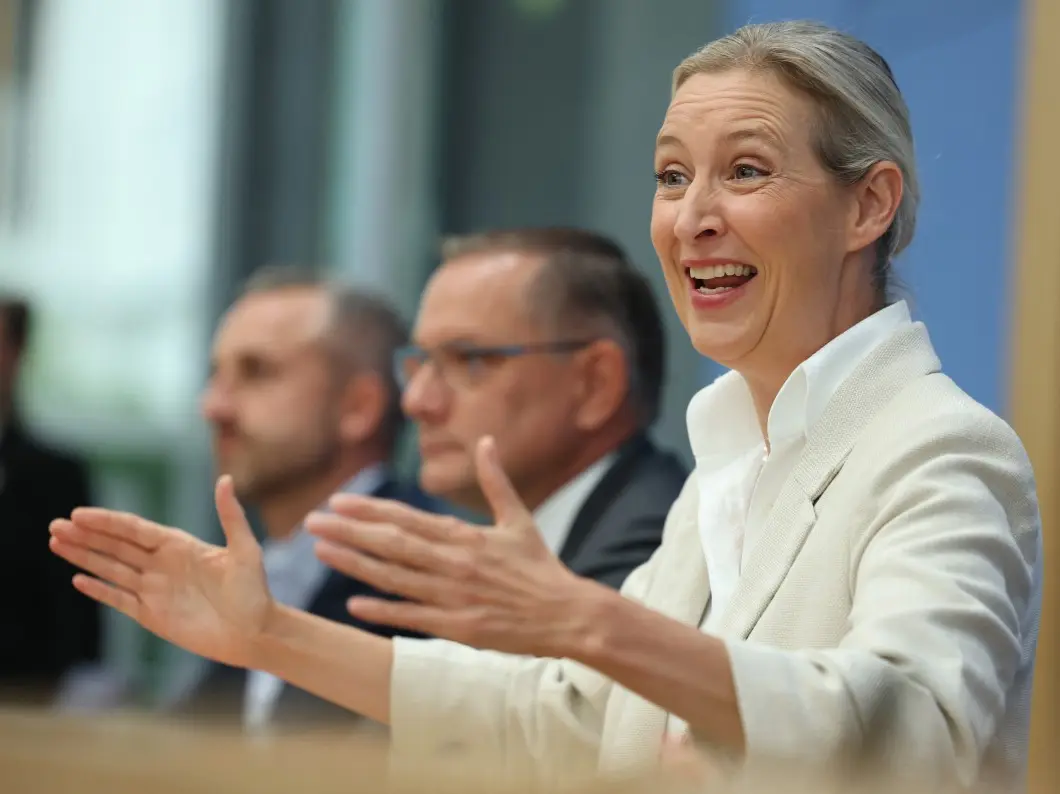
Alice Weidel, co-leader of the far-right Alternative for Germany (AfD) party, speaks during a press conference in Berlin on September 7, 2026 Photograph: (AFP)
Alice Weidel, AfD co-leader, has emerged as a key figure in Germany's far-right rise despite being openly lesbian and married to an immigrant.
AfD, which secured a dramatic victory at the September 2026 Saxony-Anhalt state election, is driven by politics of anti-immigrant and anti-same-sex marriage, which are sometimes considered outright racist. Alice Weidel, the co-leader of the Alternative for Germany (AfD) party who had been at the centre of the party's rise, has been a controversial figure, not because of her speeches but because of her homosexual identity.
Who is Alice Weidel?
The 45-year-old is married to a Sri Lankan-born woman, a filmmaker and is raising two children, primarily in Einsiedeln, Switzerland. Weidel described her upbringing as highly political. Her parents did not belong to any political party, but her grandfather was a prominent Nazi judge, according to the German newspaper Die Welt and her family was expelled from Silesia, now in Poland, after World War Two.
She studied Business and economics and joined Goldman Sachs, grew bored and moved to China, where she learned Mandarin and got a doctorate in the Chinese pension system while working as a Business Consultant.
She joined AfD in 2013 during the Eurozone bailout; her party opposed it vehemently. Soon, the party started to take more anti-immigration stances. Weidel modelled herself around the economic policies of the neoliberal British leader Margaret Thatcher and argued for a Brexit-style referendum on EU membership.
Trending Stories
&imwidth=280&imheight=210&format=webp&quality=medium)
&imwidth=280&imheight=210&format=webp&quality=medium)
&imwidth=280&imheight=210&format=webp&quality=medium)
&imwidth=280&imheight=210&format=webp&quality=medium)
&imwidth=280&imheight=210&format=webp&quality=medium)
&imwidth=280&imheight=210&format=webp&quality=medium)
&imwidth=280&imheight=210&format=webp&quality=medium)
&imwidth=280&imheight=210&format=webp&quality=medium)
&imwidth=280&imheight=210&format=webp&quality=medium)
&imwidth=280&imheight=210&format=webp&quality=medium)
&imwidth=280&imheight=210&format=webp&quality=medium)
&imwidth=280&imheight=210&format=webp&quality=medium)
&imwidth=280&imheight=210&format=webp&quality=medium)
&im=FitAndFill=(700,400)&imwidth=280&imheight=210&format=webp&quality=medium)
&imwidth=280&imheight=210&format=webp&quality=medium)
&imwidth=280&imheight=210&format=webp&quality=medium)
&imwidth=280&imheight=210&format=webp&quality=medium)
&imwidth=280&imheight=210&format=webp&quality=medium)
&imwidth=280&imheight=210&format=webp&quality=medium)
&imwidth=280&imheight=210&format=webp&quality=medium)
&imwidth=280&imheight=210&format=webp&quality=medium)
&imwidth=280&imheight=210&format=webp&quality=medium)
&imwidth=280&imheight=210&format=webp&quality=medium)
&imwidth=280&imheight=210&format=webp&quality=medium)
&imwidth=280&imheight=210&format=webp&quality=medium)
&imwidth=280&imheight=210&format=webp&quality=medium)
&imwidth=280&imheight=210&format=webp&quality=medium)
&imwidth=280&imheight=210&format=webp&quality=medium)
&imwidth=280&imheight=210&format=webp&quality=medium)
&im=FitAndFill=(700,400)&imwidth=280&imheight=210&format=webp&quality=medium)
&imwidth=280&imheight=210&format=webp&quality=medium)
&imwidth=280&imheight=210&format=webp&quality=medium)
&imwidth=280&imheight=210&format=webp&quality=medium)
&imwidth=280&imheight=210&format=webp&quality=medium)
&imwidth=280&imheight=210&format=webp&quality=medium)
In 2016, the party shifted from conservative economic and immigration policies to a more neo-conservative position with the adoption of the Stuttgart Manifesto- the party's first formal manifesto. It identified family exclusively as a mother, father, and children. It introduced proposals such as stopping sexual diversity education in schools as “early sexualisation”. They formally declared opposition to full marriage equality.
Alice's own sexual identity becomes paradoxical in AfD. The co-leader of an anti-immigrant and anti-LGBTQ+ party, AfD – with which the mainstream right in Germany is hesitant to associate – is herself homosexual and married to an immigrant.
When confronted about why, as a lesbian woman, she is a member of a homophobic party, she said that because she is a lesbian and co-leader of AfD is a political message. According to her, violence against gays comes especially from ‘Muslim gangs’, they will provide safety to homosexuals by tackling the immigration problem.