8 engines, 32,000kg payload, 50,000ft ceiling: Why the B-52 Stratofortress is the most terrifying aircraft ever built

&imwidth=600&imheight=450&format=webp&quality=medium "8 engines, 32,000kg payload, 50,000ft ceiling: Why the B-52 Stratofortress is the most terrifying aircraft ever built")
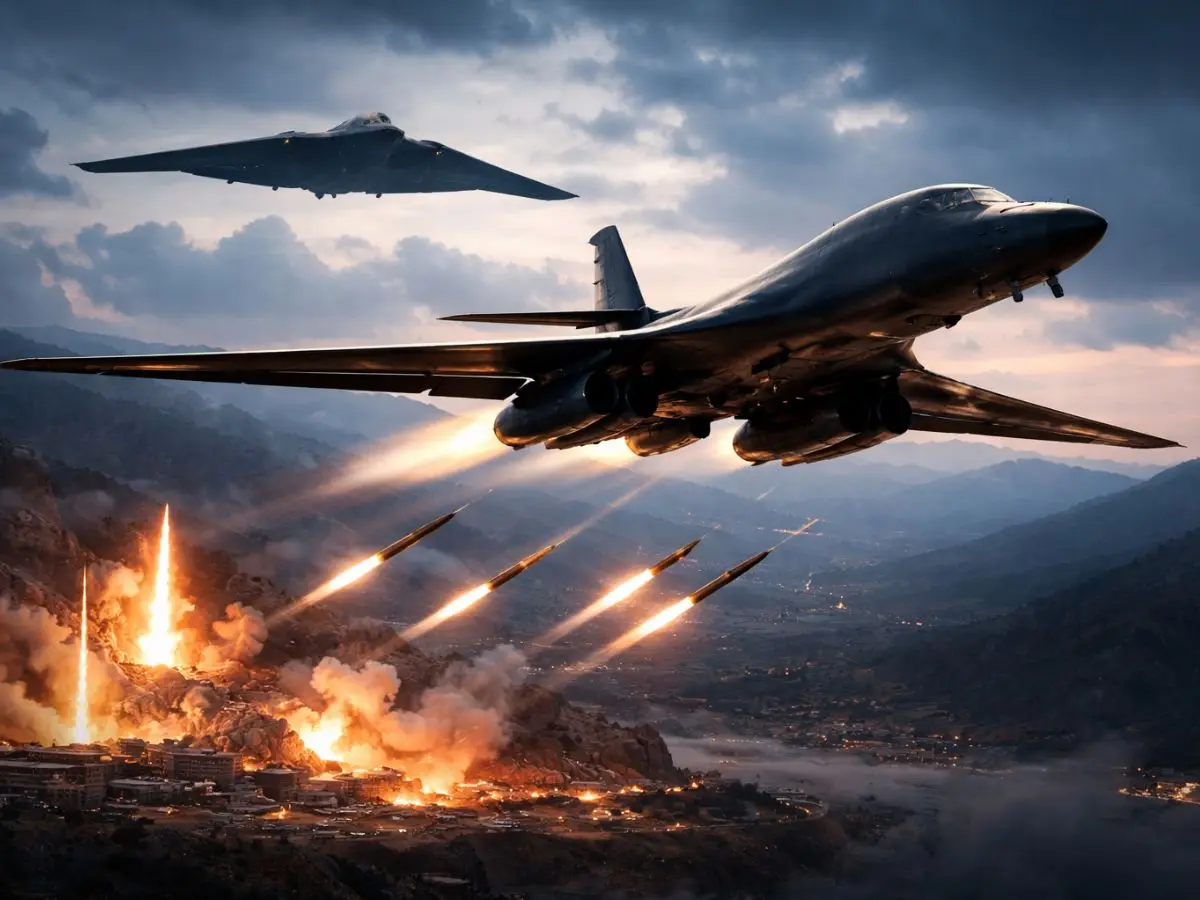
8 engines, 32,000kg payload, 50,000ft ceiling: Why the B-52 Stratofortress is the most terrifying aircraft ever built Photograph: (AI Generated)
It flies at 50,000 feet, carries 32,000 kilograms of weapons, has a range of over 14,000 km, and can deliver nuclear warheads, conventional bombs, cruise missiles and hypersonic test vehicles from the same aircraft.
There are more powerful explosives in the world. There are faster aircraft. There are stealthier platforms. But when it comes to the combination of range, payload, versatility and sheer endurance, nothing in the history of military aviation comes close to the Boeing B-52 Stratofortress. It has been in continuous service for over 70 years, and its raw specifications still make it one of the most formidable aircraft flying today.
The Numbers
The B-52H — the version currently operated by the US Air Force, is powered by eight Pratt and Whitney TF33 turbofan engines, currently being replaced with new Rolls-Royce F130 powerplants under a $2 billion upgrade programme. It has a wingspan of 56 metres (185 feet) and a length of just under 50 metres. It can fly at speeds up to Mach 0.9 (960 km/h) and has a service ceiling of 50,000 feet. Unrefuelled, it can cover over 14,000 kilometres, roughly the distance from New York to Sydney. With aerial refuelling, that range becomes effectively unlimited.
The Payload That Defines It
The B-52 can carry up to 32,000 kilograms (70,000 pounds) of weapons, a figure that covers an extraordinary range of armaments. It can carry conventional unguided bombs in its bomb bay and on underwing pylons. It can carry precision-guided munitions including GPS-guided JDAMs, laser-guided bombs, and standoff cruise missiles including the AGM-86. It is nuclear-capable, certified to carry the B61 and B83 nuclear gravity bombs as well as nuclear-tipped cruise missiles. More recently, it has been used as a testbed for experimental hypersonic weapons. No other aircraft in service anywhere in the world can perform this range of missions in a single airframe.
A Five-Person Crew Flying a 60-Year-Old Jet
Trending Stories
)
)
)
)
)
)
)
)
)
)
)
)
)
)
)
)
)
)
)
)
)
)
)
)
)
)
)
)
)
)
)
)
)
)
&im=FitAndFill=(700,400))
)
)
)
&im=FitAndFill=(700,400))
)
)
Despite all of this capability, the B-52H is crewed by just five people: an aircraft commander, a pilot, a radar navigator, a navigator, and an electronic warfare officer. The crew compartment has been described as spartan even by Cold War standards, cramped, dated, and kept functional more through maintenance than modernity. The aircraft's avionics are being completely replaced as part of the ongoing B-52J upgrade programme, which will fit all 76 remaining aircraft with a new Raytheon AESA radar, new communications systems, and a redesigned crew environment.
What It Actually Feels Like To Encounter One
The B-52 is not stealthy. It is not quiet. It is 49 metres long, has a massive radar cross-section, and its eight engines are audible from a considerable distance. But that visibility is also part of its deterrent value. When the US Air Force wants to send an unmistakable message to an adversary, it flies B-52s into the region. It happened repeatedly during tensions with North Korea. It happened in the South China Sea. It happened during Russia's buildup around Ukraine. The Stratofortress does not need to be invisible to be effective. In many scenarios, being very visibly present, and carrying 32,000 kilograms of ordnance is exactly the point.
