Wildfire the size of 140 football fields edges closer to nuclear plant in UK. Here's what experts think can happen

&imwidth=600&imheight=450&format=webp&quality=medium "Wildfire the size of 140 football fields edges closer to nuclear plant in UK. Here's what experts think can happen")
Sizewell B nuclear power station could soon be shrouded by flames from a major wildfire. Photograph: (AFP)
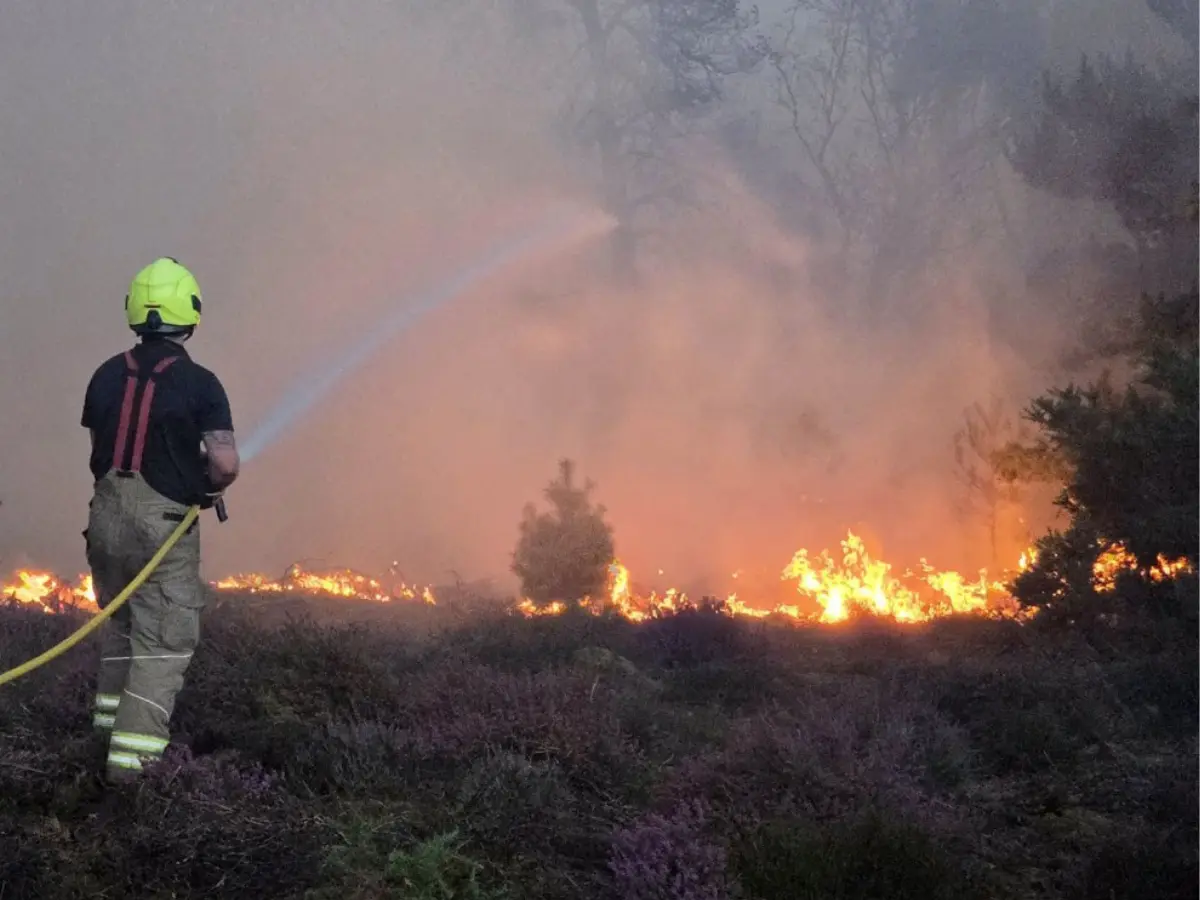
A major wildfire in Suffolk, Britain, is moving closer to the Sizewell B nuclear power station. Is the plant in danger of damage from the wildfire? Experts weigh in on the matter, explaining what could happen if the fire gets too close to the nuclear power plant.
The raging wildfire in Suffolk, an English county, is threatening one of Britain’s key nuclear power stations. The blaze at Dunwich Heath is about three miles north of Sizewell B nuclear power station. The Suffolk Fire and Rescue Service has declared the wildfire a major incident, prompting an emergency response as people fled the area. Even as the fire seems to be closing in on the nuclear site, the plant has denied reports that it has been placed on "high alert". However, there are concerns that if weather conditions change, smoke could pose a threat to the nuclear plant.
“If the wind changes or the fire spreads closer to Sizewell, smoke could be drawn into the station’s heating, ventilation and air conditioning systems,” a source told London Loves Business, adding that operations could be affected in some parts of the facility. However, experts say the plant itself is in very little danger.
Also Read: Cataclysmic Bordeaux wildfire is generating its own thunderstorms inside massive fire cloud
Suffolk nuclear plant could witness a SCRAM
Professor Joel Turner, Rolls-Royce Chair in Nuclear Fuel Technology at the University of Manchester's Dalton Nuclear Institute, told The Daily Mail that the reactor could be rapidly shut down by triggering a SCRAM. As the name suggests, it is a quick procedure where control rods are inserted into the reactor core in less than a second. Explaining what could happen, he said that normally SCRAM would be deployed "if it was unsafe to keep the plant fully staffed" and "not because of physical danger to the reactor itself."
Trending Stories
)
)
)
)
&im=FitAndFill=(700,400))
)
&im=FitAndFill=(700,400))
)
)
)
)
)
&im=FitAndFill=(700,400))
)
)
)
)
)
)
)
)
)
)
)
)
)
&im=FitAndFill=(700,400))
)
)
)
)
)
)
)
)
)
)
)
)
He added that the main problem that could occur from the wildfire is maintaining the connection to the electricity grid, which helps power its cooling systems. However, even if there was a problem with it, the plant's multiple backup cooling systems and diesel-powered generators will keep the reactor safe.
Besides, the fact that it is an industrial site will also safeguard the plant, as the network of large access roads would act as natural firebreaks. Professor Mike Bluck, Professor of Nuclear Engineering at Imperial College London, said the reactor was built to withstand all types of hazards, including fires. If the fire still manages to come extremely close to the station, it would simply be shut down, and the backup cooling systems would keep it safe. The site also has its own fully equipped fire service and specially trained emergency personnel.
"The reactor core sits within a 20cm thick steel vessel, which is surrounded by a reinforced concrete containment," he said, adding that "breaching of the containment and pressure vessel is unimaginable." Bluck clarified that this is not an unprecedented situation, as many of France's nuclear power stations are located close to areas regularly affected by much larger wildfires, and there has never been any nuclear accident.
The Suffolk wildfire spread from 24 acres to about 247 acres by mid-Thursday, Suffolk Fire and Rescue Service said. This is about the size of 140 football pitches.

