Jar of death? Stone container with remains of 37 mystery humans found in Laos

&imwidth=600&imheight=450&format=webp&quality=medium "Jar of death? Stone container with remains of 37 mystery humans found in Laos")
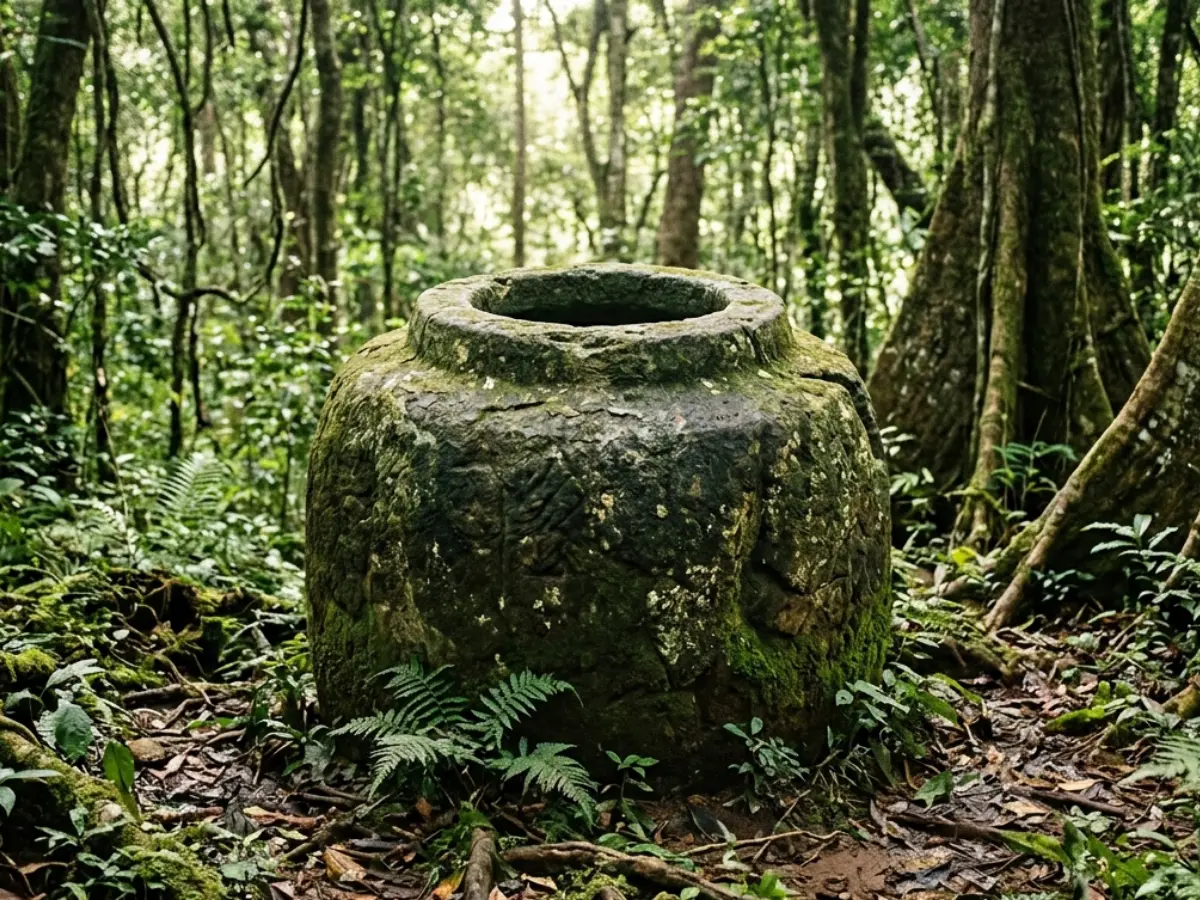
(AI-generated) In Northern Laos's Xieng Khouang Plateau, a stone jar has been found with the remains of 37 ancient humans.
A huge megalithic stone jar in Laos was discovered with human remains inside it. Archaeologists found bones and teeth of 37 people in it, who lived nearly 1,000 years ago. They do not know who these people were and are trying to gather DNA to learn about them.
Archaeologists were left stunned when they found a jar with human remains in Northern Laos's Xieng Khouang Plateau. They belong to 37 people who lived 1,000 years ago, a study states. Human bones have been previously found in such jars in the past as well, but they were all burnt. “We were very excited because it was the first time we found non-burnt bones inside a jar,” lead author of the study, Nicholas Skopal, said, according to National Geographic.
The site where the discovery was made is itself more than 1,000 years old, but has been a mystery to archaeologists for nearly a century. They have been working for decades to understand more about its purpose. Some archaeologists had previously found ashes and burnt bones in other jars. But the latest megalithic stone jar to have been found has revealed something they had never seen before.
A jar used for funeral purposes?
Excavation work was carried out between 2022 and 2024, which led to the unearthing of this stone jar. It is four feet high and seven feet wide, and contains the remains of 37 people. Named Jar 1, scientists found, using dating methods, that it was used for generations by ancient people between 890 AD and 1160 AD. The jar was likely used for some sort of ancient funerary process, acting as a burial space where large bones and skulls were set near the outer edges.
Also Read: 3,000 years ago, humanity spoke thousands of languages — then fell silent. Where did they all go?
Archaeologists also found an iron knife, a copper bell, stone slabs, and shards of earthenware.
Trending Stories
)
)
)
&im=FitAndFill=(700,400))
)
)
)
)
)
)
)
)
)
)
)
)
)
)
)
)
)
)
)
)
)
)
)
)
)
)
&im=FitAndFill=(700,400))
)
)
)
&im=FitAndFill=(700,400))
)
Skopal said they also found glass beads, which they think could have been an offering to the dead. However, Kelly Brandão, an archaeologist with the University of São Paulo and Mamirauá Institute at Tefé, isn't sure if the jar's sole purpose was acting as a place of burial. "We can't know for sure if the vase was really made with the burial objective in sight," she said.
From single jars to collecting bones in a second jar
Skopal, meanwhile, has another theory. He thinks that each body was first placed in individual jars where they were left to decompose. After the skin came off, the bones were placed "as secondary bundles into the larger jar", acting as the final resting place. He admits it is just a theory, especially with the discovery of more teeth than their skulls.
The researchers are now working to get DNA from the Plain of Jars to understand who these people were and where they lived, which Skopal admits is not going to be easy because of the tropical climate.

