New muscle for India: Pralay missile’s message to Beijing and Islamabad

&imwidth=600&imheight=450&format=webp&quality=medium "New muscle for India: Pralay missile’s message to Beijing and Islamabad")
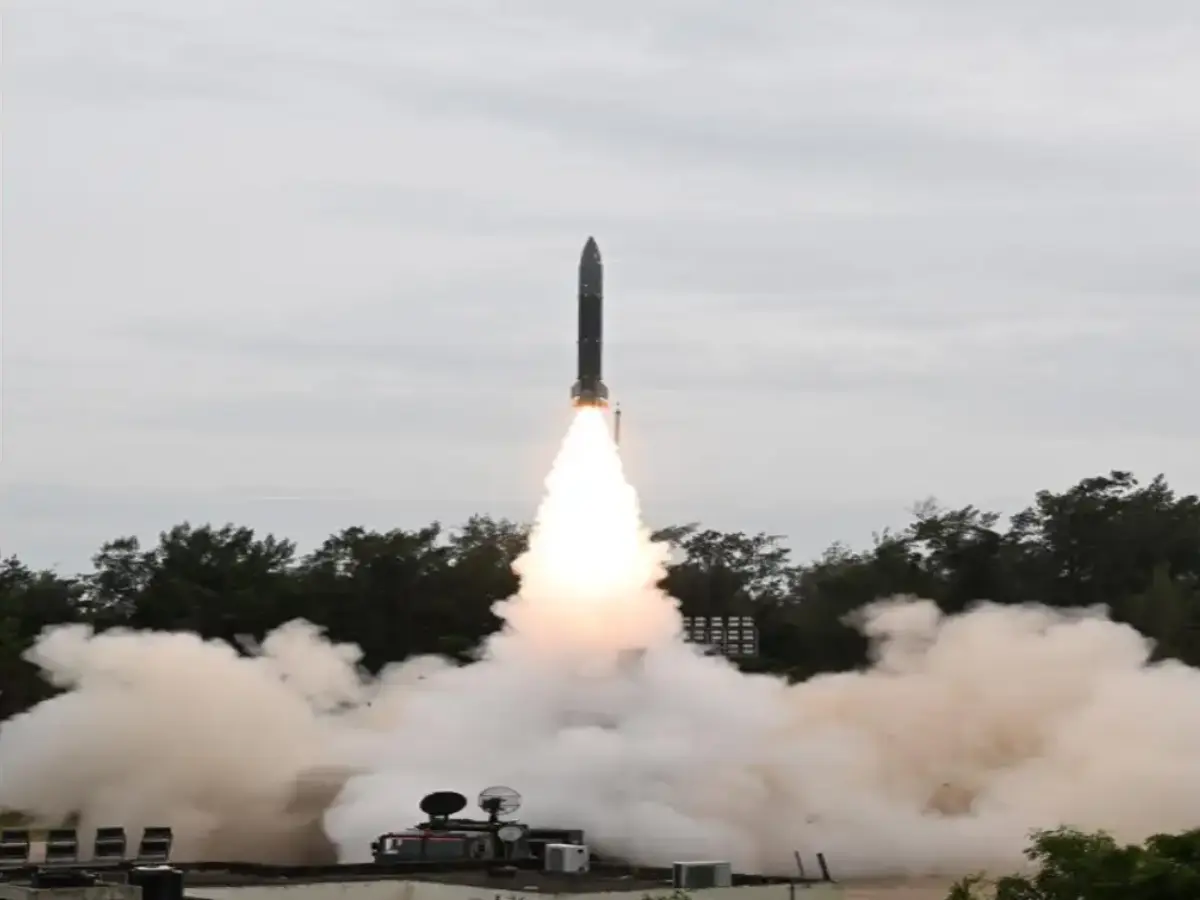
Two consecutive flight tests of Pralay Missile were conducted successfully by DRDO from Dr APJ Abdul Kalam island off the coast of Odisha. Photograph: (PTI)
India has just taken a big step towards strengthening its defence with the successful testing of the 'Pralay' missile. Developed by our very own Defence Research and Development Organisation (DRDO), Pralay was test-fired twice on July 28 and 29 from Dr. APJ Abdul Kalam Island in Odisha.
India has just taken a big step towards strengthening its defence with the successful testing of the 'Pralay' missile. Developed by our very own Defence Research and Development Organisation (DRDO), Pralay was test-fired twice on July 28 and 29 from Dr. APJ Abdul Kalam Island in Odisha. Both times, it hit its targets with great accuracy. This is more than just a new missile—it's a powerful message to any nation that threatens our borders.
What is Pralay?
To put it simply, Pralay is like a smart, powerful arrow that can fly between 150 to 500 kilometres and hit its target with precision. It is a surface-to-surface missile, meaning it is launched from the ground and hits a ground target. It is not designed to shoot down planes or enemy missiles.
Unlike traditional ballistic missiles that fly in a high arc and are easier to track, Pralay follows a quasi-ballistic path. That means it flies at a lower height and can change its path mid-air. This makes it much harder for the enemy to detect and destroy. Think of it like a clever cricketer who suddenly changes his shot and confuses the fielder.
Pralay carries powerful conventional (non-nuclear) explosives, weighing between 350 to 700 kilograms. These are strong enough to destroy enemy command centres, radar posts, airfields, and other military sites.The missile reaches terminal speed of Mach 6.1,making it extremely difficult to intercept.
Fast, Mobile and Made in India
Trending Stories
&imwidth=280&imheight=210&format=webp&quality=medium)
&imwidth=280&imheight=210&format=webp&quality=medium)
&imwidth=280&imheight=210&format=webp&quality=medium)
&imwidth=280&imheight=210&format=webp&quality=medium)
&imwidth=280&imheight=210&format=webp&quality=medium)
&imwidth=280&imheight=210&format=webp&quality=medium)
&im=FitAndFill=(700,400)&imwidth=280&imheight=210&format=webp&quality=medium)
&imwidth=280&imheight=210&format=webp&quality=medium)
&imwidth=280&imheight=210&format=webp&quality=medium)
&imwidth=280&imheight=210&format=webp&quality=medium)
&imwidth=280&imheight=210&format=webp&quality=medium)
&imwidth=280&imheight=210&format=webp&quality=medium)
&imwidth=280&imheight=210&format=webp&quality=medium)
&imwidth=280&imheight=210&format=webp&quality=medium)
&imwidth=280&imheight=210&format=webp&quality=medium)
&imwidth=280&imheight=210&format=webp&quality=medium)
&imwidth=280&imheight=210&format=webp&quality=medium)
&imwidth=280&imheight=210&format=webp&quality=medium)
&imwidth=280&imheight=210&format=webp&quality=medium)
&imwidth=280&imheight=210&format=webp&quality=medium)
&imwidth=280&imheight=210&format=webp&quality=medium)
&imwidth=280&imheight=210&format=webp&quality=medium)
&imwidth=280&imheight=210&format=webp&quality=medium)
&im=FitAndFill=(700,400)&imwidth=280&imheight=210&format=webp&quality=medium)
&imwidth=280&imheight=210&format=webp&quality=medium)
&imwidth=280&imheight=210&format=webp&quality=medium)
&imwidth=280&imheight=210&format=webp&quality=medium)
&imwidth=280&imheight=210&format=webp&quality=medium)
&imwidth=280&imheight=210&format=webp&quality=medium)
&imwidth=280&imheight=210&format=webp&quality=medium)
&imwidth=280&imheight=210&format=webp&quality=medium)
&imwidth=280&imheight=210&format=webp&quality=medium)
Pralay is a proud symbol of Atmanirbhar Bharat—self-reliant India. It runs on solid fuel, meaning it can be launched quickly during emergencies. It is also mobile, as it can be launched from a special 8-wheeled military vehicle called a Tatra transporter launcher, built by BEML. The newer variants also use advanced 12×12 Ashok Leyland high mobility vehicles with twin-launcher systems.
The missile is quite large—weighing around 4-5 tonnes and measuring approximately 7-8 metres in length. Yet, it's cost-effective compared to many foreign options, though exact cost figures vary across different procurement batches. The tests completed under Phase-1 trials have now cleared the way for Pralay's early induction into the Indian Army and Air Force.
How Does It Help India?
India shares borders with China and Pakistan, both of whom have tactical ballistic missiles. China, for example, has the Dongfeng-12 (DF-12) with a range of 100-280 km (up to 400+ km for domestic variants), and Russia has the Iskander missile. With Pralay, India joins this elite group of countries with similar capabilities.
- Deterring Pakistan
Pralay can strike deep inside Pakistan without needing to use nuclear weapons. This gives India a strong and quick conventional option to respond to any attack—without the fear of escalating to a nuclear war. It can easily target key enemy bases, communication centres, or supply lines. And since it flies unpredictably, it is very hard to shoot down.
Imagine Pakistan tries a small-scale military attack. With Pralay, India can strike back hard and fast—hitting exactly where it hurts, while keeping the response within safe limits. This deterrent power is what makes Pralay a game-changer.
- Countering China
At the Line of Actual Control (LAC), China has deployed many missiles. Their People's Liberation Army Rocket Force (PLARF) is large and well-equipped. But Pralay directly challenges them.
It can match missiles like the DF-12 and hit Chinese military posts, airfields, or troop camps in Tibet. Its smart flying pattern makes it hard for China's powerful HQ-9 air defense system to stop it. This means Pralay gives India the ability to strike with surprise and keep China guessing, especially during any standoff at the border.
- A New Missile Force for India
There are plans to form an Integrated Rocket Force in India, where Pralay will play a key role alongside other systems like Nirbhay (subsonic cruise missile), BrahMos (supersonic cruise missile), and Pinaka (multiple rocket launcher system). This will be a separate military wing focused only on conventional missiles. It won't mix with India's nuclear command, which follows the clear principle of 'No First Use'.
This is important because it shows that India is serious about building non-nuclear deterrence, which keeps peace and reduces chances of mistakes during tensions. Pralay is accurate, cost-effective, and can be widely deployed—making it the perfect fit for this new force.
- Strategic Procurement and Deployment
The Ministry of Defence has already approved significant procurement orders for Pralay missiles. In December 2022, around 120 missiles were cleared for the Indian Air Force, followed by approval for a regiment's worth of missiles for the Indian Army in September 2023. The missiles are specifically being deployed along the Line of Actual Control (LAC) with China and the Line of Control (LoC) with Pakistan for tactical roles.
- A Symbol of India's Growing Strength
In the end, Pralay is much more than a missile. It reflects India's scientific talent, military readiness, and strategic maturity. It's a clear signal to the world that India can protect its borders without having to depend on anyone.
The successful completion of these Phase-1 flight tests, as confirmed by DRDO Chairman Dr. Samir V. Kamat, paves the way for induction of the system into the Armed Forces in the near future. Defence Minister Rajnath Singh has noted that the missile equipped with modern technologies will give a further technological boost to the Armed Forces against emerging threats.
Thanks to our scientists, engineers, and brave defence forces, we now have a missile that can give quick and powerful answers to any threat—without stepping into dangerous territory. For every Indian, this is a moment of pride.
We are moving forward. We are getting stronger. And with weapons like Pralay, we are safer too.
