Air quality in Delhi improves slightly, stubble burning continues in neighbour states

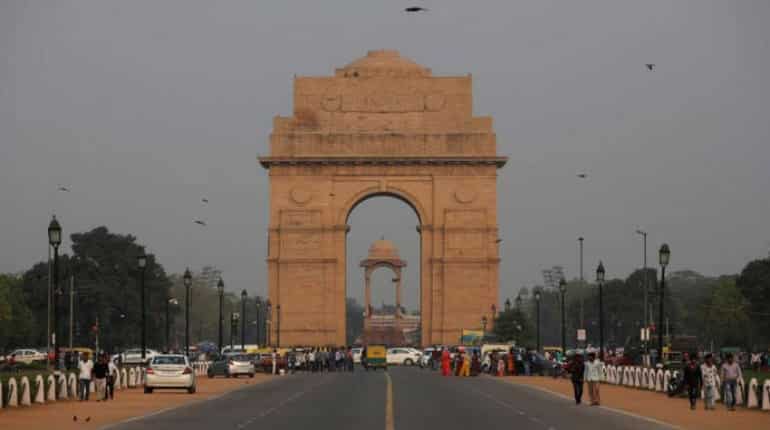
India Gate
Air Quality Index (AQI) in Delhi dropped slightly on Friday morning representing improved air quality in the national capital. The city recorded an AQI of 198. On Thursday, the average AQI was recorded to be 208. AQI of 198 falls in 'moderate' category.
Delhi's air quality had turned poor on Wednesday, the first time in since June 29, with the Central Pollution Control Board (CPCB) recording a 24-hour average AQI of 215. The AQI was 230 on June 29.
An AQI between 0 and 50 is considered 'good', 51 and 100 'satisfactory', 101 and 200 'moderate', 201 and 300 'poor', 301 and 400 'very poor', and 401 and 500 'severe'.

Ministry of Earth Sciences' air quality monitor SAFAR said that AQI may improve by Saturday.
A gradual increase in farm fires around Punjab, Haryana and other areas has been seen. Wind direction and speed are favourable for transport of pollutants toward Delhi. However, a shift in wind direction is expected.
High levels of air pollution in Delhi is a year-round problem, which can be attributed to unfavourable meteorological conditions, farm fires in neighbouring regions and local sources of pollution.
)
‘I have a big decision coming up’: Trump says he’s approaching major ‘crossroad’ in Iran war
)
Abhishek Sharma shatters record with 30-ball century against Afghanistan
)
India seeks to build a full semiconductor supply chain
)
US intel warns China can steal F-35 jets secret from Saudis
)
Former India player Diana Edulji wants Smriti Mandhana to replace Harman as skipper at the earliest
)
Pak defence minister says 'time has come to implement pact'
)
Formula One reveals the 2027 race calendar; Monaco to host sprint race for the first time
&im=FitAndFill=(700,400))
Meet top 5 batters in the latest ICC T20I Rankings
)
All Indian goods to get duty-free access to New Zealand
)
AI already defying, denying humans, is it beyond human control already?
)
240-million-year-old bizarre 'pig with a tusk' creature creates new dilemma over origin of dinosaurs
)
US to sell 48 F-35 Lightning fighter jets to Saudi Arabia, help it deter threats
)
Hong Kong unveils 11 new measures to boost birth rates, offers higher cash bonuses and housing perks
)
Former OpenAI researcher warns of growing risks from Artificial Intelligence
)
Tata Trusts chairman Noel Tata calls Chandrasekaran’s reappointment ‘illegal’, rejects Tata Sons listing
)
Dolly Parton dies at 80: Country legend’s team reveals cause of death
)
Hong Kong extends newborn cash support scheme by three years
)
Fed raises rates for first time in 3 years, Kevin Warsh defies Trump as inflation mounts
)
US drone firm linked to Trump’s sons signs MoU with Pakistan army, gets initial order
)
Pak batter Rizwan's petition against being questioned by cyber crime agency rejected by court
)
Daayra movie review: Kareena Kapoor, Prithviraj Sukumaran shine in Meghna Gulzar’s cop-versus-cop crime thriller
)
Trump could impose tariffs of up to 100%
)
Want to get married within a year? Why 18 lakh people rush to Jaipur for ‘sacred henna’
&im=FitAndFill=(700,400))
Suriya and Jyothika say ‘I do’ again after 20 years! See their dreamy wedding pics
)
Laura Wolvaardt sets new world record for most WT20I runs in a year
)
Mahua Moitra moves UN over alleged exclusion of Muslim officers from Amit Shah events
)
Pezeshkian, Araghchi set to attend UNGA 2026 in New York amid ongoing conflict as US-imposed travel curbs remain
)
Ukraine plans record $109 bn defence spending, nearly two thirds of budget amid Russia war
Also Read | Crowds throng Delhi's small eatery 'Baba Ka Dhaba' as emotional video goes viral
According to an analysis by the Council on Energy, Environment and Water, a Delhi-based think tank, transportation contributes the most -- 18 to 39 per cent -- to Delhi's air pollution.
Road dust is the second-largest source of air pollution in the city (18 to 38 per cent), followed by industries (2 to 29 per cent), thermal power plants (3 to 11 per cent) and construction (8 per cent).
The Delhi government on Monday launched a massive anti-air pollution campaign.
Chief Minister Arvind Kejriwal said he himself will review the situation daily.
A "green" war room was also inaugurated by Environment Minister Gopal Rai at the Delhi Secretariat to monitor the steps being taken to deal with high levels of air pollution in winters.
The government will also start the spraying of 'Pusa bio-decomposer' solution in non-Basmati rice fields in the national capital, starting October 11.
The solution, experts say, can turn stubble into manure in 15 to 20 days and therefore, can prevent stubble burning.
Starting October 15, stricter measures to fight air pollution will also come into force in Delhi and its neighbourhood as part of the Graded Response Action Plan, which was first implemented in Delhi-NCR in 2017.
These measures include increasing bus and metro services, hiking parking fees and stopping use of diesel generator sets when the air quality turns poor.
When the situation turns "severe", GRAP recommends closure of brick kilns, stone crushers and hot mix plants, sprinkling of water, frequent mechanised cleaning of roads and maximising power generation from natural gas.
The measures to be followed in the "emergency" situation include stopping entry of trucks in Delhi, ban on construction activities and introduction of the odd-even car rationing scheme.
(With PTI inputs)