Nirmala Sitharaman says burden on middle class narrative ‘not based on facts’; clarifies real estate taxes

Nirmala Sitharaman
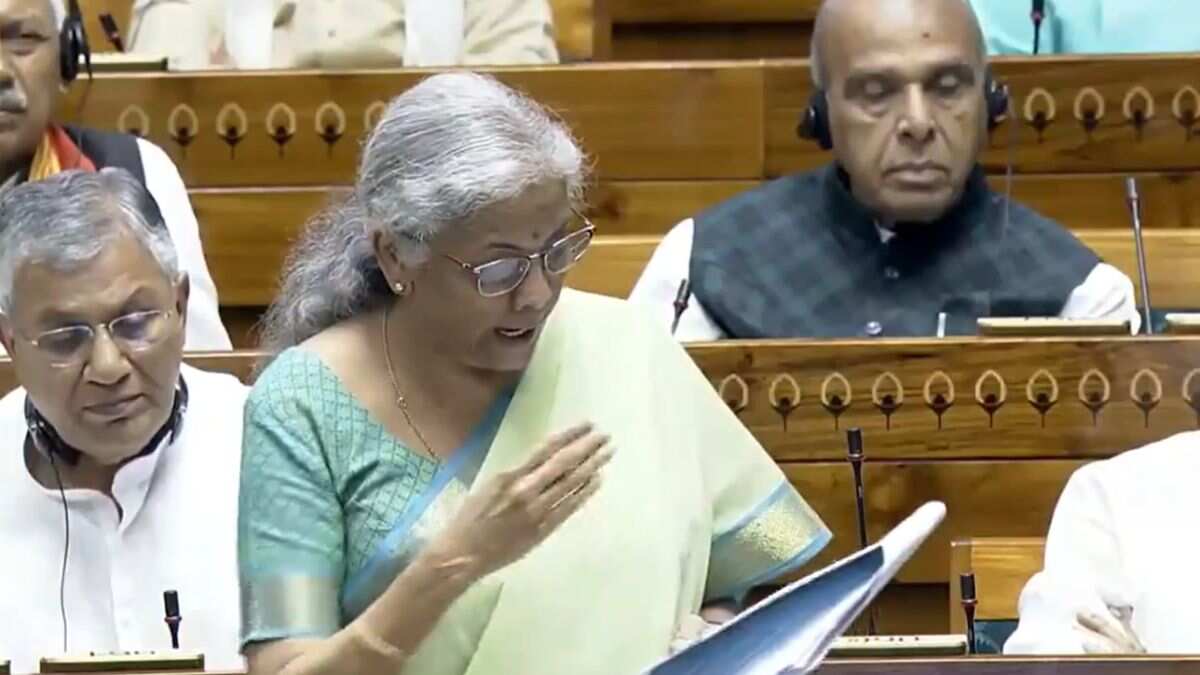
Indian Finance Minister Nirmala Sitharaman on Wednesday (August 7) said "we heard the people" as she confirmed revisedreal estate indexation rules in the Parliament.
With the relaxed rules,taxpayers will get more flexibility in calculating their long-term capital gains tax.
"The amendment gives taxpayers a choice to calculate and see what works better for them. The current amendment ensures that there will be no additional tax burden on people," Sitharaman said.

What changes did she announce?
The changes introduced by Sitharaman provide property ownerswho sold assets before July 23, 2024, two options for calculating their long-term capital gains tax.Taxpayerscan choose between the new and old tax regimes, thus selecting the one with the lower tax liability.
&imwidth=180&imheight=135&format=webp&quality=medium)
'Vivek should keep it up': Trump defends Ramaswamy's controversial campaign ad targeting Amy Acton
&imwidth=180&imheight=135&format=webp&quality=medium)
China's dancing robot turns violent bodyguard, lifts cars and fights intruders - Watch
&imwidth=180&imheight=135&format=webp&quality=medium)
US to get 850 F-35 stealth fighter jets under 10-year Pentagon-Lockheed deal
&imwidth=180&imheight=135&format=webp&quality=medium)
Horrific video shows the moment 18-year-old fell to her death from Mexico amusement park ride
&imwidth=180&imheight=135&format=webp&quality=medium)
Putin says Russia is ready to resume Ukraine-US peace talks but rejects 'short ceasefire' amid deadly attacks
&imwidth=180&imheight=135&format=webp&quality=medium)
Meghan Markle’s father Thomas under investigation over alleged child abuse images: Report
&imwidth=180&imheight=135&format=webp&quality=medium)
Two BrahMos missiles on Tejas, triple the range and 100% indigenisation, says former BrahMos CEO
&imwidth=180&imheight=135&format=webp&quality=medium)
'It's a crime not to see this scene': Tehran puts Trump 'behind bars'
&imwidth=180&imheight=135&format=webp&quality=medium)
AI slop or smart strategy? South African author Coral Hart defends Her 370 AI- assisted books in 20 months
&imwidth=180&imheight=135&format=webp&quality=medium)
One man, 8 months of work, and a river dirty again: Why Bittu Tabahi may quit
&imwidth=180&imheight=135&format=webp&quality=medium)
France reports first human case of livestock virus Shamonda, patient dies; what we know so far
&imwidth=180&imheight=135&format=webp&quality=medium)
Ilhan Omar breaks silence over alleged marriage to her brother; Trump thinks it's 'really good answer'
&imwidth=180&imheight=135&format=webp&quality=medium)
US midterms 2026: US Supreme Court allows New Hampshire to restrict student IDs for voting
&imwidth=180&imheight=135&format=webp&quality=medium)
SA vs AUS 2nd Test: Temba Bavuma reveals 'Tendulkar inspiration' behind career-best 179
&imwidth=180&imheight=135&format=webp&quality=medium)
GRAVITAS | Putin fires nuclear-capable hypersonic missiles, Zelensky ready to surrender 25% territory
&imwidth=180&imheight=135&format=webp&quality=medium)
'This is despicable': Amy Acton hits back at Vivek Ramaswamy over Ohio campaign ad featuring her estranged mother
&imwidth=180&imheight=135&format=webp&quality=medium)
450 villagers in UP rush to take anti-rabies shots after consuming 'charnamrit'
&imwidth=180&imheight=135&format=webp&quality=medium)
Pakistan signs another defence pact even as Makkah Alliance shows no teeth. This time, it's with Qatar, Indonesia, Turkey
&imwidth=180&imheight=135&format=webp&quality=medium)
Shikhar Mohan earns maiden India A call-up, replaces KL Rahul
&im=FitAndFill=(700,400)&imwidth=180&imheight=135&format=webp&quality=medium)
New Friday OTT releases (October 23, 2026): Gajab Raat, Dorothy, Chaar Yaar- Watch these 6 new movies and TV shows on Netflix, Prime Video and more
&imwidth=180&imheight=135&format=webp&quality=medium)
From Agni-V to Project Kusha: How are India’s indigenous missile systems and defence shield reshaping modern warfare
&imwidth=180&imheight=135&format=webp&quality=medium)
Trump ordered to answer questions under oath in BBC defamation lawsuit by December 11
&imwidth=180&imheight=135&format=webp&quality=medium)
BCCI’s CoE cautious over Hardik Pandya’s fitness, sets expected comeback timeline
&imwidth=180&imheight=135&format=webp&quality=medium)
Saudi Arabia targeted yacht carrying 14 Indians in Red Sea, rescue underway, Houthis claim
&imwidth=180&imheight=135&format=webp&quality=medium)
A secret code, a midnight escape and 300 deaths: The Russian officer who turned on Putin
&imwidth=180&imheight=135&format=webp&quality=medium)
Finance influencer dies by suicide in Chennai; father accuses tech CEO, who denies charge
&imwidth=180&imheight=135&format=webp&quality=medium)
What is the ‘heat ray’ weapon? Pete Hegseth reportedly authorises DHS to test it at US-Mexico border
&imwidth=180&imheight=135&format=webp&quality=medium)
Christa Pike's failed execution: Tennessee team struggled to insert IV lines, lawyer says
&im=FitAndFill=(700,400)&imwidth=180&imheight=135&format=webp&quality=medium)
Serbia elections: Nearly 150,000 people take to streets in massive rally against Aleksandar Vucic | In pics
&imwidth=180&imheight=135&format=webp&quality=medium)
Watch: India rejects ‘imprecise and unsupported’ references in UN migrant rights report
&imwidth=180&imheight=135&format=webp&quality=medium)
India-China face-off continues near Arunachal’s Taksing, reveals ITBP chief in first official confirmation of tensions
&imwidth=180&imheight=135&format=webp&quality=medium)
Did Neha Bora call for Bangladesh-like GenZ protest, 'anarchy' in India? WION Fact-checks viral claim
&imwidth=180&imheight=135&format=webp&quality=medium)
WATCH: Trump demands Ilhan Omar removal from Congress for 'using fake name to be sworn in'. So what is her real name?
&imwidth=180&imheight=135&format=webp&quality=medium)
ENG vs SL: Harry Brook breaks Shubman Gill’s record for fastest ODI double century
&imwidth=180&imheight=135&format=webp&quality=medium)
Viral video shows cross falling on Colombia priest, no official confirmation | WATCH
&imwidth=180&imheight=135&format=webp&quality=medium)
Netanyahu dials PM Modi, invites him and Capt Smit Machchhar to light torch on Israel’s Independence Day
&imwidth=180&imheight=135&format=webp&quality=medium)
US midterms 2026: Elon Musk’s political spending hits $445 million as Republicans battle to retain Senate control
Taxpayers can pay a lower rate of 12.5 per cent on capital gains from property sales without adjusting the purchase price for inflation.
Taxpayers can opt for a 20 per cent tax rate while adjusting the property's purchase price for inflation using the Cost Inflation Index (CII), potentially reducing their taxable gains.
Reduced burden on middle class
Sitharaman emphasised the government's commitment to a simplified tax structure while responding to criticisms that corporate taxes are lower than individual taxes and said that the tax burden on the middle class has been reduced.
She noted that the effective tax on an annual income of Rs 15 lakh ($137,000) was lowered to 10 per cent in 2023 and further reduced this year.
"Corporate taxes are lower than the individual taxes claim is not well founded. It is not based on facts," she said, refuting claims that the government favours big corporations over middle-class taxpayers.
Also read |Pulling hair, pushing a woman during quarrel does not mean outraging her modesty: Bombay HC
"One should note that the corporates are legal entities. The dividend income is also part of the profits. It was earlier taxed at a lower rate in the hands of the company. In 2020, we started taxing it at the hands of shareholders at the applicable rate. This effectively meant the richer shareholders would pay tax on dividends at 39 per cent rate. In contrast, small and medium-income taxpayers will pay tax on dividends at even less than 10 per cent, which is the effective tax rate. Therefore, the argument that you burden the middle-class taxpayers by supporting only big corporations is not true," she said.
"Without drastically increasing taxes, we have brought in a simplified taxation regime and eased compliance," she added.
More and more prefer the new tax regime: Sitharaman
Sitharaman highlighted the growing preference for the New Tax Regime, with 72.8 per cent of taxpayers opting for it this year.
Sitharaman also addressed concerns about savings and said: "Middle class losing out is not a correct argument. The new regime is promoting investment, which is happening with investment in mutual funds have increased tremendously".
"The vision of PM Modi has been to establish a simple, efficient and fair technology-driven taxation regime in this country. So, simplification and ease of compliance for the taxpayer has been the primary objective with which in the last 10 years, and this year, in the third term of PM Modi, the approach to taxation has been to simplify it, reduce the burden on taxpayer and make sure it is transparent and Equitas," she concluded.
(With inputs from agencies)

