Will RIC emerge from BRICS? The question of a power trio that hesitates to unite

&imwidth=600&imheight=450&format=webp&quality=medium "Will RIC emerge from BRICS? The question of a power trio that hesitates to unite")
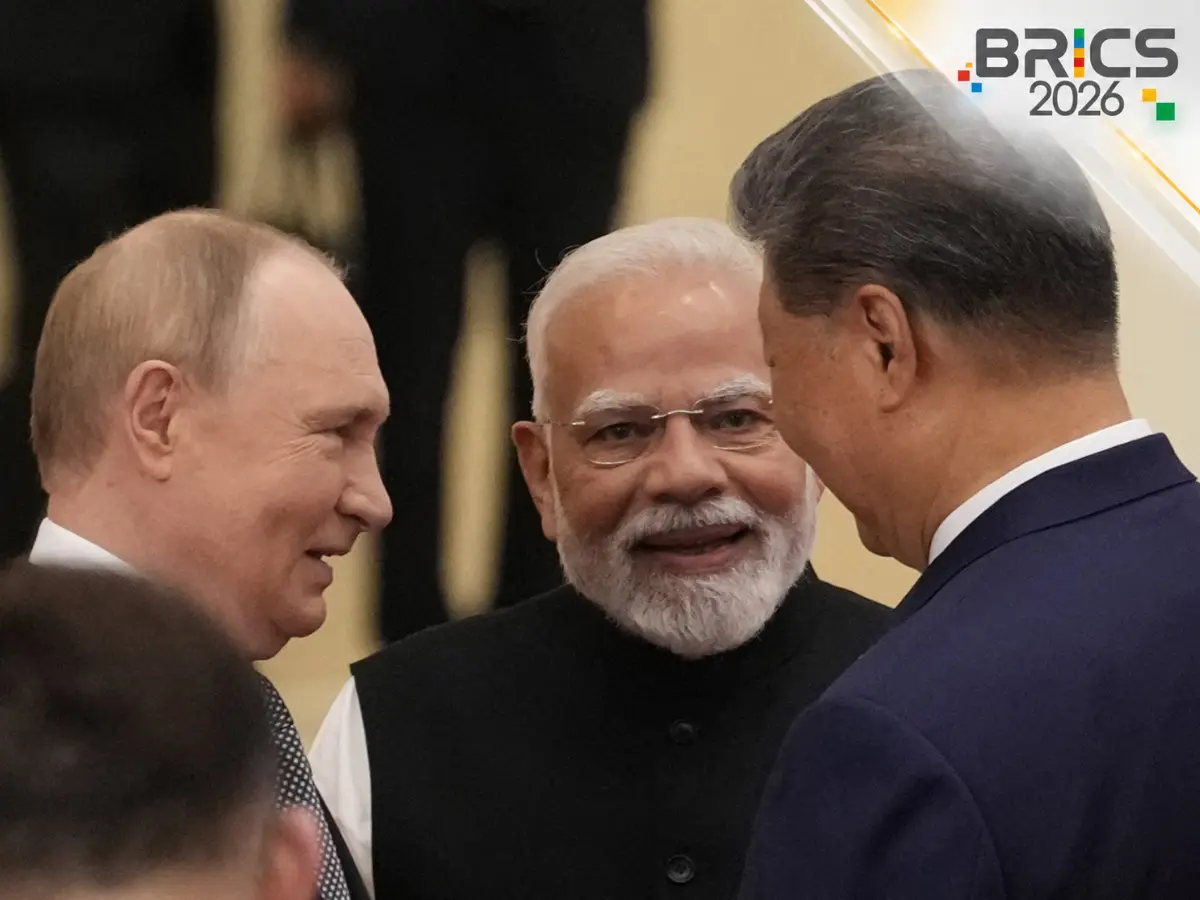
File photo of Indian Prime Minister Narendra Modi (C) Russian President Vladimir Putin (L) and Chinese President. Photograph: (AFP)
The trio came into existence in the late 1990s by Russian statesman Yevgeny Primakov, aiming to promote a multipolar world order and counter unipolar global dominance.
Before the emergence of BRICS on June 16, 2009, there was RIC, which stands for Russia, India, and China. This trilateral strategic grouping served as the foundational precursor and core building block for BRICS. The trio, formulated in the late 1990s by Russian statesman Yevgeny Primakov, was aimed at promoting a multipolar world order and countering unipolar global dominance.
Brazil joined the group in 2004, transforming the concept into the BRIC framework, which later added South Africa to become BRICS. This trilateral bloc has held over twenty ministerial-level meetings since the early 1990s. While talk of reviving it has intensified through 2025 and 2026, the three powers remain far from acting as a unified bloc capable of standing up to the West.
Although there are few instances where Russia and China have pushed to revive the block but outcome still remains far from reality. On January 20, 2026, Russian Foreign Minister Sergey Lavrov announced that Moscow is striving to revive the activities of the Russia-India-China (RIC) trilateral.
Reports suggest that, according to Russia, the RIC’s revival has become vital as Beijing is rapidly wanting to consolidate absolute dominance. It also indicated that Russia could mobilise the bloc to coordinate the technical mechanisms of sanctions evasion, focusing on the integration of payment systems (SPFS/CIPS/UPI) and the use of national currencies for energy trade.
Similarly, China has also echoed this enthusiasm for backing Russia's push to revive the long-dormant format. This has framed it as important for regional and global stability, though the mechanism has remained largely inactive since the COVID-19 pandemic and the 2020 India-China border clashes in Ladakh.
Trending Stories
&im=FitAndFill=(700,400)&imwidth=280&imheight=210&format=webp&quality=medium)
&imwidth=280&imheight=210&format=webp&quality=medium)
&imwidth=280&imheight=210&format=webp&quality=medium)
&imwidth=280&imheight=210&format=webp&quality=medium)
&imwidth=280&imheight=210&format=webp&quality=medium)
&imwidth=280&imheight=210&format=webp&quality=medium)
&imwidth=280&imheight=210&format=webp&quality=medium)
&im=FitAndFill=(700,400)&imwidth=280&imheight=210&format=webp&quality=medium)
&imwidth=280&imheight=210&format=webp&quality=medium)
&imwidth=280&imheight=210&format=webp&quality=medium)
&imwidth=280&imheight=210&format=webp&quality=medium)
&imwidth=280&imheight=210&format=webp&quality=medium)
&imwidth=280&imheight=210&format=webp&quality=medium)
&imwidth=280&imheight=210&format=webp&quality=medium)
&imwidth=280&imheight=210&format=webp&quality=medium)
&imwidth=280&imheight=210&format=webp&quality=medium)
&imwidth=280&imheight=210&format=webp&quality=medium)
&imwidth=280&imheight=210&format=webp&quality=medium)
&imwidth=280&imheight=210&format=webp&quality=medium)
&imwidth=280&imheight=210&format=webp&quality=medium)
&imwidth=280&imheight=210&format=webp&quality=medium)
&im=FitAndFill=(700,400)&imwidth=280&imheight=210&format=webp&quality=medium)
&imwidth=280&imheight=210&format=webp&quality=medium)
&imwidth=280&imheight=210&format=webp&quality=medium)
&imwidth=280&imheight=210&format=webp&quality=medium)
&imwidth=280&imheight=210&format=webp&quality=medium)
&imwidth=280&imheight=210&format=webp&quality=medium)
&imwidth=280&imheight=210&format=webp&quality=medium)
&imwidth=280&imheight=210&format=webp&quality=medium)
India's caution to join RIC
Reports indicated that India has stayed notably reserved in expressing any opinion on joining RIC. In July 2025, India neither rejected nor explicitly endorsed reviving RIC, suggesting a cautious openness rather than enthusiasm. New Delhi's hesitation is directly linked to its unresolved border tensions with China, as India has continuously emphasised that its relations with Beijing depend on progress at the border first.
Will RIC emerge?
The answer to this question is unclear, as we think Russia and China have clear incentives to formalise the RIC, since it boosts their standing and signals resistance to Western isolation. However, India has structural reasons to keep the mechanism informal due to its border tensions with China, its strategic balancing between Washington and Moscow, and its reluctance to be considered anti-West. These developments indicate that all work against a tightly coordinated trio, which is very hard to push further for its emergence.
Meanwhile, the India-Russia-China triangle shouldn't allow other nations to dominate or hurt the others' interests. But China's closeness with the US will threaten Russia's wants of a multipolar world. Therefore, Russia will attempt to keep India engaged regionally. India, too, benefits from staying involved, ensuring coordination among these major powers.

