'Would encourage him to...': Mamdani's bold message to King Charles on Kohinoor diamond

&imwidth=600&imheight=450&format=webp&quality=medium "'Would encourage him to...': Mamdani's bold message to King Charles on Kohinoor diamond")
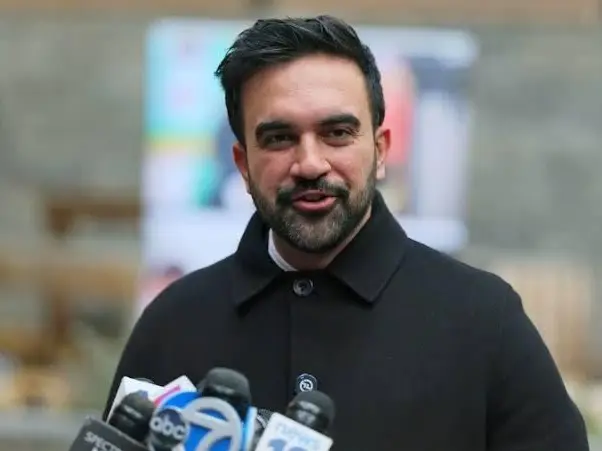
Zohran Mamdani Photograph: (X)
NYC Mayor Zohran Mamdani to urge King Charles III to return the Kohinoor diamond, reviving debate over colonial-era ownership and historical restitution claims
Zohran Mamdani has challenged centuries of British colonial history after hinting that any potential meeting with King Charles III should include a discussion of one of Britain’s most contested royal artifacts, the Kohinoor diamond. At a press conference in New York, Mamdani was asked what message he would deliver to King Charles III. He moved beyond diplomatic convention and focused on historical restitution. "If I were to speak to the king... I would probably encourage him to return the Kohinoor diamond."
The remarks come ahead of King Charles and Queen Camilla's visit to the One World Trade Center in New York to mark the 25th anniversary of the September 11 attacks, an event Mamdani is expected to attend. The Kohinoor diamond, widely viewed in India as a symbol of colonial-era exploitation, was mined in the Kollur region and passed through multiple South Asian empires before being taken by the British East India Company in 1849 following the Second Anglo-Sikh War. It was transferred to Britain under the Treaty of Lahore, signed by the young Maharaja Duleep Singh, and is now part of the Crown Jewels displayed in the Tower of London.
Today, the 105.6-carat diamond remains mounted in the Crown of the Queen Mother, behind reinforced glass, and continues to be a source of diplomatic and cultural contention. For many in India, the Kohinoor represents what is often described as the ultimate unreturned asset, symbolising colonial extraction and historical injustice. British authorities maintain it was acquired under a valid treaty, while critics argue the agreement was signed under coercion.
Mamdani’s comments align with wider global restitution movements, including demands from Greece for the Elgin Marbles and from Nigeria for the Benin Bronzes, as countries seek the return of cultural heritage held in Western institutions. By raising the issue in the context of a potential royal audience, Mamdani has reframed a ceremonial diplomatic exchange into a broader discussion on historical accountability and cultural restitution.
Trending Stories
)
)
)
)
)
)
)
&im=FitAndFill=(700,400))
)
)
)
)
)
)
)
)
)
)
)
)
)
)
)
)
)
)
)
)
)
)
)
&im=FitAndFill=(700,400))
)
)
&im=FitAndFill=(700,400))
)
)
)
)
)
)
)

