This Fern shatters Guinness World Record with largest genome on Earth

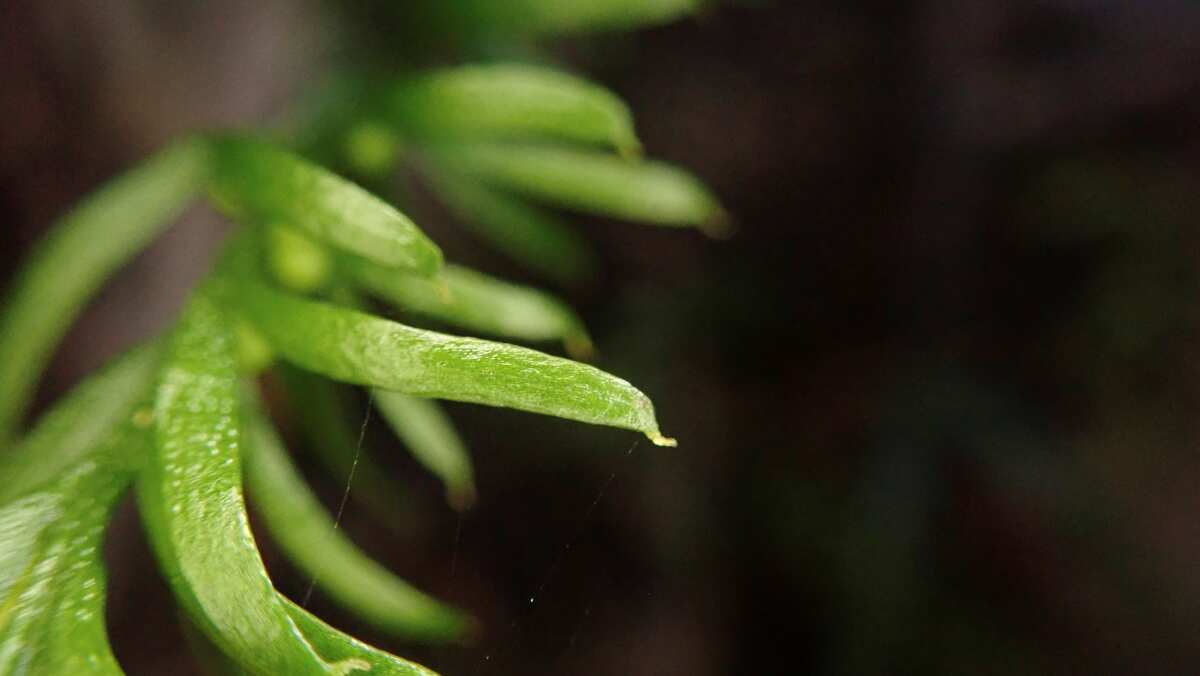
Fern
A fern growing on a remote Pacific island has broken the Guinness World Record for having the largest genome of any organism on Earth. A genome in any organism is the complete set of genetic material present in that organism, including its DNA.
With a genome measuring a staggering 160 gigabase pairs (Gbp). The fern surpasses the previous record holder, the Japanese flowering plant Paris japonica, by 7 per cent.
The human genome, with a relatively modest size of approximately 3.1 gigabase pairs (Gbp)provides a striking contrast to the colossal genomes found in these fern.

Human genome, when unravelled, would measure about six feet in length.
The fern, Tmesipteris oblanceolata, has more than 50 times more DNA packed into the nucleus of its cells than humans do. Tmesipteris oblanceolata is endemic to New Caledonia, an archipelago that is located in the southwest Pacific Ocean and is known for its rich biodiversity.
Scientists revealed in a new study that if the DNA from one of the fern's cells would stretch out to 350 feet. This means the fern's DNA, when fully extended, would be taller than both the Statue of Liberty and the tower housing London's Big Ben.
)
AI kill switch explained: Why shutting down a dangerous AI may not be as simple as pressing a button
)
US ships in Indian Ocean ‘will be attacked’ if war resumes, warns Iran
)
SNL UK takes aim at Ed Sheeran with AI Princess Diana sketch
)
Trump says he'll build an 'AI Force' and appoint a czar, for 'high IQ' people only
)
‘0% chance’: Nvidia CEO Jensen Huang dismisses AI extinction fears by 2030
&im=FitAndFill=(700,400))
What TSMC's 2nm technology means for Apple
)
'Were you here to sell chickpeas?': Wasim Akram criticises Babar Azam's captaincy
)
Sikh bus driver assaulted, bus stolen and rammed into cars in England; video surfaces
)
Mark Carney mimics Trump in hilarious moment over C$70 billion clean-energy investment; room erupts in laughter
&im=FitAndFill=(700,400))
Top 10 countries in mathematics: See the world’s best performers in 2026
)
Apple reportedly building AI server with M8 Ultra chips, may use Nvidia technology
)
TIFF 2026: Theja Rio’s Angh wins Platform Prize, puts Nagaland story on global stage
)
BTS' fans question iHeartRadio’s treatment of group after brief festival set
)
Asian Games 2026: India win first medal as women’s 10m air rifle team claims silver
)
Samsung raises Galaxy S26 prices by Rs 20,000: Here’s what each model now costs
)
Bessent meets China’s He Lifeng to prepare for Trump-Xi summit
)
Trump defends AI amid growing alarm, announces new 'AI force' and promises an 'AI czar'
)
S Jaishankar, former Army chief among high-profile names issued Delhi SIR notices
)
Iran sets 7 conditions to end war with US: What are Tehran’s demands?
)
Trump announces ‘AI Force’ as debate grows over AI risks and regulation
)
Israeli President pardons combat medic who shot dead a badly wounded Palestinian attacker
)
Arvind Kejriwal, family members, Delhi CM Rekha Gupta get SIR notices
)
AI actress Tilly Norwood glitches mid-interview, switches from English to Chinese | Watch
)
Saudi vs Houthis: Houthis claim missiles & drones used in attack on key Saudi sites
)
Ed Sheeran addresses Macklemore's removal, Gaza conflict during Philadelphia concert: 'I cannot hide how I feel'
)
Saudi Arabia exits China-led mBridge digital currency platform amid Saudi-Houthi conflict
)
'Lot of things to learn from experienced players': Jayasuriya backs Rohit, Virat for 2027 ODI World Cup
)
Chancellor Friedrich Merz vows to stay on as exit polls signal major poll setback
)
North Korea's nuclear tests triggered 1,399 earthquakes: Earth is still shaking | Gravitas
)
Several petrol pumps, other businesses to refuse UPI payments above Rs 2,000 from Oct 16: Is it legal?
)
Kampala-Ankara rift deepens: Uganda suspends military ties, seeks Fred Lumbuye's extradition
)
AUS vs ZIM, 3rd ODI: Ellis stars as Australia edge Zimbabwe by one wicket in last-over thriller
)
West Indies Squad for India Series: Hetmyer included for T20Is, Holder rested
)
China now makes advanced memory chips without the machines it was banned from buying
)
Harry Brook targets long reign at top of T20I rankings after Sri Lanka sweep
)
Trump in ‘deciding mode’ on Iran, says ‘very big things’ going to happen soon
)
Microsoft executive called AI training the ‘largest theft of labour in human history’
)
Munich Mayor taps first keg to kick off Oktoberfest
Also Read |NASA debunks reports of 'planetary parade', gives list of celestial events for June
Ilia Leitch, a researcher at the UK's Royal Botanic Gardens Kew and co-author of the study, expressed the team's astonishment. The team was "really surprised to find something even bigger than Paris japonica."
The research team travelled to the island of Grand Terre in 2023. There, the team teamed up with local scientists for the study.
Also Read |A group of mammals suddenly disappeared 50,000 years ago. Ancient bone collagen might tell why
Leitch explained that having a massive genome is generally a disadvantage. The more DNA you have, the larger your cells need to be to accommodate it all, according to him.
Moreover, replicating such a vast amount of DNA is complex. In plants with exceptionally large genomes, this process becomes even more challenging. The sheer volume of genetic material to be copied can lead to longer periods required for growth and reproduction. Leitch has shown that there is a correlation between genome size and plant adaptability to environmental stress.
Watch |WHO warns of huge impact of food shortages on children in Gaza | Situation horrific in Gaza: WFP
Leitch pondered the fern's unique adaptation - "How does it survive with that much DNA in it?"
Scientists remained uncertain about the role of much of the DNA in such large genomes, often labeling it as "junk DNA." However, Leitch suggested that this might be due to our own ignorance, hinting that it could have undiscovered functions.
The study was published in the journal iScience.
(With inputs from agencies)