Man bitten over 200 times by deadly snakes, now his blood helps make ‘ideal’ antivenom

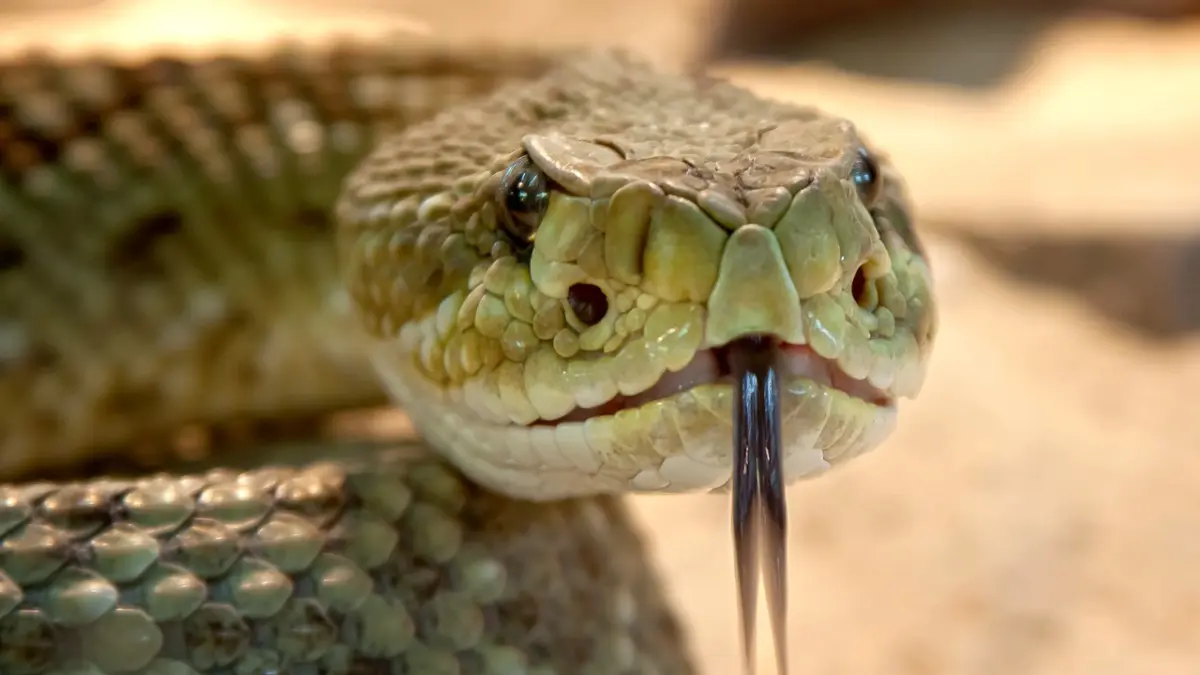
Science & Technology | World: In total, Friede has endured more than 200 bites and more than 700 injections of venom prepared from some of the world’s deadliest snakes, including mambas, cobras, taipans, and kraits.
A man in the United States deliberately injected himself with snake venom for nearly two decades, and now his blood is turning out to be a boon for humanity as it has helped make an ‘unparalleled’ antivenom, say scientists.
When the tests were conducted, the antibodies found in Tim Friede’s blood protected against fatal doses from a wide range of species.
The current therapies have to match the specific species of venomous snake that has bitten someone.
The 18-year mission of Friede could be a significant step in finding a universal antivenom against all snakebites that kill up to 140,000 people a year and leave three times as many with permanent disability.
‘Endured over 200 bites and 700 venom injections’
In total, Friede has endured more than 200 bites and more than 700 injections of venom prepared from some of the world’s deadliest snakes, including mambas, cobras, taipans, and kraits.
He initially wanted to build up immunity to protect himself when handling snakes and documenting his exploits on YouTube.
Also Read |Now a simple blood test could detect Parkinson’s disease long before symptoms emerge
Friede, a former truck mechanic, conceded that he “completely screwed up” early on when two cobra bites in quick succession left him in coma.
“I didn’t want to die. I didn’t want to lose a finger. I didn’t want to miss work,” he told the BBC.
His motivation was to develop better therapies for the rest of the world. “It just became a lifestyle and I just kept pushing and pushing and pushing as hard as I could push - for the people who are 8,000 miles away from me who die from snakebite.”
The antivenom currently in use is made by injecting small doses of snake venom into animals, like horses whose immune system fights the venom by producing antibodies that are then harvested and used.
But the venom and antivenom have to closely match because the toxins vary across species.
Also Read | Researchers breach brain-blood barrier, deliver medicine precisely via nanoparticles
Moreover, there is variety within the same species, and antivenom made from snakes in India is less effective against the same species in Sri Lanka.
Dr Jacob Glanville, chief executive of biotech company Centivax, who came to know about Tim Friede, said, “Immediately I was like, ‘if anybody in the world has developed broadly neutralising antibodies, it’s going to be him’ and so I reached out.”
“The first call, I was like ‘this might be awkward, but I’d love to get my hands on some of your blood’.”
Friede agreed, and the research got ethical approval because the study would only take blood rather than giving him more venom.
Trending Stories
)
)
)
&im=FitAndFill=(700,400))
)
)
)
)
)
)
)
)
)
)
)
)
)
)
)
&im=FitAndFill=(700,400))
)
)
)
)
)
)
)
)
)
)
&im=FitAndFill=(700,400))
)
)
)
&im=FitAndFill=(700,400))
Also Read |Prostate cancer surgery innovation reduces odds of post-op erectile dysfunction
The research focused on elapids like coral snakes, mambas, cobras, taipans, and kraits. Elapids have neurotoxins in their venom, which paralyses the victim and is fatal when it stops the muscles needed to breathe.
Researchers picked 19 elapids among the deadliest snakes on the planet and began looking for protective defences in Friede’s blood.
‘Unparalleled breadth of protection’
Their work, detailed in the journal Cell, identified two broadly neutralising antibodies that could target two classes of neurotoxin. Then they added a drug that targets a third to make their antivenom cocktail.
In experiments on mice, the cocktail helped survive fatal doses from 13 of the 19 venomous snake species. “This is ‘unparalleled’ breadth of protection, that likely covers a whole bunch of elapids for which there is no current antivenom,” said Dr Glanville.
The team is trying to add a fourth component that could lead to total protection.
In total, there are around a dozen broad classes of toxins in snake venom, including haemotoxins that attack the blood and cytotoxins that directly kill cells.
Also Read |Type 5 Diabetes finally recognised after decades, afflicts young. What we all need to know
“I think in the next 10 or 15 years we’ll have something effective against each one of those toxin classes,” said Prof Peter Kwong, a researcher at Columbia University.
“Tim’s antibodies are really quite extraordinary — he taught his immune system to get this very, very broad recognition,” Prof Kwong added.
The ultimate aim is to have either a single antivenom or one for elapids and one for vipers.
Prof. Nick Casewell, head of the centre for snakebite research and interventions at the Liverpool School of Tropical Medicine, however, cautions there was much work to do and that the antivenom still needed extensive testing before it could be used in people.
But Friede is elated at the research reaching this stage. “I’m doing something good for humanity, and that was very important to me. I'm proud of it. It's pretty cool.”