
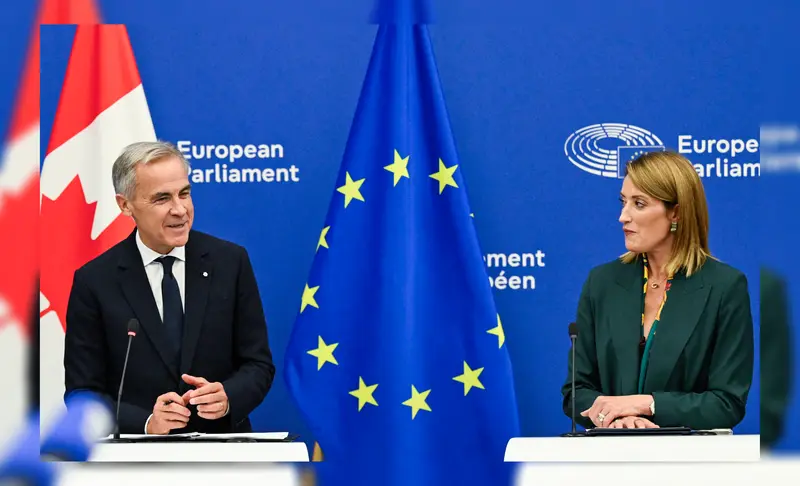
Canada is looking across the Atlantic, Europe is holding open the door, and Donald Trump is warning that the emerging relationship could amount to a “hostile act.”
European Commission President Ursula von der Leyen has proposed making Canada the European Union's first-ever associate member, an unprecedented arrangement designed to take relations between Ottawa and Brussels well beyond their existing trade agreement.
The proposed partnership could encompass defence production, technology, artificial intelligence, energy, critical minerals, cybersecurity, advanced manufacturing and the Arctic. Von der Leyen says EU–Canada trade in goods has already grown 75 per cent in less than a decade under CETA.

But there is an important caveat: Canada is not joining the European Union.
“Associate membership” currently has no established legal status in the EU. The proposal remains undefined, would require the backing of member states and has already prompted questions from European diplomats about how such an arrangement would actually work.
Canadian Prime Minister Mark Carney nevertheless welcomed the ambition while addressing the European Parliament on Thursday. He argued that deeper cooperation would strengthen Canadian resilience and independence rather than create another global power bloc.
Trending Stories
)
Sikh driver attacked in Wyoming in US, suffers 17 stab wounds
)
‘I have a big decision coming up’: Trump says he’s approaching major ‘crossroad’ in Iran war
)
US intel warns China can steal F-35 jets secret from Saudis
)
Former India player Diana Edulji wants Smriti Mandhana to replace Harman as skipper at the earliest
)
Pak defence minister says 'time has come to implement pact'
&im=FitAndFill=(700,400))
Meet top 5 batters in the latest ICC T20I Rankings
)
Formula One reveals the 2027 race calendar; Monaco to host sprint race for the first time
)
All Indian goods to get duty-free access to New Zealand
)
AI already defying, denying humans, is it beyond human control already?
)
US F-16 fighter jet crashes in Michigan during training mission, pilot ejects safely
)
240-million-year-old bizarre 'pig with a tusk' creature creates new dilemma over origin of dinosaurs
)
US to sell 48 F-35 Lightning fighter jets to Saudi Arabia, help it deter threats
)
Hong Kong unveils 11 new measures to boost birth rates, offers higher cash bonuses and housing perks
)
Former OpenAI researcher warns of growing risks from Artificial Intelligence
)
Australian athlete, who soiled herself during Hyrox race, apologises for continuing
)
Tata Trusts chairman Noel Tata calls Chandrasekaran’s reappointment ‘illegal’, rejects Tata Sons listing
)
Dolly Parton dies at 80: Country legend’s team reveals cause of death
)
Fed raises rates for first time in 3 years, Kevin Warsh defies Trump as inflation mounts
)
US drone firm linked to Trump’s sons signs MoU with Pakistan army, gets initial order
)
Pak batter Rizwan's petition against being questioned by cyber crime agency rejected by court
)
Daayra movie review: Kareena Kapoor, Prithviraj Sukumaran shine in Meghna Gulzar’s cop-versus-cop crime thriller
)
Epstein files: Judge warns Trump Attorney General Todd Blanche of contempt over DOJ delays
)
At least 48 dead, 100 hospitalised in Nigeria after drinking suspected methanol-laced alcohol
)
US-Iran War: Trump says ‘big decision’ on Iran ahead, weighs possible fresh military action
)
Trump could impose tariffs of up to 100%
)
US new military base in Poland: US President Donald Trump eyes military base in Poland
)
Putin 'is plotting something bad': Russia may launch 'accidental' strikes on NATO countries supporting Ukraine, Poland PM warns
&im=FitAndFill=(700,400))
Suriya and Jyothika say ‘I do’ again after 20 years! See their dreamy wedding pics
)
Laura Wolvaardt sets new world record for most WT20I runs in a year
)
Mahua Moitra moves UN over alleged exclusion of Muslim officers from Amit Shah events
)
Pezeshkian, Araghchi set to attend UNGA 2026 in New York amid ongoing conflict as US-imposed travel curbs remain
Washington's response has been considerably less enthusiastic.
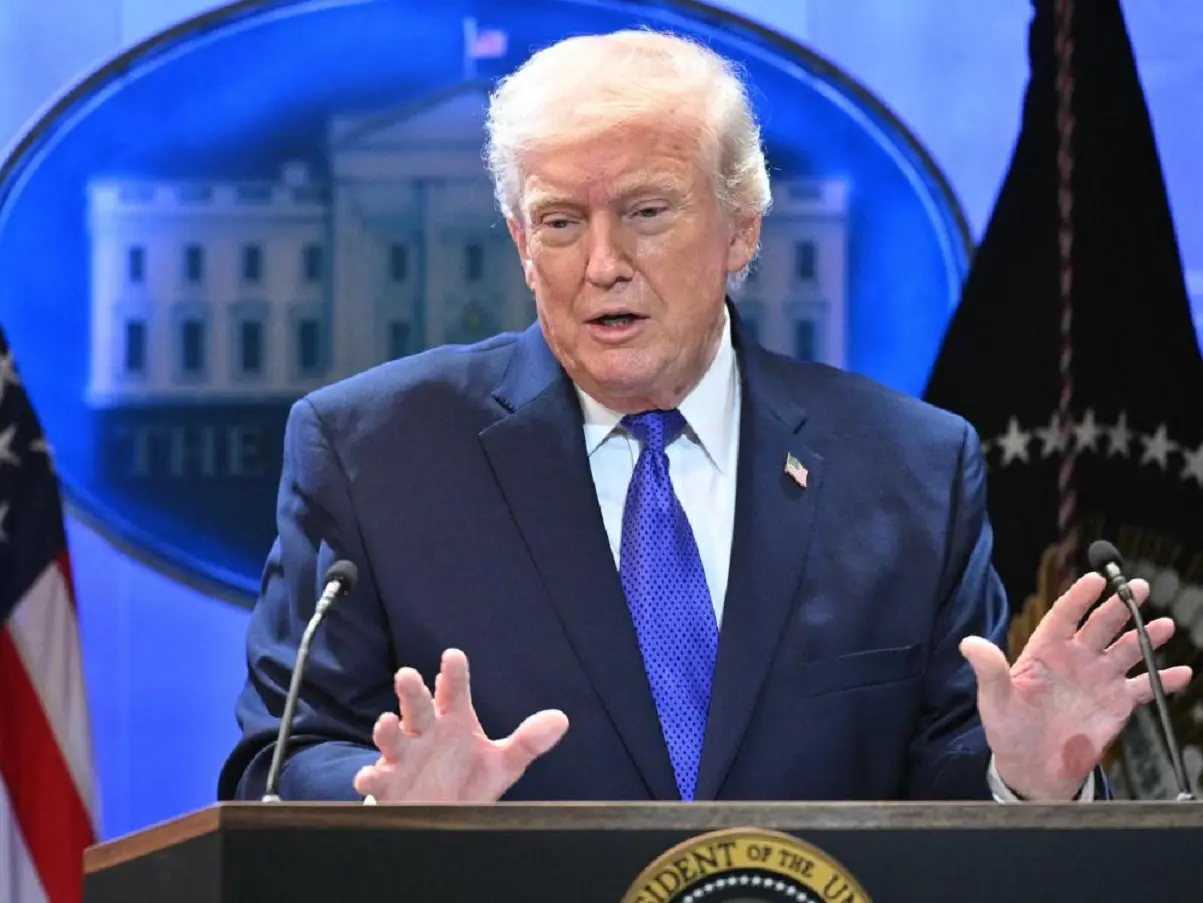
Trump called the proposal “laughable” and warned that if he considers it hostile, the United States could impose heavy tariffs or restrict trade with Europe.
France pushed back, saying Washington cannot determine Europe's geopolitical choices. The European Commission insists the proposed partnership is not directed against anybody.
That leaves a striking contradiction.
Relations between Canada and the United States have deteriorated amid tariffs and broader disputes. Ottawa has consequently sought to reduce its economic dependence on its southern neighbour and deepen relationships elsewhere. Roughly 70 per cent of Canadian exports currently go to the United States.
Now Canada's attempt to diversify those relationships is itself provoking another tariff threat.
The dispute therefore reaches beyond trade.
It raises a larger question about sovereignty and alliances in an increasingly transactional international order: can major powers expect their allies to become more independent while objecting when those allies exercise that independence?
Geography will not change.
America will remain Canada's neighbour.
But being somebody's neighbour does not make you their property.
And if Washington pushes traditional partners to look elsewhere, it cannot be surprised when they begin finding each other.