Siddaramaiah resigns: Inspiring journey of shepherd boy who became Karnataka CM

&imwidth=600&imheight=450&format=webp&quality=medium "Siddaramaiah resigns: Inspiring journey of shepherd boy who became Karnataka CM")
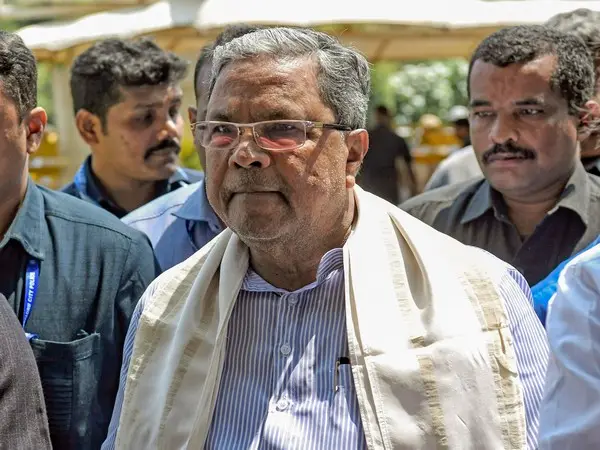
File photo of Siddaramaiah. Photograph: (ANI)
Siddaramaiah's first tenure as CM was widely viewed as administratively effective, with welfare initiatives such as Annabhagya, Ksheerabhagya, and Shadibhagya benefiting economically weaker sections and becoming closely associated with his leadership.
Siddaramaiah tendered his resignation from the post of Karnataka Chief Minister on Thursday (May 28, 2026). This comes as Siddaramaiah met Deputy CM DK Shivakumar and other MLAs during a breakfast meeting in Bengaluru. He reportedly told ministers that the Congress high command requires him to shift to national politics. Siddaramaiah's resignation came days after a leadership tussle between the South Indian leaders of the Congress party and two years before the Karnataka Assembly elections.
Siddaramaiah said, "Deeply grateful to all who worked with me. I had said time and again that I will resign whenever high command tells me." "I got the opportunity to serve the people of Karnataka twice. I thank Sonia Gandhi, Rahul Gandhi, and Mallikarjun Kharge," he added.
Reflecting his political journey, he stated that he had never imagined becoming an MLA, minister or Chief Minister after joining the Congress in 2006. "It was by mistake I entered politics. Nobody in my family was in active politics, neither my parents nor anyone else. I had never dreamt I would become an MLA, a minister, a chief minister ever," he said.
Inspiring Journey of Siddaramaiah
Siddaramaiah was born in Siddaramanahundi, a small village in Varuna Hobli of Mysore district. His early years were marked by hardship, as he began his formal school journey when he was around ten years old. As a child, he reportedly spent time grazing sheep across the dry fields of Mysore with a stick in hand. Despite starting school late, Siddaramaiah quickly adapted to academics. Understanding the power of education as a tool against injustice and exploitation, the aspiring village boy went on to earn a law degree in Mysuru and began practising as a lawyer.
Trending Stories
&im=FitAndFill=(700,400))
)
)
)
)
)
)
)
)
)
)
)
)
)
)
&im=FitAndFill=(700,400))
)
)
)
)
)
)
)
)
)
)
)
)
)
&im=FitAndFill=(700,400))
A major turning point in his political journey came in 2006 when he joined the Indian National Congress in the presence of Sonia Gandhi. Within a short time, he succeeded in gaining the confidence of the party leadership. Another significant moment came during the 2010 Bellary Padayatra, where Siddaramaiah led protests against the alleged illegal mining activities of the Reddy brothers. The campaign drew widespread attention across Karnataka at a time when illegal mining in Bellary had reportedly reached its peak under the then BJP-led government.
Meanwhile, after being expelled from the JD(S) following a dispute, he championed the AHINDA movement (a coalition of religious minorities, backward classes, and Dalits). He joined the Indian National Congress in 2006, which transformed him into a statewide mass leader.
Then minister Gali Janardhana Reddy had reportedly challenged Siddaramaiah in the Assembly by saying, “If you can, visit Bellary.” Accepting the challenge, Siddaramaiah launched a 320-km padayatra from Bengaluru to Bellary between July 25 and August 9, 2010. What began as a political march soon evolved into a massive public movement.
Following the Congress victory in the 2013 Karnataka Assembly elections, Siddaramaiah became Chief Minister. His first tenure was widely viewed as administratively effective, with welfare initiatives such as Annabhagya, Ksheerabhagya, and Shadibhagya benefiting economically weaker sections and becoming closely associated with his leadership.
However, during the same period, issues such as Tipu Jayanti celebrations and the proposal for a separate religious status for Lingayats were criticised by opposition parties, which alleged they were aimed at consolidating vote-bank politics. Siddaramaiah later returned as Chief Minister after the Congress secured victory in the May 2023 Assembly elections.

