Oil prices edge higher after US-Japan trade deal

&imwidth=600&imheight=450&format=webp&quality=medium "Oil prices edge higher after US-Japan trade deal")
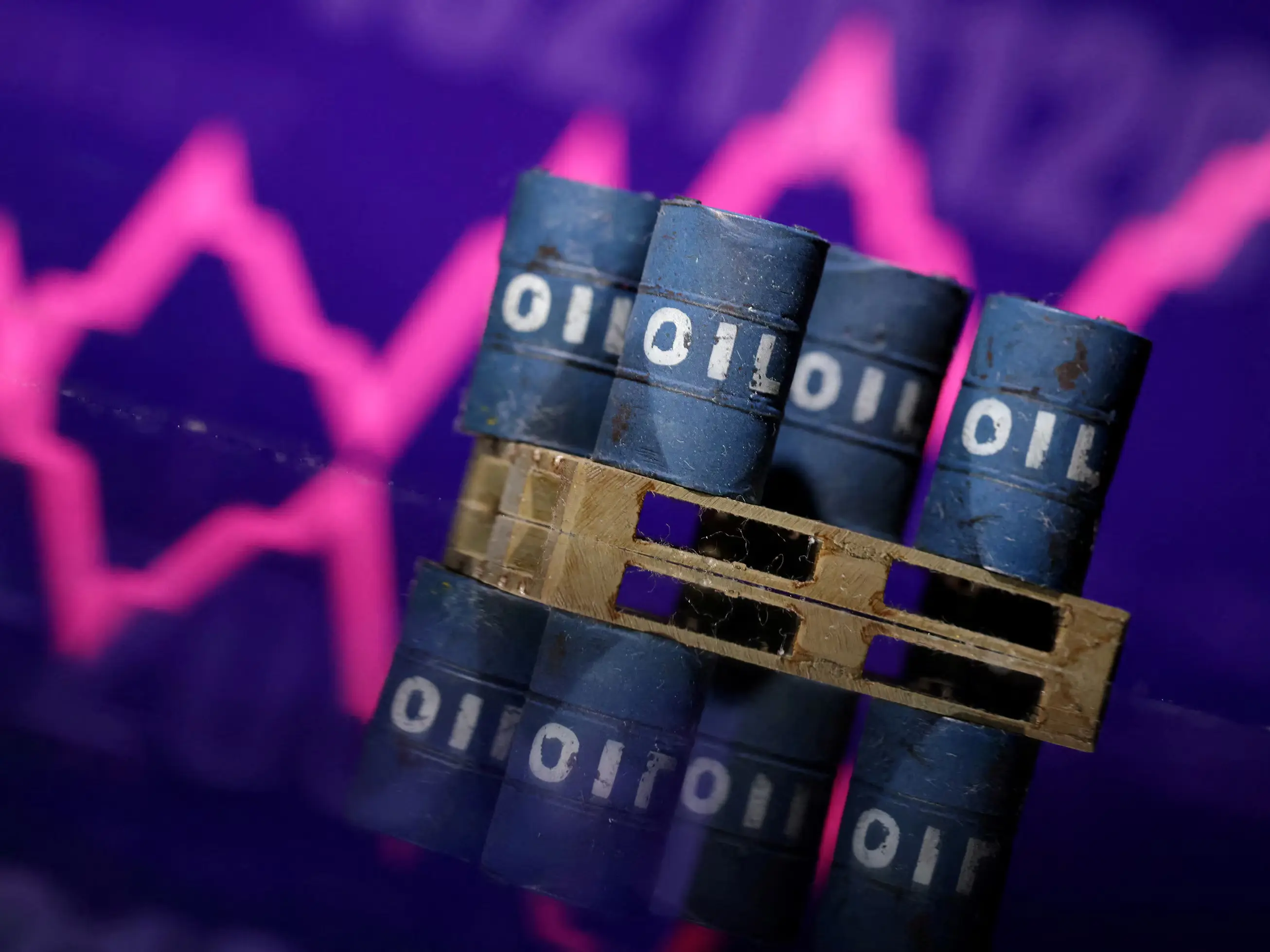
Miniatures of oil barrels and a rising stock graph are seen in this illustration. Photograph: (Reuters)
On Wednesday, oil prices rose modestly in Asian trading, snapping a three-session declining trend, as easing US-Japan trade tensions provided temporary relief.
As markets responded to signs of easing tensions between the United States and Japan, on Wednesday, oil prices inched up in Asian trading, halting a three-session losing streak. However, the upside remained muted as investors braced for limited progress at the upcoming EU-China summit and broader uncertainty around trade policy.
Brent crude futures rose by 21 cents, or 0.31 per cent, to $68.80 a barrel by 0351 GMT, while US West Texas Intermediate (WTI) climbed 17 cents, or 0.26 per cent, to $65.48. Both contracts had lost nearly 1 per cent in the previous session on worries that the European Union may retaliate against US tariffs.
WTI for September delivery moved closer to $66 a barrel after falling over three days, while Brent hovered just below the $69 mark, according to Bloomberg. Despite the uptick, both benchmarks remain under immense pressure as Brent is still down around 8 per cent year-to-date.
US-Japan deal
On Tuesday, US President Donald Trump announced that a trade deal had been struck with Japan, setting a 15 per cent tariff on Japanese auto imports and securing up to $550 billion in investment commitments for US supply chains.
Oil traders took note of the agreement, which temporarily eased fears of escalating trade friction with America’s key Asian ally. “The slide of the past three sessions appears to have abated,” said Vandana Hari of Vanda Insights, “but I don’t expect much of an upward impetus from the US-Japan trade deal,” she told Reuters.
Trending Stories
)
)
)
)
)
)
&im=FitAndFill=(700,400))
)
)
)
)
)
)
)
)
)
)
)
)
)
)
)
)
&im=FitAndFill=(700,400))
)
)
)
)
EU-China summit weighs on market mood
As the Japan deal offered a short-term lift, now all eyes are on the European Union-China summit, which is reportedly expected to deliver little concrete progress on Thursday. Both sides remain at odds on trade and technology issues.
China’s commerce ministry said that its talks with the EU trade chief were “candid and in-depth,” but expectations are low. Meanwhile, as per Bloomberg, the US Treasury Secretary Scott Bessent will meet Chinese negotiators in Stockholm next week, and may extend the current August 12 deadline for negotiations.
US stockpiles shift, but outlook remains mixed
Market sources citing American Petroleum Institute (API) data said that US crude and gasoline inventories declined last week, while distillate stockpiles rose by 3.48 million barrels. Analysts at ING said this could ease pressure on the diesel market, which has been facing a supply crunch.
Though the traders are cautious as the official inventory data from the US Energy Information Administration due later on Wednesday.
Russia sanctions talk adds uncertainty
In another development, the US energy secretary said Washington may consider new sanctions on Russian oil to help end the war in Ukraine. The European Union recently passed its 18th sanctions package, which lowers the price cap on Russian crude.
However, analysts warned that without active US enforcement, the effectiveness of EU measures could be limited.