Japan’s $550 billion US trade fund faces scrutiny amid unclear details

&imwidth=600&imheight=450&format=webp&quality=medium "Japan’s $550 billion US trade fund faces scrutiny amid unclear details")
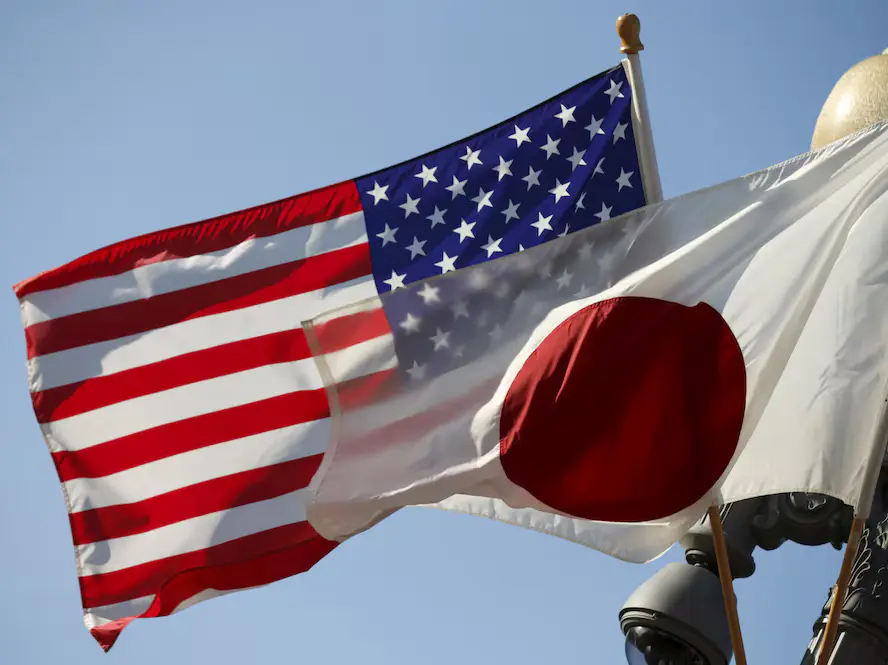
The US and Japan flags fly together outside the White House in Washington April 27, 2015. Photograph: (Reuters)
Critics argue that the US-Japan trade deal proposal resembles a campaign promise more than a credible economic agreement. Some analysts also question whether previously announced investments from firms like SoftBank and Nippon Steel will be retroactively counted toward the deal.
A landmark US-Japan trade agreement touted by President Donald Trump has stirred a mix of optimism and confusion, as Japan pledges to establish a massive $550 billion investment fund targeting American industries. Despite its scale, questions abound over how the fund will be structured, financed, and implemented, leaving markets and analysts uncertain about its real impact. President Trump hailed the agreement as “the largest trade deal in history,” with the White House claiming that the US will control the fund’s direction and receive 90 per cent of its profits. Japanese officials, however, have offered a more cautious explanation, describing the pledge as a mix of investments, loans, and guarantees capped at $550 billion, not necessarily new capital.
Fund lacks clarity, faces implementation hurdles
Japan’s chief negotiator, Ryosei Akazawa, confirmed the fund would be supported by state-owned agencies like the Japan Bank for International Cooperation (JBIC) and Nippon Export and Investment Insurance, along with the private sector. Yet, with JBIC investing only $1.8 billion in North America in FY24, it’s unclear how these institutions could fund such an enormous commitment alone.
Commerce Secretary Howard Lutnick suggested that Japanese firms will finance US-based infrastructure and industrial projects, with the profits split predominantly in favour of US taxpayers. But legal and operational details remain murky. Critics argue the proposal resembles a campaign promise more than a credible economic agreement. Some analysts also question whether previously announced investments from firms like SoftBank and Nippon Steel will be retroactively counted toward the deal.
BOJ sees room to raise rates
Despite these uncertainties, the deal has lifted a key cloud over Japan’s economic outlook, prompting speculation that the Bank of Japan (BOJ) may resume interest rate hikes later this year. Deputy Governor Shinichi Uchida signalled a more upbeat tone, citing improved chances of hitting the 2 per cent inflation target and rising price pressures from food costs.
Trending Stories
)
)
)
)
)
)
&im=FitAndFill=(700,400))
)
)
)
)
)
)
)
)
)
)
)
)
)
)
)
)
&im=FitAndFill=(700,400))
)
)
)
)
The BOJ is expected to maintain current rates at its July 30-31 meeting but could hint at a policy shift in the coming months. A revised inflation forecast and softened language around downside risks could pave the way for a potential rate hike as early as October. Still, the central bank remains cautious. The first-quarter GDP contraction, persistent consumer weakness, and the long-term impact of new US tariffs continue to weigh on policy deliberations.
As markets await further guidance from BOJ Governor Kazuo Ueda next week, the success of the US-Japan trade deal and its true economic impact will depend heavily on whether its bold promises translate into tangible investment.
(With inputs from agencies)