Nepal flood survivor trapped for 11 days: How Chandika Kumari Shrestha defied medical odds, experts explain

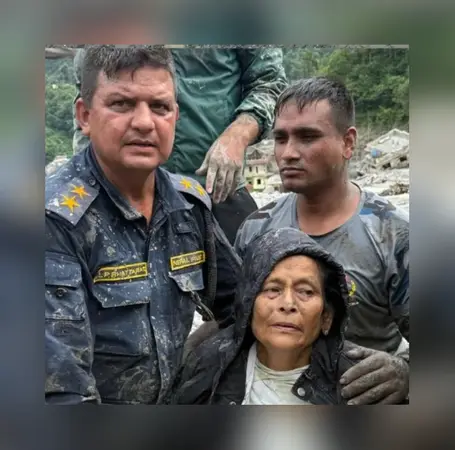
Chandika Kumari Shrestha's miraculous rescue Photograph: (Credit: X)
Trapped under debris for 11 days following Nepal’s deadly avalanche, Chandika Kumari Shrestha’s miraculous rescue highlights the biological and psychological limits of human survival.
Nepal has witnessed its worst natural disaster in a decade. A glacial collapse and ice-rock avalanche near the country’s border with Tibet has claimed over 1,300 lives, leaving thousands missing and trapped in mudslides and debris. Yet, amid the devastation, the Himalayan nation has reported miraculous rescues, most notably that of Chandika Kumari Shrestha.
News of her survival arrived just as her loved ones were preparing for her symbolic final rites. After days of waiting, many families had filed missing person reports and begun accepting the slim chances of survival. With heavy hearts, residents across the disaster-struck region chose to perform symbolic rituals for the peace of the departed.
According to news agency Reuters, Shrestha survived inside a narrow air pocket under the rubble of her collapsed home in Betrawati village. But how can a human survive trapped beneath deep debris? WION spoke to clinical psychologist Krishnaveni Kannan and internal medicine specialist Dr Vineeta Singh Tandon about how the human body and mind react in such extreme situations.
When trapped without food for an extended period, Dr Vineeta noted, "The body begins to tap into its energy reserves to sustain vital organs. First, it uses available glucose, then converts stored fat, and ultimately breaks down muscle tissue for fuel. However, access to water, oxygen, and stable body temperature are crucial for survival."
Trending Stories
)
)
)
)
)
)
)
)
)
)
)
)
)
)
)
)
)
)
)
)
)
)
)
)
)
&im=FitAndFill=(700,400))
)
)
)
)
)
)
)
Delving into the psychological perspective, clinical psychologist Krishnaveni Kannan said, "Humans have an innate drive to survive, and from a psychophysiological standpoint, the mind-body connection is well established. We often hear stories of individuals overcoming natural disasters and extreme adversity. Their survival isn't the result of a single factor; it emerges from an interplay of physiological adaptation, resource availability, immediate decision-making, and mental grit. While willpower alone doesn't guarantee survival, the body's innate biological mechanisms work in tandem with mental resilience."
While such miracles may seem rare against the backdrop of widespread devastation, Kannan pointed out that these stories demonstrate how biology and human spirit are intertwined: under extreme pressure, physical survival and the drive for meaning blend together.
While prayers were likely offered for Shrestha’s safety, it is rare to see news of death and survival converge in a way that brings such profound joy. It is the kind of miracle humanity hopes for in tragedy, and when answered, it offers nothing short of a second chance at life.
Also read: NEPAL FLOODS | Trishuli Valley Struggles To Rebuild After Deadly Glacier-Triggered Floods
Dr Vineeta agreed: "Surviving 11 days under debris is extremely rare and depends on a combination of critical factors." She added, "The most vital elements are breathable air, protection from severe physical trauma, and access to moisture or water. A person can survive far longer without food than without water. Remaining still in a protected air pocket helps conserve energy and slow the metabolic rate. However, prolonged entrapment still poses severe risks, including extreme dehydration, low blood pressure, acute kidney injury, infections, and muscle damage."
Framing the ordeal through the lens of logotherapy, the existential psychotherapeutic framework developed by Viktor Frankl, Krishnaveni explained, "Frankl, a psychiatrist who survived Nazi concentration camps, proposed three core ideas: freedom of will, the will to meaning, and meaning in life itself. He argued that even when a person loses control over their physical environment, they retain the freedom to choose how they relate to their suffering. That search for meaning can become a powerful reason to endure when everything else is lost."
In the end, while any good news is welcome, this story of survival was nothing short of a miracle.

