Delhi logs wettest March in three years; AQI at 123 after rain

&imwidth=600&imheight=450&format=webp&quality=medium "Delhi logs wettest March in three years; AQI at 123 after rain")
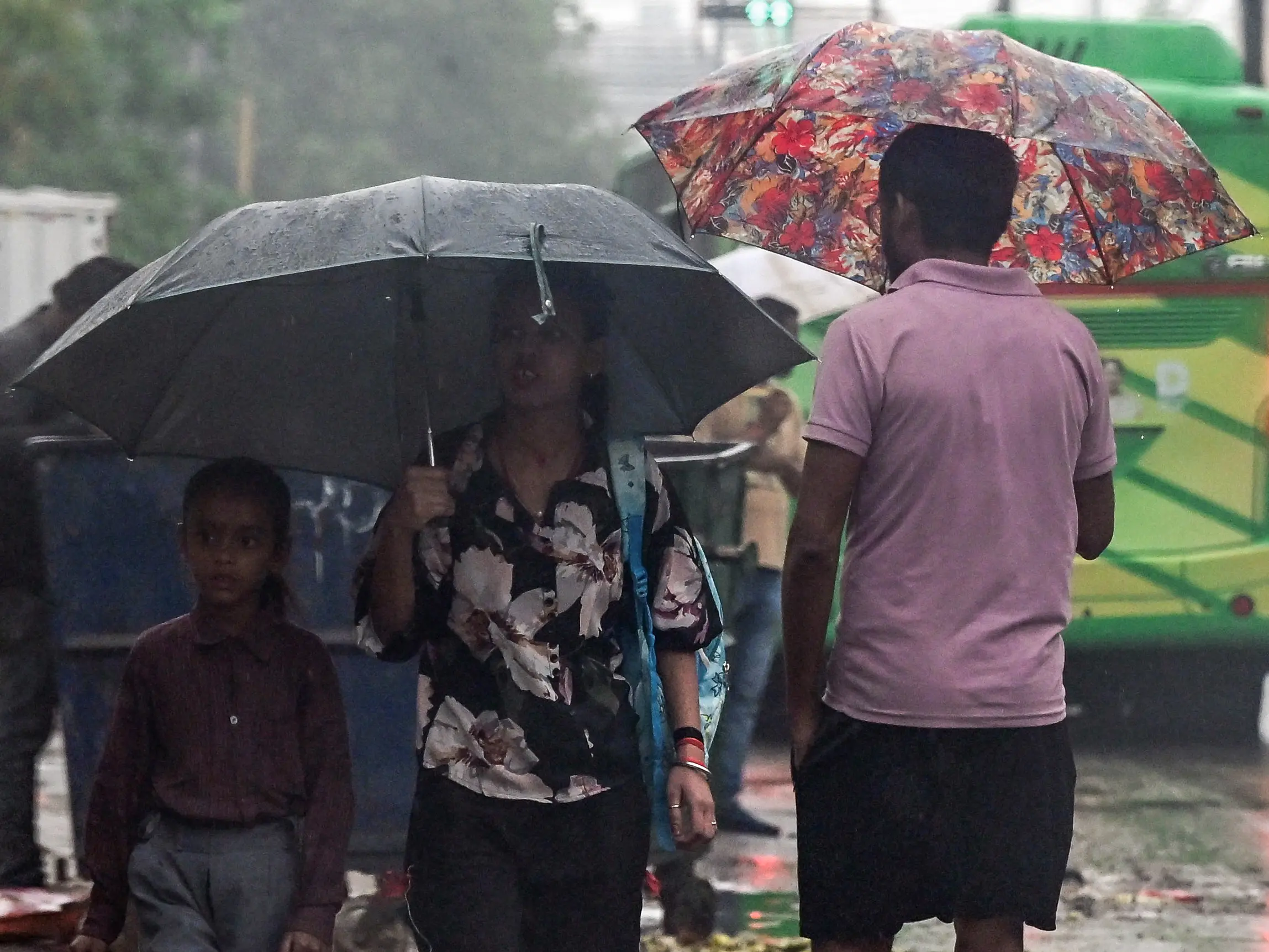
People hold umbrellas while walking on a road during early morning rain, in New Delhi on Friday. Photograph: (ANI)
The nearby areas of the national capital of India, including Noida, Gurugram, and Faridabad, also saw sudden rain and cold showers, bringing respite from the increase in temperature in March.
Delhi has experienced a spell of light rain and gusty winds on early Friday morning, making it the wettest March in three years, according to the India Meteorological Department (IMD). Following the rain, IMD also issued a yellow alert in the wake of a gloomy sky as the city woke up at 16 degrees Celsius, 0.5 degrees below normal, on March 20, 2026.
The nearby areas of the national capital, including Noida, Gurugram, and Faridabad, also saw sudden rain and cold showers, bringing respite from the increase in temperature in March. “Generally cloudy skies, with a spell of very light to light rain accompanied by thunderstorm/lightning and strong surface winds of 30–40 kmph, gusting to 50 kmph, are likely in the morning," the IMD said while issuing a yellow alert for the city.
“The system is expected to intensify over central Pakistan and adjoining parts of Punjab and Haryana from Thursday, leading to further rainfall over the next two days,” meteorological expert Mahesh Palawat said, as reported by PTI. “Current models suggest that weather conditions on March 20 are likely to be more intense,” he added.
Delhi AQI touches 123 after rain
The Air Quality Index (AQI) of Delhi after the rain was recorded at 123, placing it in the “moderate” category, as per the Central Pollution Control Board. Several locations also fell within this range, including Anand Vihar (176), Dwarka (118), RK Puram (176), Chandni Chowk (118), Bawana (123), and JNU (106).
The CPCB explains that the AQI scale runs from 0 to 500 and is divided into six categories, each indicating the level of pollution and its potential health impact. An AQI between 0 and 50 is considered “good,” with little to no health risk. Levels between 51 and 100 are categorised as “satisfactory,” where air quality is generally acceptable, though vulnerable groups such as children, the elderly, and those with respiratory conditions may experience minor discomfort.
&imwidth=280&imheight=210&format=webp&quality=medium)
&imwidth=280&imheight=210&format=webp&quality=medium)
&imwidth=280&imheight=210&format=webp&quality=medium)
&imwidth=280&imheight=210&format=webp&quality=medium)
&imwidth=280&imheight=210&format=webp&quality=medium)
&imwidth=280&imheight=210&format=webp&quality=medium)
&imwidth=280&imheight=210&format=webp&quality=medium)
&imwidth=280&imheight=210&format=webp&quality=medium)
&imwidth=280&imheight=210&format=webp&quality=medium)
&imwidth=280&imheight=210&format=webp&quality=medium)
&imwidth=280&imheight=210&format=webp&quality=medium)
&imwidth=280&imheight=210&format=webp&quality=medium)
&imwidth=280&imheight=210&format=webp&quality=medium)
&imwidth=280&imheight=210&format=webp&quality=medium)
&imwidth=280&imheight=210&format=webp&quality=medium)
&imwidth=280&imheight=210&format=webp&quality=medium)
&imwidth=280&imheight=210&format=webp&quality=medium)
&imwidth=280&imheight=210&format=webp&quality=medium)
&imwidth=280&imheight=210&format=webp&quality=medium)
&imwidth=280&imheight=210&format=webp&quality=medium)
&imwidth=280&imheight=210&format=webp&quality=medium)
&im=FitAndFill=(700,400)&imwidth=280&imheight=210&format=webp&quality=medium)
&imwidth=280&imheight=210&format=webp&quality=medium)
&im=FitAndFill=(700,400)&imwidth=280&imheight=210&format=webp&quality=medium)
&imwidth=280&imheight=210&format=webp&quality=medium)
&imwidth=280&imheight=210&format=webp&quality=medium)
&im=FitAndFill=(700,400)&imwidth=280&imheight=210&format=webp&quality=medium)
&imwidth=280&imheight=210&format=webp&quality=medium)

