Delhi NEET protests: How Bluetooth mesh apps kept communication alive without internet

&imwidth=600&imheight=450&format=webp&quality=medium "Delhi NEET protests: How Bluetooth mesh apps kept communication alive without internet")
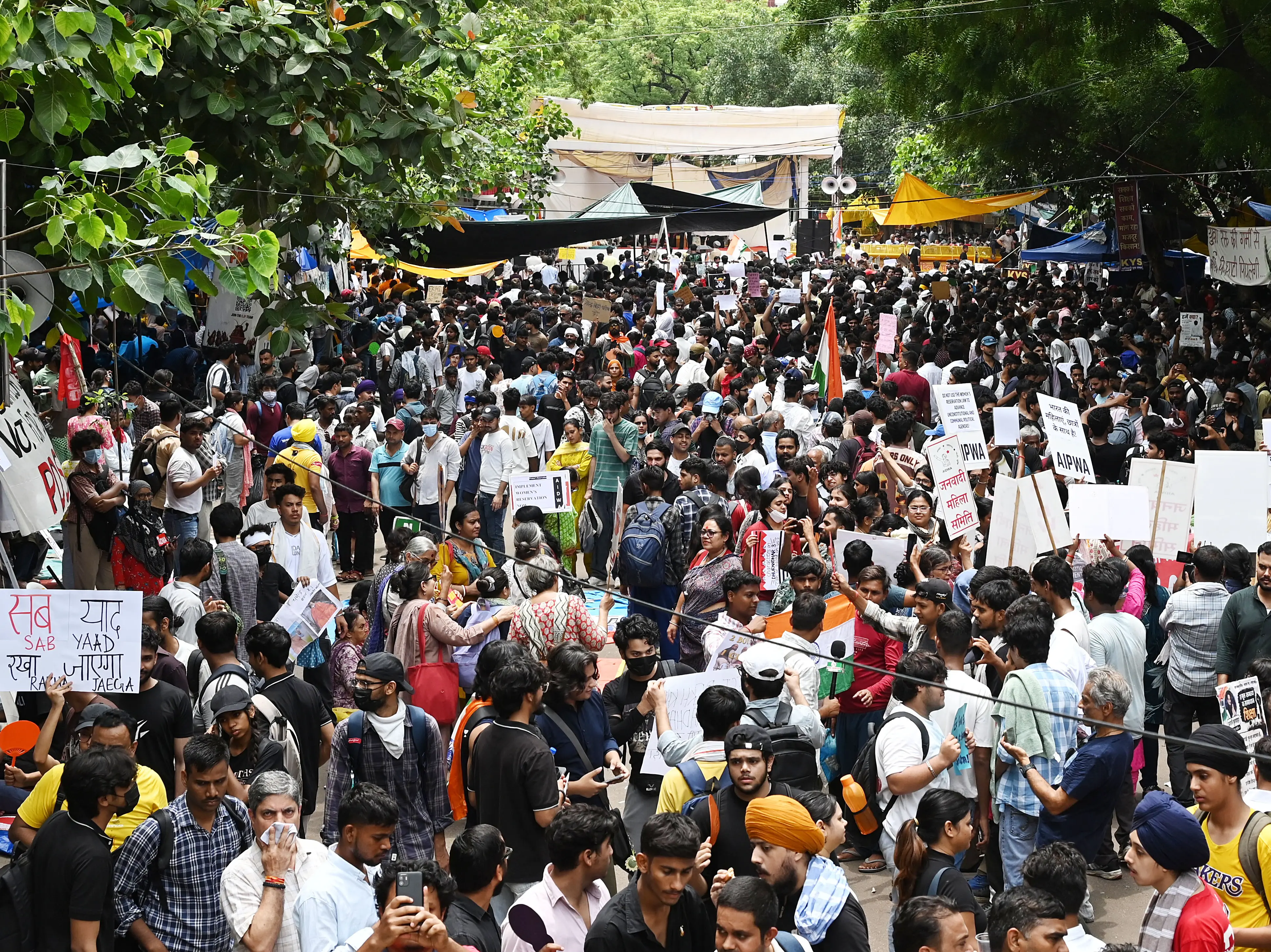
Protesters in large numbers continue their protest at Jantar Mantar in support of the Cockroach Janata Party (CJP), demanding the resignation of Union Education Minister Dharmendra Pradhan over alleged examination irregularities and NEET paper leak, in New Delhi on Thursday. Photograph: (ANI)
Amid Delhi NEET protests and internet curbs, Bluetooth mesh apps like Bridgefy, Briar and Bitchat are gaining attention for enabling offline messaging without mobile data or traditional networks.
The protests at Delhi’s Jantar Mantar have brought focus to messaging apps such as Bridgefy, Briar and Bitchat that use Bluetooth mesh technology. Unlike WhatsApp or Signal, these applications are designed to keep users connected even when mobile networks are unavailable, or internet services are suspended. This comes as internet services were disrupted in parts of central Delhi amid protests over the NEET-UG paper leak.
How do these apps work without the internet?
When mobile networks go offline, Bluetooth mesh apps rely on the phones around them to keep messages moving. Instead of sending data to internet servers, these apps use Bluetooth Low Energy (BLE) to create direct links between nearby devices.
Every smartphone running the app becomes a small relay station. A message sent by one user can move from phone to phone, jumping across nearby devices until it reaches the intended recipient. This allows communication even without mobile data, Wi-Fi or cellular signals.
The catch is that the network depends on people being close enough and using the same app. A crowded area with many connected users can keep messages travelling, but a lack of nearby devices can break the communication chain.
Why network size matters
Trending Stories
&im=FitAndFill=(700,400)&imwidth=280&imheight=210&format=webp&quality=medium)
&imwidth=280&imheight=210&format=webp&quality=medium)
&imwidth=280&imheight=210&format=webp&quality=medium)
&imwidth=280&imheight=210&format=webp&quality=medium)
&imwidth=280&imheight=210&format=webp&quality=medium)
&imwidth=280&imheight=210&format=webp&quality=medium)
&imwidth=280&imheight=210&format=webp&quality=medium)
&im=FitAndFill=(700,400)&imwidth=280&imheight=210&format=webp&quality=medium)
&imwidth=280&imheight=210&format=webp&quality=medium)
&imwidth=280&imheight=210&format=webp&quality=medium)
&imwidth=280&imheight=210&format=webp&quality=medium)
&imwidth=280&imheight=210&format=webp&quality=medium)
&imwidth=280&imheight=210&format=webp&quality=medium)
&imwidth=280&imheight=210&format=webp&quality=medium)
&imwidth=280&imheight=210&format=webp&quality=medium)
&imwidth=280&imheight=210&format=webp&quality=medium)
&imwidth=280&imheight=210&format=webp&quality=medium)
&imwidth=280&imheight=210&format=webp&quality=medium)
&imwidth=280&imheight=210&format=webp&quality=medium)
&imwidth=280&imheight=210&format=webp&quality=medium)
&imwidth=280&imheight=210&format=webp&quality=medium)
&im=FitAndFill=(700,400)&imwidth=280&imheight=210&format=webp&quality=medium)
&imwidth=280&imheight=210&format=webp&quality=medium)
&imwidth=280&imheight=210&format=webp&quality=medium)
&imwidth=280&imheight=210&format=webp&quality=medium)
&imwidth=280&imheight=210&format=webp&quality=medium)
&imwidth=280&imheight=210&format=webp&quality=medium)
&imwidth=280&imheight=210&format=webp&quality=medium)
&imwidth=280&imheight=210&format=webp&quality=medium)
A Bluetooth mesh network does not require a fixed number of users to function. Two compatible devices can exchange messages directly, but the network becomes more reliable as more participants join. Every additional device increases the chances of finding a path for messages to travel.
If only a handful of people are using the app or if users are spread too far apart, the relay chain breaks, preventing messages from reaching recipients beyond Bluetooth range. In such cases, messages may remain undelivered until another compatible device comes within range.
How useful are Bluetooth mesh apps during protests or disasters?
In situations where mobile networks are disrupted, Bluetooth mesh apps can provide a temporary communication lifeline. During protests, natural disasters or large public gatherings, these platforms allow people to exchange messages without relying on internet access or telecom services.
However, their success depends heavily on the situation around them. A crowded protest site or disaster zone with many users running the same app can create a stronger network, allowing messages to move across several devices. But in areas with fewer users, the connection can weaken quickly as there may not be enough phones available to relay messages.
These apps are therefore not a replacement for regular messaging platforms. They work best as backup tools when conventional networks fail, offering limited but useful communication in specific situations rather than a complete alternative to internet-based services.

