Stephen Hawking’s terrifying alien attack warning resurfaces amid 'mothership' UFO fears: It is 'something we wouldn't want to meet'

&imwidth=600&imheight=450&format=webp&quality=medium "Stephen Hawking’s terrifying alien attack warning resurfaces amid 'mothership' UFO fears: It is 'something we wouldn't want to meet'")
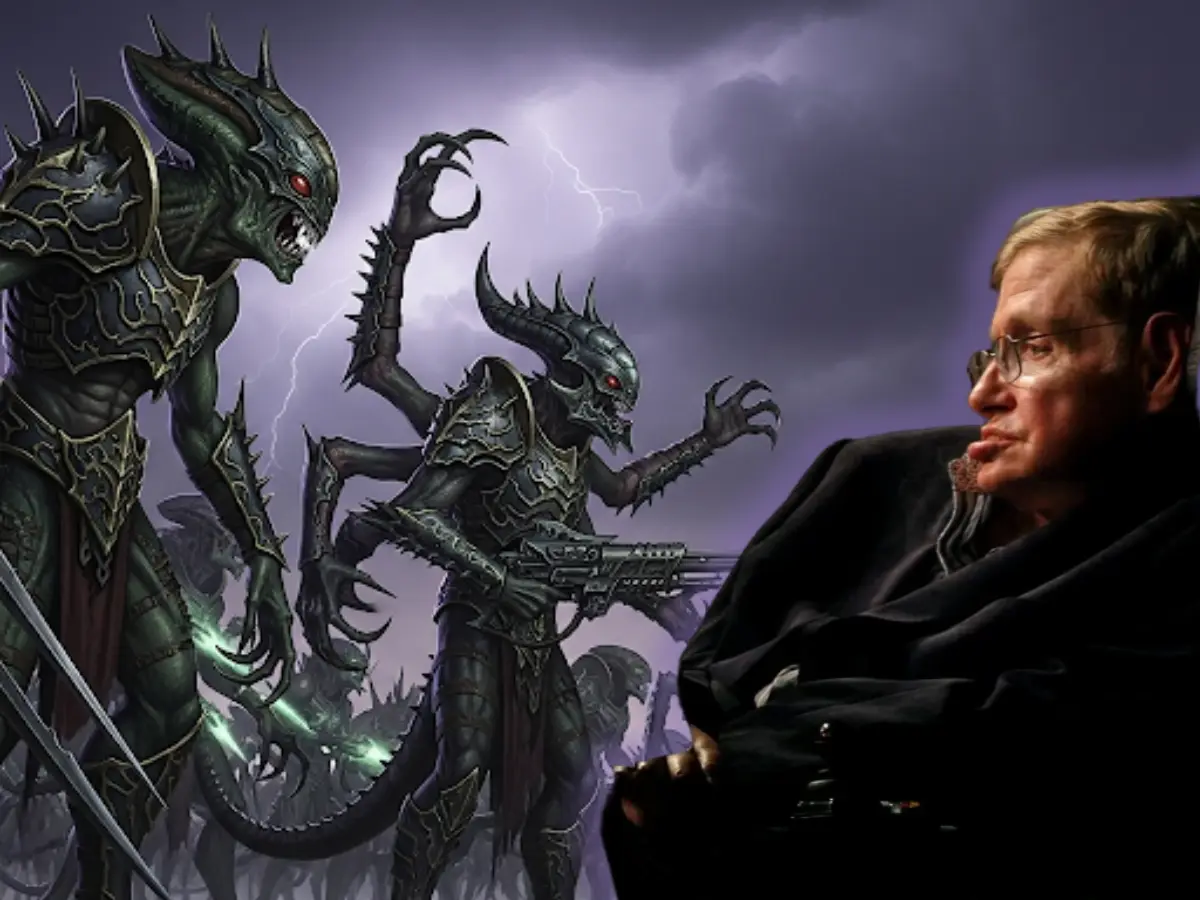
AI-generated image of aliens attacking (L) cutout image Stephen Hawking (R) Photograph: (WION Web Desk)
Before his death, Stephen Hawking consistently warned humanity against contacting aliens. As interest in UFOs and little green men comes to the fore, an ominous warning he made has also resurfaced. What did Stephen Hawking say about aliens? Is humanity in danger? All you need to know.
Stephen Hawking, the renowned physicist known for his contributions to humanity's understanding of black holes, the cosmos, and the nature of the universe, once warned that if aliens make contact with us, they won't be kind and might view Earth as just another planet to plunder. The world-renowned scientist's warning has once again entered the spotlight as intrigue around UFOs and extraterrestrial life continues to escalate. This is amplified by reports of a possible alien warship that may strike around November and as US Vice President JD Vance revealed his "obsession" with the little green men. "I'm obsessed with the whole UFO thing. What’s actually going on? What were those videos all about? What’s actually happening?" He said recently while appearing on the Ruthless podcast. What did Stephen Hawking say about aliens? Is humanity in danger? All you need to know.
Stephen Hawking's alarming warning on aliens and extraterrestrial vehicles
Before his passing in 2018, Hawking was known to persistently caution against intentional efforts to communicate with aliens, especially those potentially far superior to humans. He warned that an intellectually superior species may view our planet as a world ready to plunder instead of approaching us with goodwill. In an ominous warning, he suggested that such contact may even jeopardise humanity's survival.
In a 2010 episode of 'Into the Universe', the genius famously said that, "If aliens ever visit us, the outcome might be similar to when Columbus landed in America, which didn't turn out well for the Native Americans." Pointing at how historically dominant societies, when they encounter less developed cultures, tend to dominate and disregard suffering that isn't their own, he argued that humans only need to look at themselves "to see how intelligent life might develop into something we wouldn't want to meet". According to Hawking, it would be stupid to presume that a sophisticated civilisation would inherently embrace peace.
Stephen Hawking further theorised that a developed alien species that possesses advanced interstellar travel capabilities would probably (like humans are currently doing) have depleted their natural resources. Thus, driving them to travel the cosmos to look for newer, resource-rich worlds. In such a case, Earth could look less like an ally and more like a viable conquest.
Notably, Hawking was not alone in warning about how dangerous contact with aliens could be. Carl Sagan, an American astronomer and planetary scientist who dedicated his life to research on his research on the possibility of extraterrestrial life, is also known to have voiced a need for caution. He pointed out that alien psychology could be beyond our predictions.
Trending Stories
)
)
)
)
&im=FitAndFill=(700,400))
&im=FitAndFill=(700,400))
)
)
)
)
)
)
)
)
)
)
)
)
)
)
)
)
)
)
)
)
)
)
)
&im=FitAndFill=(700,400))
)
)
&im=FitAndFill=(700,400))
&im=FitAndFill=(700,400))
So, what should humans do?
Staunchly shunning attempts to actively try to communicate with aliens, Stephen Hawking instead proposed passive monitoring was the way to go. However, some scientists argue that humanity has been beaming radio waves and signals into space for over a century. They posit that intelligent alien species may already know we exist, and if Hawking's warning was in fact a premonition, then we may already be doomed.

