Scientists make a startling discovery about the Hiroshima atomic bombing after nearly 81 years

&imwidth=600&imheight=450&format=webp&quality=medium "Scientists make a startling discovery about the Hiroshima atomic bombing after nearly 81 years")
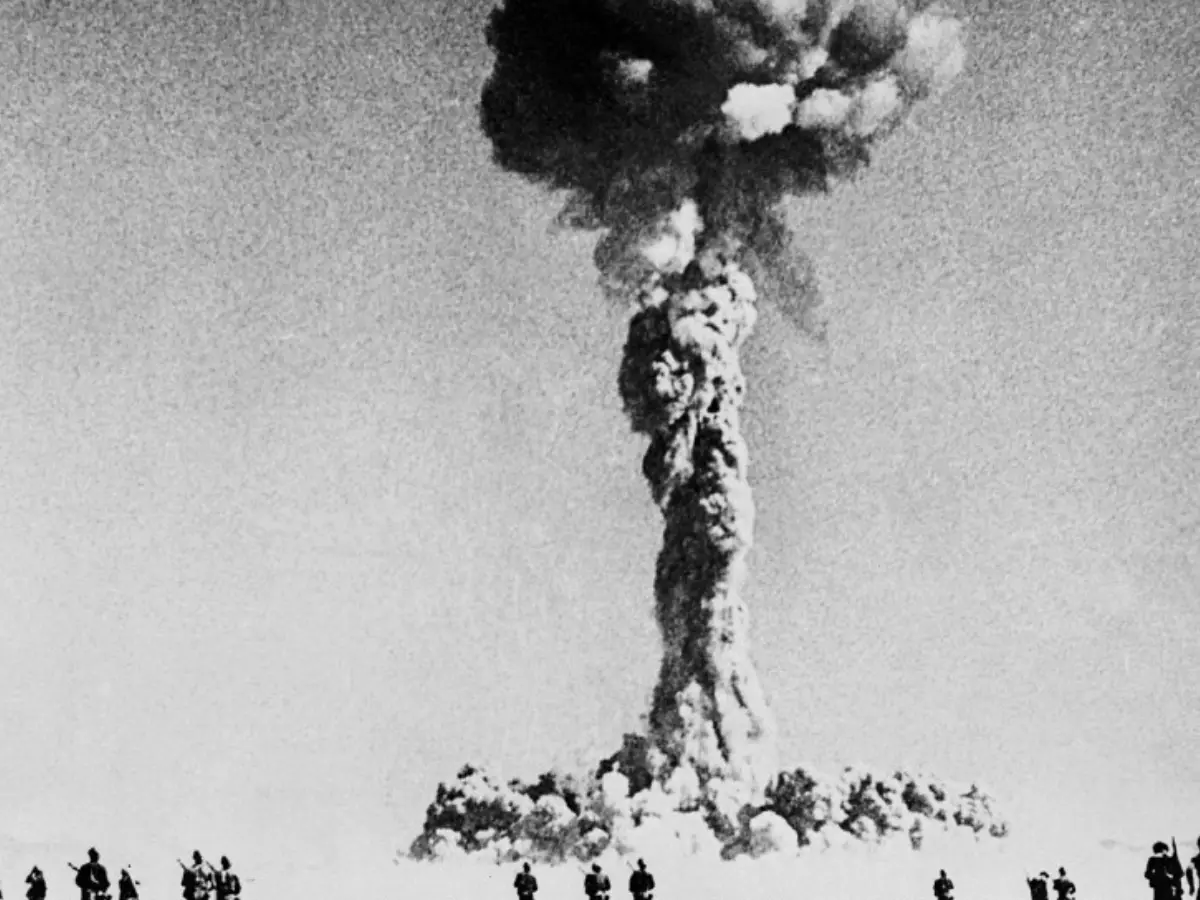
Hiroshima atomic bombing birthed a new material never before seen on Earth. Photograph: (AFP)
The Hiroshima bombing not only changed the world, but it also acted as a catalyst for the formation of a new material. After nearly 81 years, scientists have found a strange material inside the Hiroshimaite on the beaches.
The Hiroshima atomic bombing created a new material which has only been discovered now, after over 80 years. The horrific event killed more than 70,000 people and changed the world forever. An analysis has revealed a "silicon-rich multicomponent alloy inside a microscopic spherule" from the beach sands of Hiroshima. Known as Hiroshimaites, these fragments of molten debris were created when the explosion triggered temperatures to rise to 7,000 degrees Celsius within seconds.
"We report the discovery of a previously unknown alloy preserved within a Hiroshimaite spherule recovered from beach sands of Hiroshima Bay, formed during the 6 August 1945 atomic airburst," the study authors wrote in the journal Science Advances. "It’s a historical fact that these two events did occur and generated conditions comparable in nature to hypervelocity planetary collisions, meteor impacts, and lightning strikes," the team wrote in the paper.
Fireball and the resulting microscopic droplets
Researchers said that the explosion triggered a fireball which comprised vapourised building materials, metals, soil, glass, and water. This fireball then rapidly cooled down into microscopic droplets that settled in the landscape. They are made mainly of calcium-aluminium-silicon glasses that were formed when the temperature reached roughly 1,800 degrees Celsius.
Now scientists have found a new class of "Hiroshimaite materials" that form at an even higher temperature range. They found small droplets of iron-rich alloys, including iron-chromium alloys with varying amounts of nickel, manganese and molybdenum. Present as tiny rounded droplets and irregular grains, the alloys made up only about three per cent of the glass spheres. This mix of local metals was present in the Hiroshima sands when the explosion happened.
Trending Stories
)
)
)
)
&im=FitAndFill=(700,400))
)
)
)
)
)
)
)
)
)
)
)
)
)
)
)
&im=FitAndFill=(700,400))
)
)
)
)
)
)
)
)
)
&im=FitAndFill=(700,400))
)
)
)
&im=FitAndFill=(700,400))
But one small grain contained far more silicon than the surrounding iron-chromium alloys. It had about 63 per cent iron, 15 per cent chromium, nine per cent nickel, and seven per cent silicon. Such crystals would not form under normal circumstances.
The findings show the unexpected way matter can react under extreme temperatures, causing even a new class of materials to form.

