Another Kuiper Belt? Mystery zone spotted at the edge of our solar system

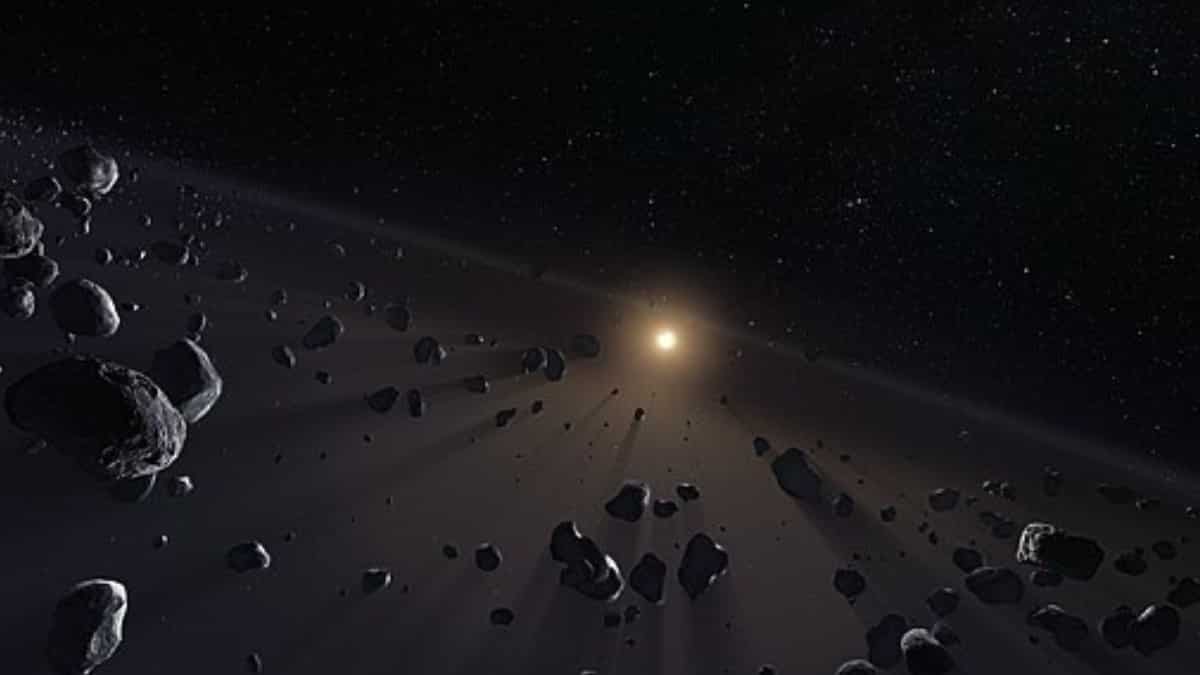
Kuiper Belt
Astronomers have found new objects lurking towards the edge of our solar system. The Kuiper Belt that lies beyond Neptune is a cold, ring-shaped field filled with multiple icy bodies. Pluto lives here, and so does Arrokoth and several more bodies.
Known as Kuiper Belt Objects (KBOs), astronomers have noticed a rise in the number of these bodies. They are between 70 and 90 astronomical units from the Sun but are much farther away from the inner population of KBOs. The gap is so wide that experts say it appears practically like a whole new Kuiper Belt in itself.
"If this is confirmed, it would be a major discovery," says planetary scientist Fumi Yoshida of the University of Occupational and Environmental Health Sciences and Chiba Institute of Technology in Japan.

To understand the distance between the objects in the Kuiper Belt and the newly discovered bodies, note that the belt itself extends from the orbit of Neptune at around 30 astronomical units from the Sun to about 50 astronomical units from the Sun. An astronomical unit is the average distance between Earth and the Sun.
The Kuiper Belt is being constantly studied to know more about the outer regions of our solar system. To date, using the National Astronomical Observatory of Japan's Subaru Telescope in Hawai'i, astronomers have found 263 new Kuiper Belt Objects.
Also Read:Tiny volcanoes continued to erupt on Moon after the bigger ones died down
)
FACT CHECK: Why did PM Modi ask Xi ‘is it okay’ at BRICS Summit? New video reveals...
)
Flying cars in UAE: Ras Al Khaimah signs deal with Chinese company to test new transport
)
Indian Cinema bets big on mythology, brings ancient stories to modern audiences
)
Pentagon revives mandatory testosterone testing for male troops aged 30 and above
)
Fast bowler Brydon Carse faces no charges over Derby nightclub incident
&im=FitAndFill=(700,400))
Meet top 5 bowlers in latest ICC T20I rankings
)
NASA research plane reaches 61,000 feet over Panama
)
US hiding troop deaths in Iran war? Toll higher than Pentagon count, claims report
)
Russia holds first parliamentary elections since the beginning of the Ukraine war
)
Brigitte Bardot’s private collection set for Paris auction; key items and prices revealed
66 years of the Indus Waters Treaty: How India and Pakistan settled a bitter river dispute
)
China may have gained access to US's classified F-35 jets; parts meant for repairs diverted to Hong Kong, sparking Pentagon inquiry
)
Pyongyang dismisses US, western pressure over nuclear programme
)
Zendaya and Tom Holland step out for a low-key date in Los Angeles
)
India seeks to build a full semiconductor supply chain
)
The Verdict | When precision fails: US commits war crime in Minab school strike, UN finds
)
‘Will go to any extent’: Pakistan vows to defend Saudi Arabia amid Houthi attacks
)
Google’s Gemini AI hacks real systems by guessing passwords during security test
)
Who is Khalilur Rahman? All you need to know about 81st UN General Assembly President
)
Tirupati Laddu ghee adulterated with chemicals, says ED, supplier arrested
)
Trump bans CNN, MS NOW and Politico from White House over ‘FAKE NEWS’
)
IIT Bombay student dies by suicide, was caught seeking AI help during exams
)
Pak: A series of counter terrorism operations in Khyber Pakhtunkhwa
)
Trump signs Russia sanctions law: India faces fresh 100% tariff threat over Russian oil
)
Godfather of AI Geoffrey Hinton gives US lawmakers a one-year warning on AI
)
Ukraine plans record $109 bn defence spending, nearly two thirds of budget amid Russia war
)
Trump signs Russia sanctions bill into law, targets Moscow’s energy sector
)
Why Ranveer Singh’s Dhurandhar missed India’s Oscar entry; FFI jury member reveals what happened
&im=FitAndFill=(700,400))
Meet top 5 Indian batters with fastest T20I centuries
&im=FitAndFill=(700,400))
New Friday OTT releases (September 18, 2026): Lust Stories 3, You+Me, Best of the Best- 8 new titles coming on Netflix, Prime Video and more
)
Trump's Greenland dream comes true? POTUS announces 'Infinite Life' deal with Denmark, claims permanent US control
)
US And Denmark reach Greenland deal, Trump announces expanded military presence
)
Trump 2.0: Dark days ahead for America’s ‘imperial presidency’
)
Africa is splitting, and a lot sooner than estimated, giving way to a new ocean
&im=FitAndFill=(700,400))
From Abhishek Sharma to Sahil Chauhan, 5 batters with fastest T20I hundreds
)
Surprisingly, at least 11 of these new KBOs reside in an area far beyond the region where the belt was thought to end.
The mysterious gap beyond Kuiper
An international team of astronomers led by Wesley Fraser of the National Research Council of Canada found that these objects are out in the region past 70 astronomical units. To put the distance into perspective, know that the New Horizons spacecraft heading into deeper space after conducting a flyby of Pluto in 2015 is currently at nearly 60 astronomical units from the Sun.
Going by the number of these objects spotted, the researchers were able to figure out the density of the outer Kuiper Belt ring which is expected to be lower than the inner population, but high enough to constitute a new structure.
The region between 55 and 70 astronomical units has almost nothing. This gap is a strange discovery for our solar system, but astronomers say this is a regular feature in other forming planetary systems.
"Our Solar System's Kuiper Belt long appeared to be very small in comparison with many other planetary systems, but our results suggest that idea might just have arisen due to an observational bias," Fraser explains.
"So maybe, if this result is confirmed, our Kuiper Belt isn't all that small and unusual after all compared to those around other stars."

