National tourism day 2022: Here is a list of a few stunning tourist attractions in India


Taj Mahal, Agra
Listed as one of the new seven wonders of the world, Taj Mahal, is an amalgamation of several elements of Islamic design including arches, minarets and domes. Facing Yamuna river, the monument has been constructed using white marble.

Red Fort, Delhi
Red Fort was built by Shah Jahan in 1648 to showcase Mughal power. Constructed using stunning red sandstone, the monument spreads fro over two kilometres. It also comprises of two large gates: The Lahore Gate and Delhi Gate.
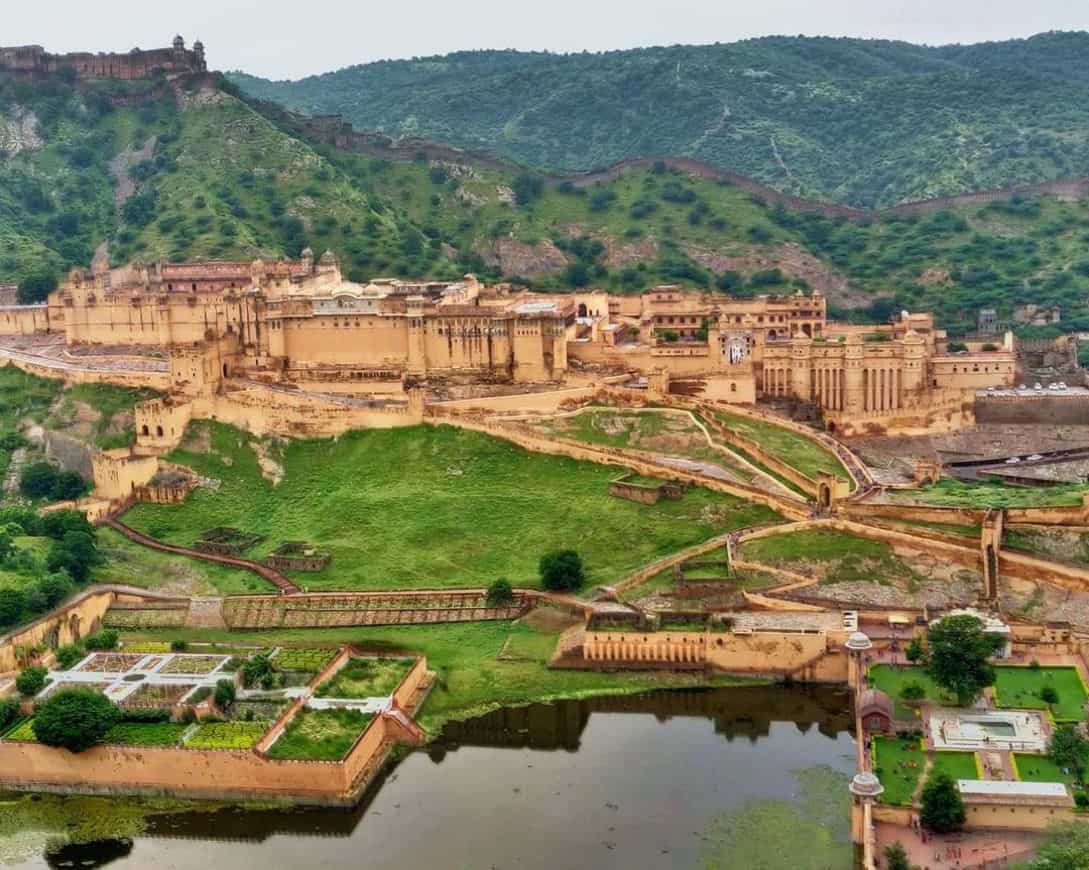
Amer Fort, Jaipur
Constructed as a fortified palace in 1592, the fort is carved into the hillside. Several highlights of the fort include Jaleb Chowk, the Shila Devi Temple. There is also an adjoining hall of public audience deemed as Diwan-i-Am.

Gateway of India, Mumbai
Overlooking the Arabian Sea, the Gateway stands 26 meters tall. This is counted as a must see tourist spot in Mumbai. Known for its Indo-Saracenic design, the monument has been constructed entirely of yellow basalt and concrete.

The Ellora caves, Aurangabad
The UNESCO World heritage site was built between the 5th and 10th centuries by Buddhist, Jain, and Hindu monks. The site includes 34 carved monasteries, chapels, and temples.Twelve of them are buddhist, 17 are hindu, and five belong to the jain faith

Mysore Palace, Karnataka
The beautiful three-storied palace was completely rebuilt in 1897 after a devastating fire. The palace houses elegant square towers and domes, ceilings and pillars in Durbar hall, a marriage pavilion.

Mehrangarh Fort, Jodhpur
Built in the 15th century, Mehrangarh fort was one of the largest fortifications in India. The aim of building this massive fort was to safeguard people of Jodhpur. The fort also has a museum housing a collection of artifacts related to the Maharajas.

Qutab Minar, New Delhi
This minaret is also a UNESCO world heritage site in Mehrauli area of South Delhi. The 73 metre high tower of victory was built in 1193 by Qutab-ud-din Aibak after the defeat of Delhi's last Hindu kingdom.
The tower contains five distinct storeys.
)

)
)
)