

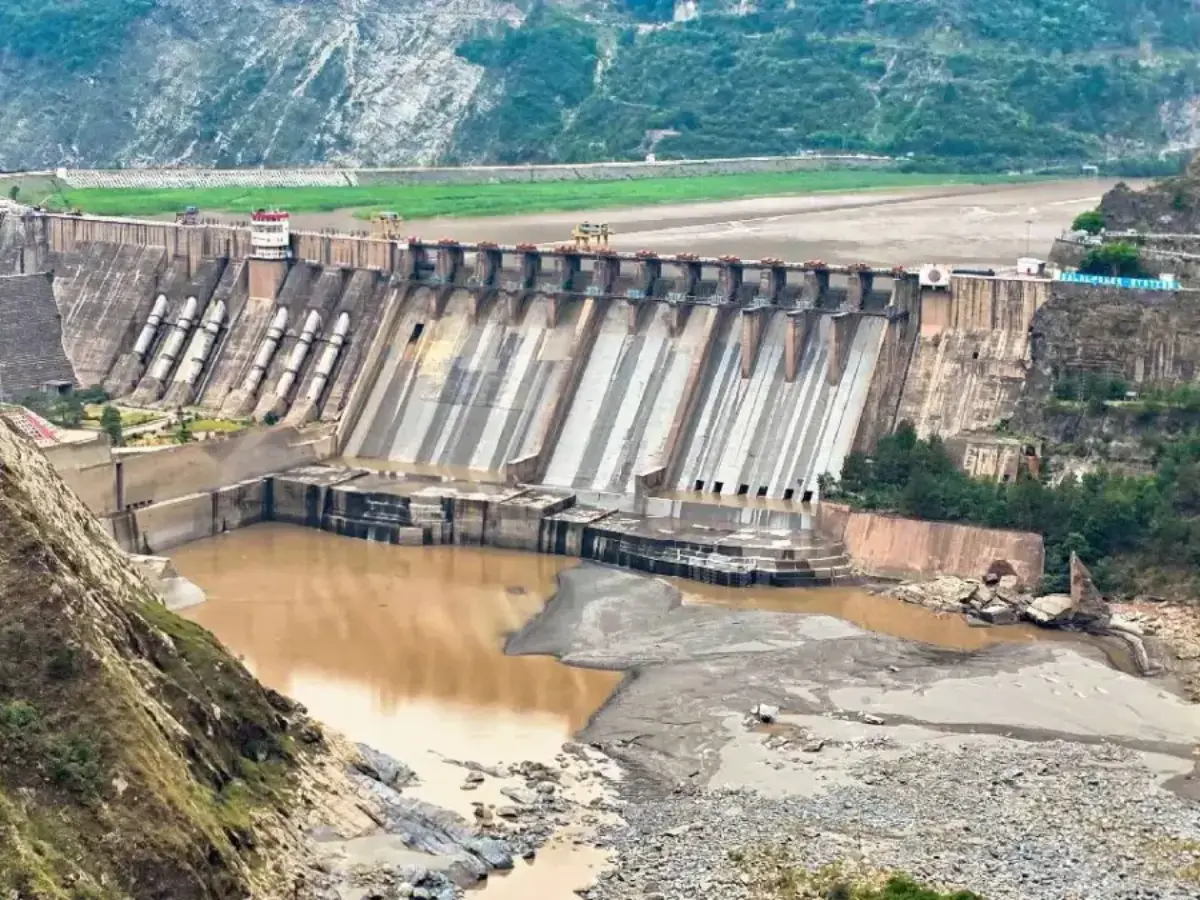
&imwidth=800&imheight=600&format=webp&quality=medium "With Indus Waters Treaty in abeyance, India alerts Pakistan about flood situation via High Commission")
India on Sunday (Aug 24) informed Pakistan about the flood situation in the Tawi river via its Indian High Commission to the Pakistan Foreign Ministry. This is the first time India has used this mechanism to alert Pakistan about the flood situation via the High Commission. This was not done through the Indus Waters Treaty, which remains in abeyance. The Indus Waters Treaty has been in abeyance after the Pahalgam terror attack. Ideally, under the Indus Waters Treaty, information is shared through the Indus Water Commissioner.
Heavy rainfall has caused severe flooding in Jammu, Jammu and Kashmir, with 190.4 mm of rain recorded in 24 hours, the second-highest August downpour in a century. Low-lying areas like Janipur, Roop Nagar, Talab Tilloo, Jewel Chowk, New Plot, and Sanjay Nagar were inundated, with floodwaters entering homes, damaging boundary walls, and sweeping away vehicles. Rivers such as Tawi, Chenab, Ujh, Ravi, and Basantar swelled, prompting high alerts for disaster response teams.
Indus Waters Treaty
India and Pakistan, in 1960, made a formal agreement, called the Indus Waters Treaty, to decide how water would be shared between both countries from the Indus River. The need for a treaty for water sharing arose after Independence when control over the river became a point of potential conflict between the two nations. Pakistan went to the United Nations (UN), and the UN brought in the World Bank to mediate. After almost nine years of negotiation, India's then-Prime Minister Jawaharlal Nehru and Pakistan's then-President Ayub Khan finally signed the agreement in 1960. After the terror attack on April 22 in Baisaran Valley of Jammu and Kashmir's Pahalgam district that killed 26 tourists, India put into abeyance the Indus Waters Treaty. Pakistani leaders have issued "war threats" to India over this decision.

