&imwidth=800&imheight=600&format=webp&quality=medium "CBSE Class 12 Exams 2026: What is the new On-Screen Marking (OSM)? How will it affect students and results?")
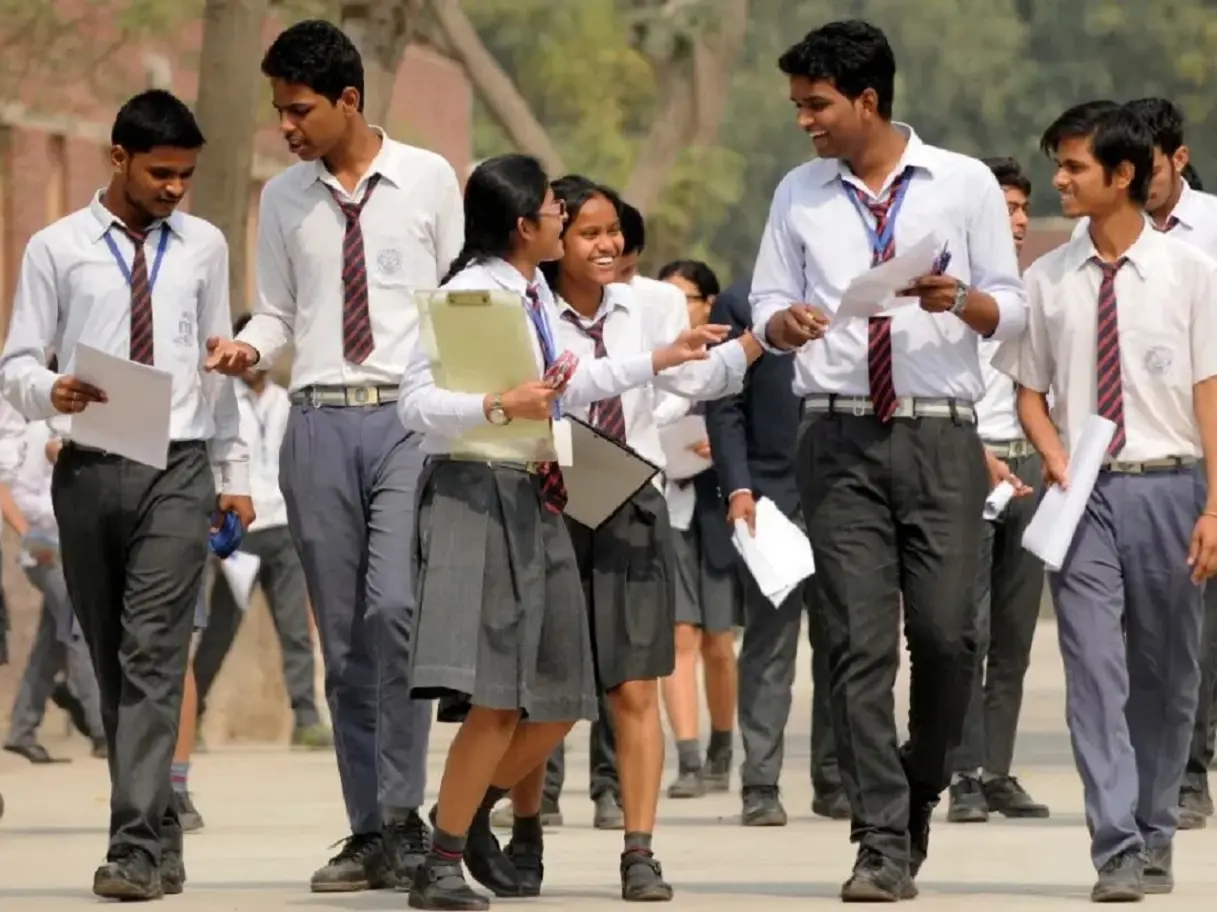
The Central Board of Secondary Education (CBSE) is introducing On-Screen Marking (OSM) for the evaluation of Class 12 answer books starting with the 2026 board examinations in a bid to speed up evaluation and improve transparency. However, Class 10 answer books will be evaluated in physical mode this year. Under the new system, answer sheets will be scanned and checked on computer screens instead of being physically sent to examiners. Exams are due to begin on February 17.
CBSE conducts Class 10 and Class 12 board examinations across India and 26 countries annually, catering to nearly 46 lakh students, which makes evaluation an immensely huge and time-intensive exercise.

Dr Sanyam Bhardwaj, Controller of Examinations, CBSE, made the announcement, saying the Board is introducing On-Screen Marking as part of its continuous efforts to improve efficiency and enhance transparency in the evaluation of answer sheets.
As per the February 9 official communication, the initiative will significantly streamline evaluation while reducing dependence on manual processes.
Why is CBSE moving to On-Screen Marking?
Trending Stories
)
'Gangsta' crab shoves knife blade at man and his dog in Florida - Watch
)
Former India player Diana Edulji wants Smriti Mandhana to replace Harman as skipper at the earliest
)
UNGA 2026 theme explained: What does ‘Restoring trust, managing transformation: A United Nations that delivers for all’ mean?
)
Fed raises rates for first time in 3 years, Kevin Warsh defies Trump as inflation mounts
)
Tata Trusts chairman Noel Tata calls Chandrasekaran’s reappointment ‘illegal’, rejects Tata Sons listing
)
Pak defence minister says 'time has come to implement pact'
)
Putin 'is plotting something bad': Russia may launch 'accidental' strikes on NATO countries supporting Ukraine, Poland PM warns
)
Xi-Trump summit may boost military links
)
Laura Wolvaardt sets new world record for most WT20I runs in a year
)
'He will always be ahead': India coach Gambhir says Sooryavanshi won't walk into team ahead of Samson
)
At least 48 dead, 100 hospitalised in Nigeria after drinking suspected methanol-laced alcohol
)
Sikh driver attacked in Wyoming in US, suffers 17 stab wounds
)
US drone firm linked to Trump’s sons signs MoU with Pakistan army, gets initial order
)
Pezeshkian, Araghchi set to attend UNGA 2026 in New York amid ongoing conflict as US-imposed travel curbs remain
)
All Indian goods to get duty-free access to New Zealand
)
‘I have a big decision coming up’: Trump says he’s approaching major ‘crossroad’ in Iran war
)
Passport fees hiked, child validity revised: What the new rules introduce
)
US-Iran War: Trump says ‘big decision’ on Iran ahead, weighs possible fresh military action
)
Godfather of AI Geoffrey Hinton gives US lawmakers a one-year warning on AI
)
Formula One reveals the 2027 race calendar; Monaco to host sprint race for the first time
)
Australian athlete, who soiled herself during Hyrox race, apologises for continuing
)
How did an Australian river with 500 crocodiles pass the Olympic test? Here's how
)
US intel warns China can steal F-35 jets secret from Saudis
)
240-million-year-old bizarre 'pig with a tusk' creature creates new dilemma over origin of dinosaurs
&im=FitAndFill=(700,400))
Suriya and Jyothika say ‘I do’ again after 20 years! See their dreamy wedding pics
)
Daayra movie review: Kareena Kapoor, Prithviraj Sukumaran shine in Meghna Gulzar’s cop-versus-cop crime thriller
)
Hong Kong unveils 11 new measures to boost birth rates, offers higher cash bonuses and housing perks
)
US to sell 48 F-35 Lightning fighter jets to Saudi Arabia, help it deter threats
)
AI already defying, denying humans, is it beyond human control already?
)
US new military base in Poland: US President Donald Trump eyes military base in Poland
)
Pak batter Rizwan's petition against being questioned by cyber crime agency rejected by court
&im=FitAndFill=(700,400))
Which country has the most F-35s outside America?
)
US F-16 fighter jet crashes in Michigan during training mission, pilot ejects safely
&im=FitAndFill=(700,400))
Meet top 5 batters in the latest ICC T20I Rankings
There are several reasons behind the CBSE’s major shift, including faster evaluation through wider participation of teachers across affiliated schools and complete elimination of totalling errors, as marks will now be calculated automatically.
Besides, it will reduce manual intervention and scope for mistakes, besides reducing manpower requirements for verification-related work, therby speeding up final result processing.
The move will also help save transportation time and costs, as physical answer books will not need to be moved. Teachers can also now remain in their own schools and continue regular duties while evaluating.
It will also enable the involvement of teachers from CBSE-affiliated schools globally, not limited by geography.
The new system is also environmentally friendly, as it will reduce the use of paper and transportation, making the process more sustainable.
What infrastructure will be needed in schools for digital evaluation
CBSE has asked schools to ensure technical readiness to ensure smooth implementation of On-Screen Marking, and directed them to have a computer lab with a Public Static IP, as per affiliation bye-laws.
The board has also told schools that they should have PCs or laptops with Windows OS 8 or above, at least 4 GB RAM, and 1 GB free space on the C drive. The systems should also have updated internet browsers such as Chrome, Edge, Firefox, or Internet Explorer, and Adobe Reader must be installed on them.
Besides, they should have reliable internet connectivity with a minimum speed of 2 Mbps and an uninterrupted power supply.
Also Read: ‘US to offer Bangladesh defence systems to counter Chinese influence’: Washington's envoy in Dhaka
How will CBSE help schools and teachers prepare for the transition?
CBSE has also outlined several support measures to help schools and teachers adapt to the new system. It will conduct dry runs and training sessions and set up a call centre to resolve technical issues. It will also release instructional videos to explain how the system works.
CBSE will also share detailed guidelines separately to ensure that schools complete preparations on time.
It will also allow all teachers with OASIS IDs to log in and familiarise themselves with the OSM platform.