&imwidth=800&imheight=600&format=webp&quality=medium "Scientist finds earliest evidence that Rig Veda verses influenced civilisations outside India")
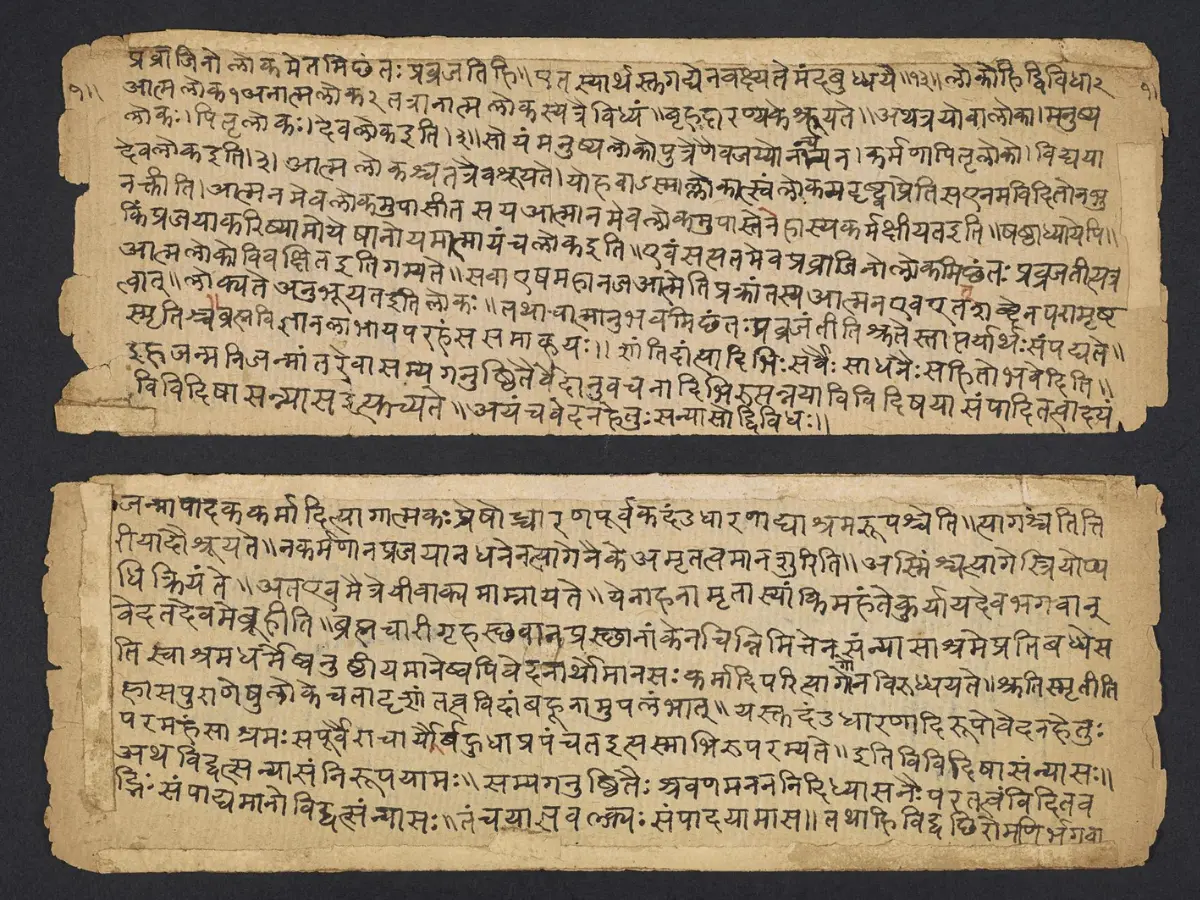
Scientists in California have found one of the earliest proofs that the Vedic culture was not limited to India. The evidence lies in music, as a study has pointed out that a hymn written on the eastern coast of the Mediterranean 3,000 years ago shares striking similarities with the Rig Veda, one of the oldest Indian sacred texts. Dan C. Baciu, of the University of California, Santa Barbara, published his comparative analysis on the Preprints.org server. He says that the Hymn to Nikkal, written in Ugarit and the Rig Veda verses shared the same cadence, or repeated melodic or rhythmic units. The researcher used computer-assisted rhythm and melody mapping to draw parallels between the two bodies of work. He wrote in his study that one in five Rig Veda verses ends with the same cadence as the Hymn to Nikkal. What makes it intriguing is that, according to him, the odds of this occurring by accident are less than one in a million. In the one written in the Mediterranean, there are two cadences - one simple and heartbeat-like, and one more intricate. Baciu says that both models are also present in the Rig Veda verses, "with one most frequently ending verses and the other linked closely to the Triṣṭubh meter," according to Baciu. Also Read: Unknown Harappan settlement discovered in Thar desert for the first time
Music connected kingdoms, lived on even after civilisations ended
While one of them is simpler, the other is complex, and Baciu says this was done deliberately. Besides the shared rhythm, there is also the echoed melodic tendencies, which "ancient commentators on the Rig Veda described as mounting upon accented syllables and falling thereafter." A digital reconstruction revealed how shockingly similar the two pieces were. Baciu's discovery shows that music was shared across different cultures and spread faster than royal decrees and political alliances. In fact, even after the kingdoms vanished, music sustained. Ugarit connected Mesopotamian and Anatolian cultures, and historians say the Mitanni kingdom served as a cultural bridge between Ugarit and India. This Bronze Age state is believed to have acted as the channel through which Vedic traditions and musical forms were exchanged. Also Read: 110 years after Maski inscription, 4,000-year-old human settlement found in Karnataka town

Rig Veda musical cadence reached Greek poetry
Baciu wrote in his paper, "The Mitanni left us two gifts. One is the earliest evidence of Vedic culture outside India. The other is this hymn, which demonstrates how music was able to unite civilisations." He says that the musical cadence continued to spread, with similar patterns being seen in Greek lyric poetry after hundreds of years. Sappho’s works, pieces of European literature, and the verses of German poet Friedrich Hölderlin in 1801 all carry the same music pattern. Baciu's research shows that music was the first global language, and challenges notions that civilisation existed in isolation.