
&imwidth=800&imheight=600&format=webp&quality=medium "110 years after Maski inscription, 4,000-year-old human settlement found in Karnataka town")
The town of Maski in Karnataka was home to humans some 4,000 years ago. The revelation was made by scientists who were digging to unearth more secrets about the quaint place in Raichur after an inscription from the age of Ashoka was found here. Scientists from the United States, Canada and India collaborated to learn more about the history of Maski. Archaeologists dug up around Mallikarjun Hill and the Anjaneya Swamy temple and discovered various artefacts and other tools. They go as far as four millennia and reveal that the region was once a thriving settlement. The three researchers - Prof Andreem M Bower from the US-based Stanford University, Peter G Johansson from McGill University, Canada and Hemanth Kadambi from the Noida University - made the breakthrough along with 20 others who assisted them. Ever since the inscription was found here from the time of the Maurya emperor, scientists have been intrigued by Maski. They have been searching for signs of human civilisation in the region.
After obtaining necessary permissions from the Archaeological Survey of India (ASI), the team planned how to go about the excavation. They surveyed the area and identified 271 points which could hold some secrets. After three months of digging, they came across evidence of a thriving society in Maski around the 11th and 14th centuries BC. This was particularly true for the area around the Mallikarjun Hill and the temple. “We have found evidence that indicates that there was a human settlement in Maski around 4,000 years ago,” Kadambi confirmed. The researchers stumbled upon pots and pans, indicating humans were present here during the age of Ashoka.
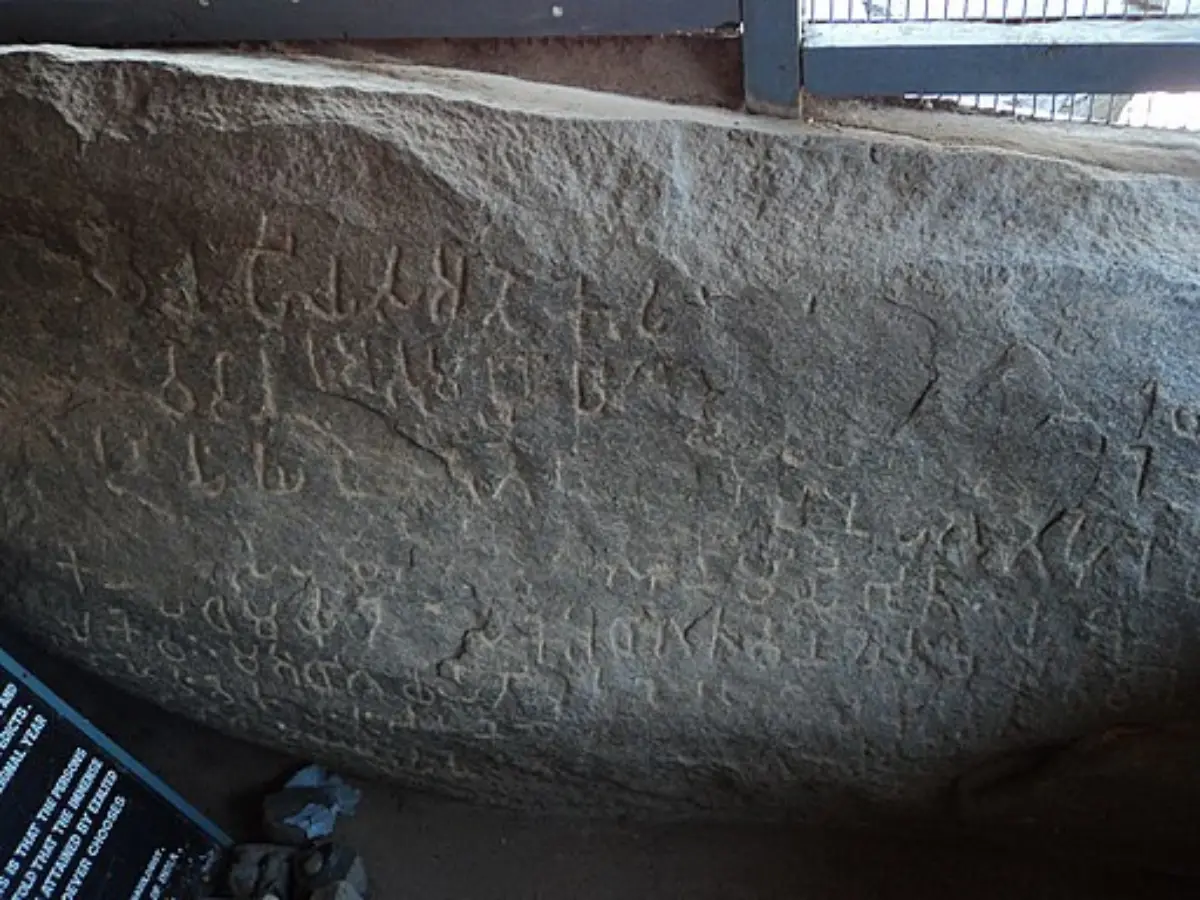
The Maski inscription from the time of Ashoka

The Maski inscription was discovered in 1915 by British gold mining engineer C. Beadon. It was carved on a rock face inside a cave. It is one of the first inscriptions from the time of the Mauryan emperor with his name clearly mentioned along with his royal title "Devanampriya" (Beloved of the Gods). The mention of the title with Ashoka's name solved a long-standing dispute that the title "Devanampriya" was indeed used for Ashoka. It was written in the Prakrit language and Brahmi script and proved that Ashoka was committed to non-violence.

