Will Voyager 1 & 2 survive the Milky Way–Andromeda galaxy collision?

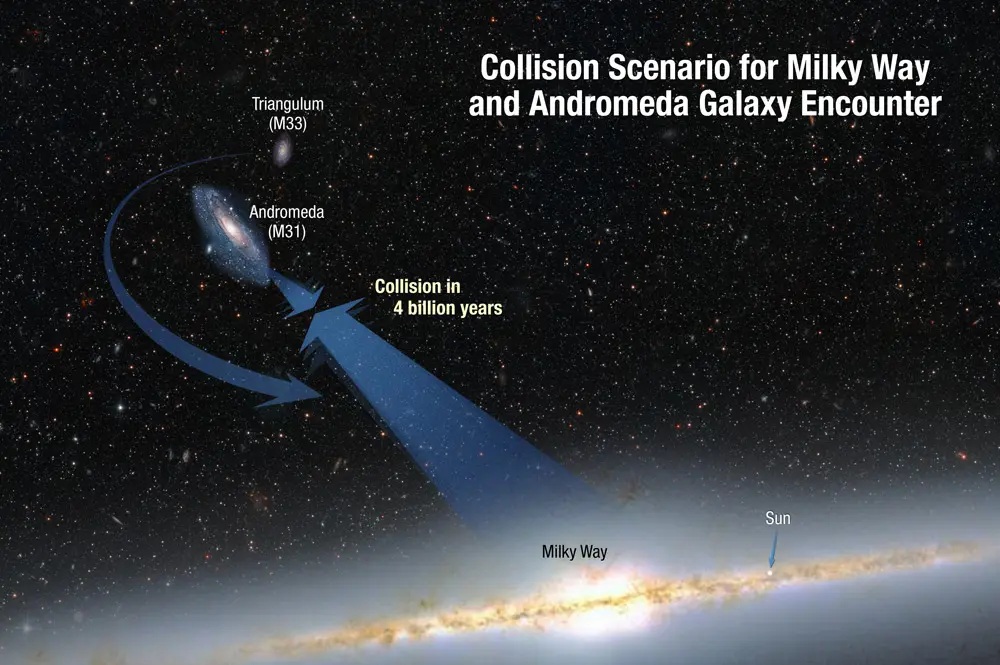
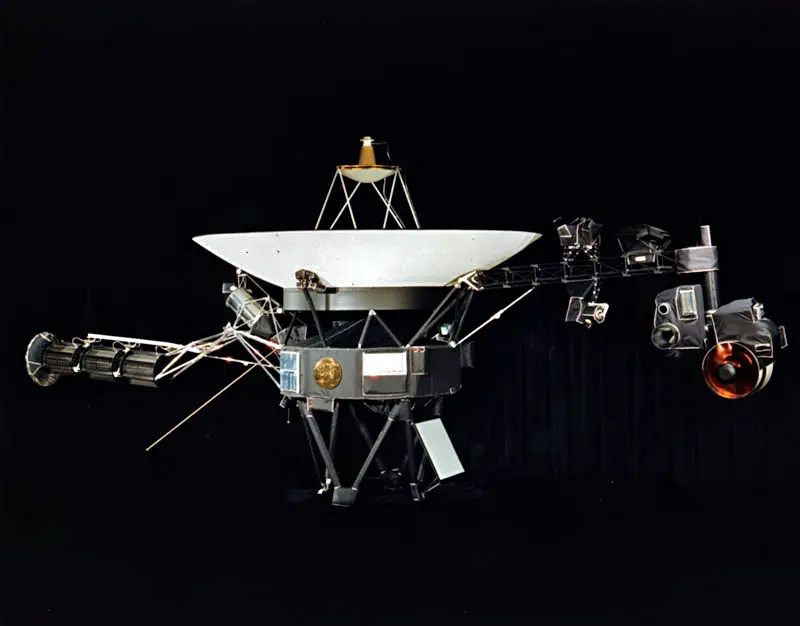
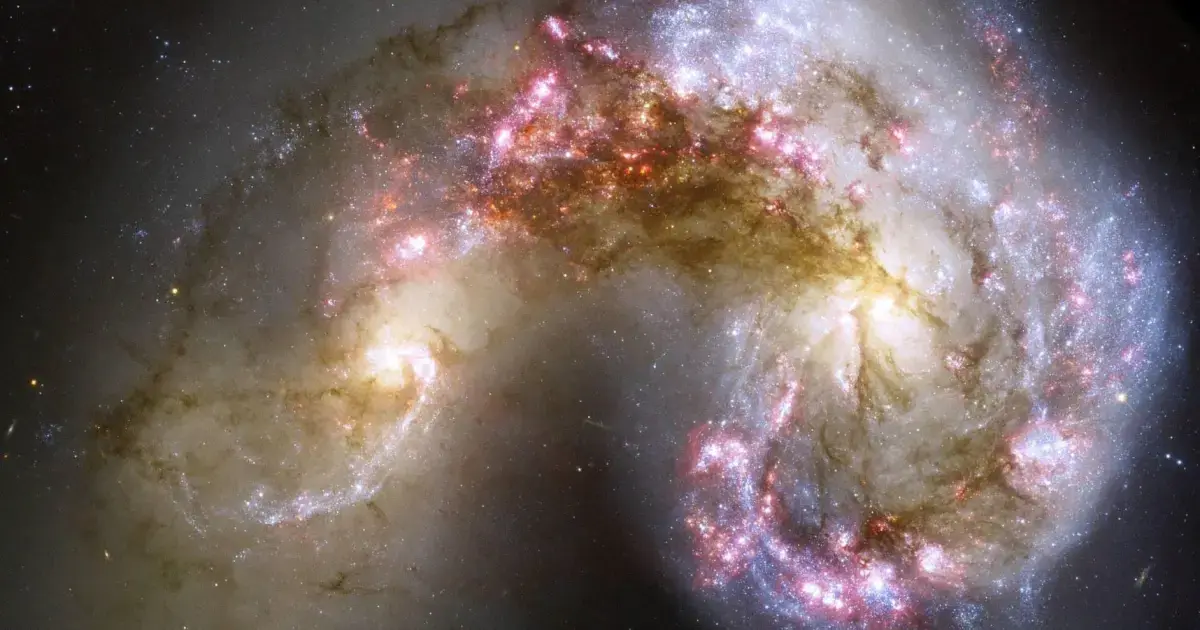
In about four billion years, the Milky Way will begin merging with the neighbouring Andromeda galaxy. Voyager 1 and 2 will still be drifting in interstellar space long after their power supplies have failed. The question arises: could they survive such a cosmic event?
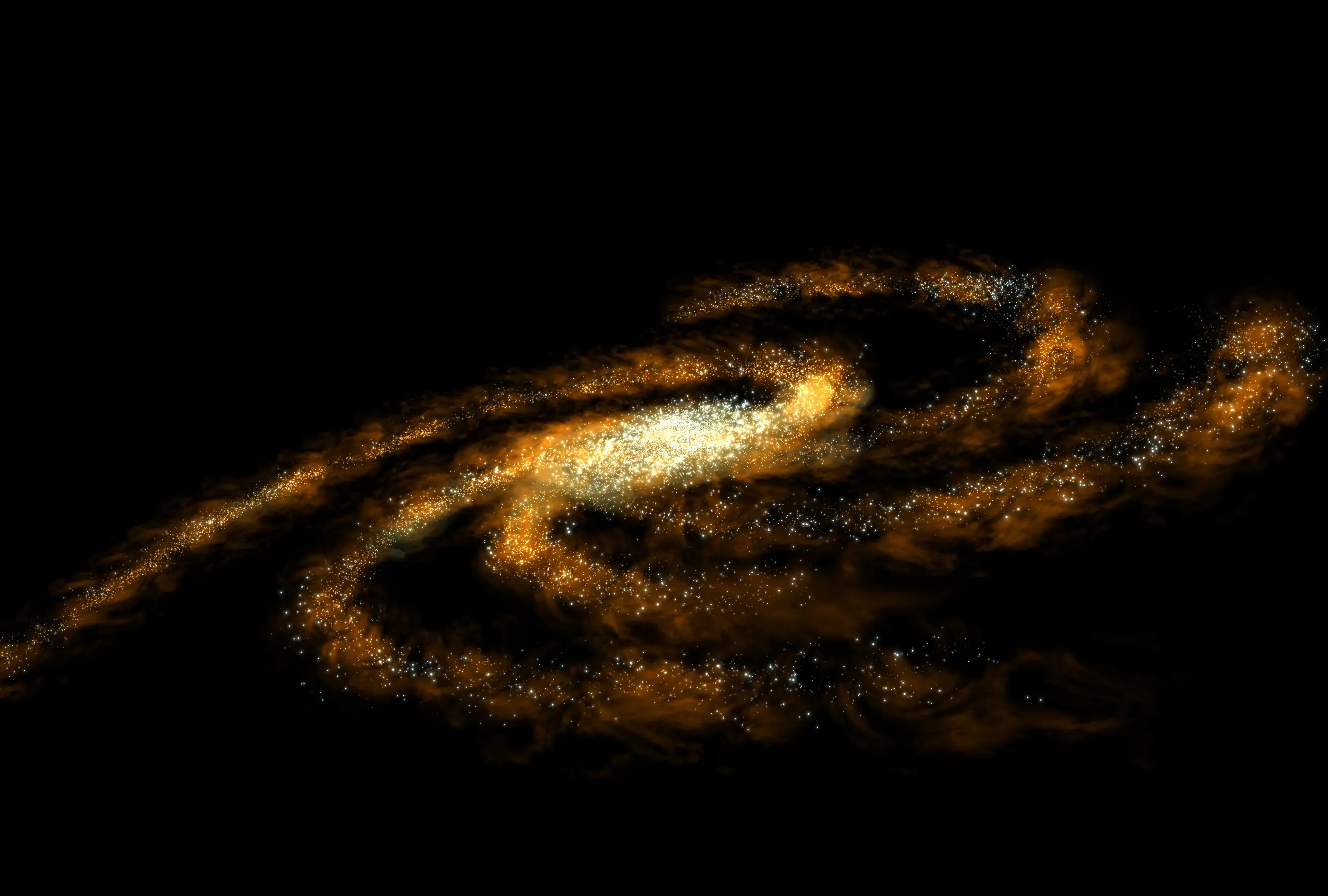
Timescale of the Collision
The Milky Way–Andromeda collision will unfold over billions of years. Voyager 1 and 2 will be tiny objects compared with the scale of galactic structures, making their survival more a question of probability than durability.
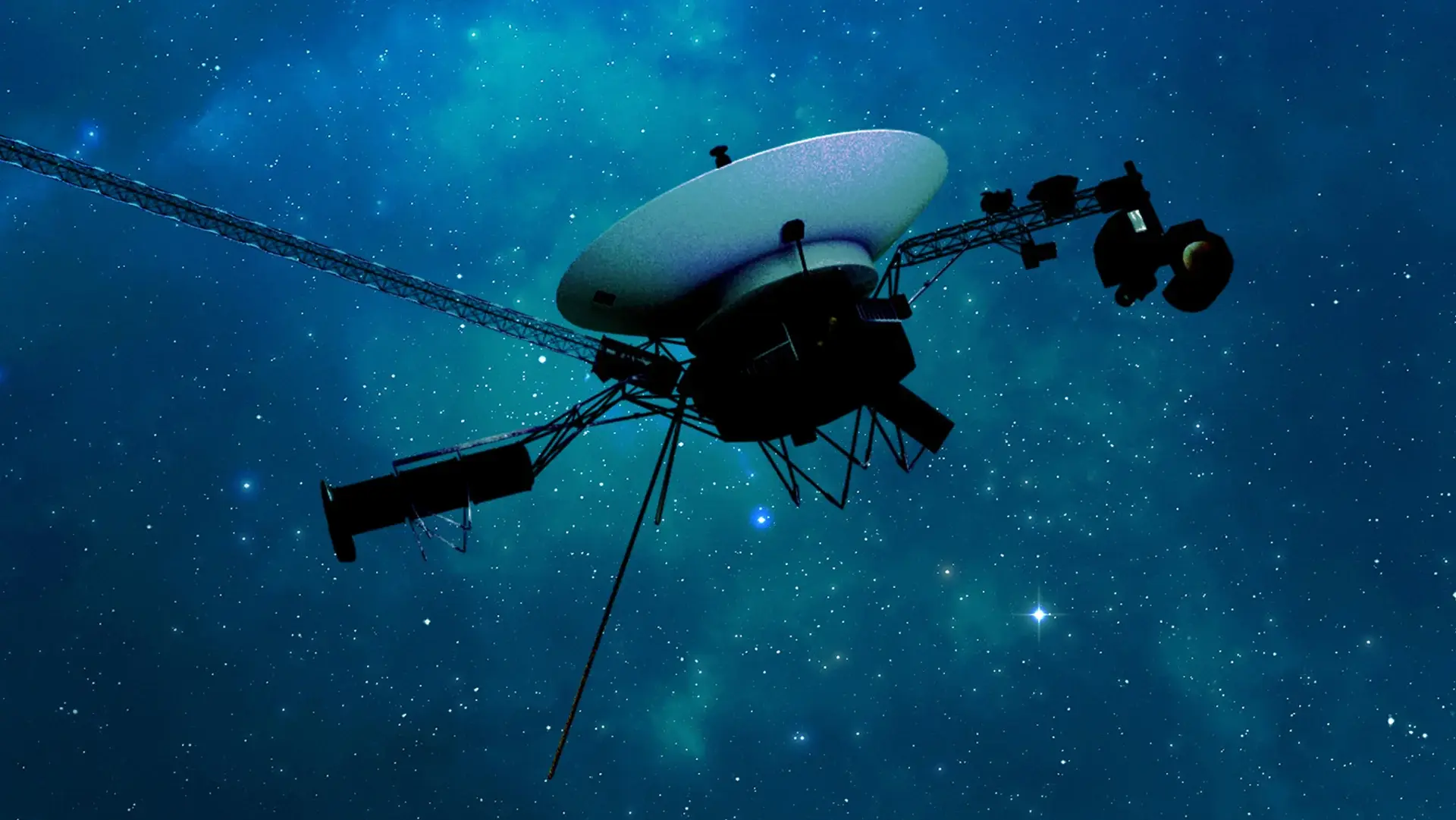
Relative Position of the Voyagers
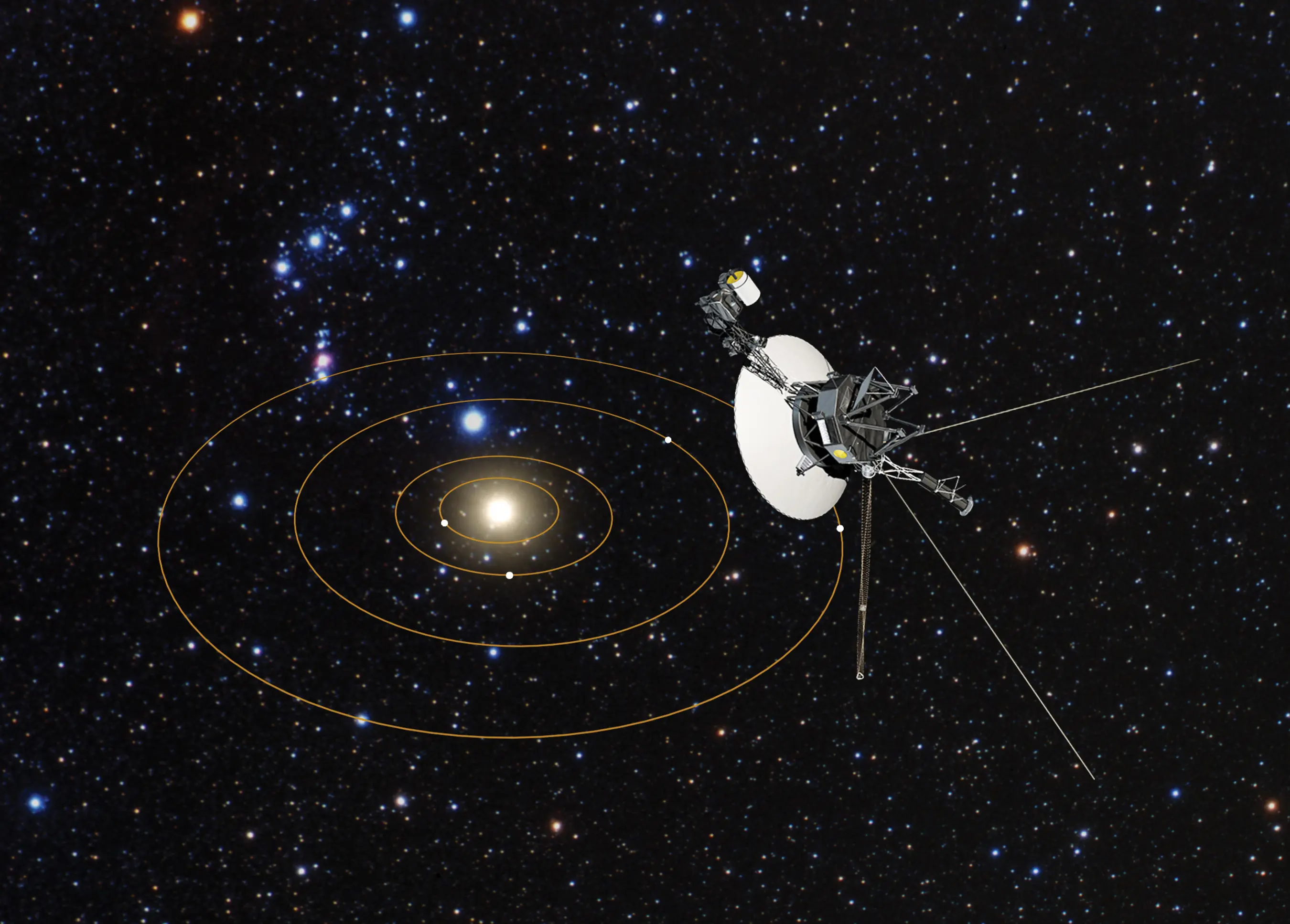
By the time of the collision, both probes will be tens of thousands of light years from Earth’s current position. Their precise locations will determine whether they pass through dense regions of gas and stars or remain in relatively empty space.
Chance of Stellar Encounters
Galaxies contain vast amounts of empty space. Even during a merger, the likelihood of Voyager directly colliding with a star remains extremely low. The greater risk comes from passing through denser star-forming regions where gas and dust are concentrated.
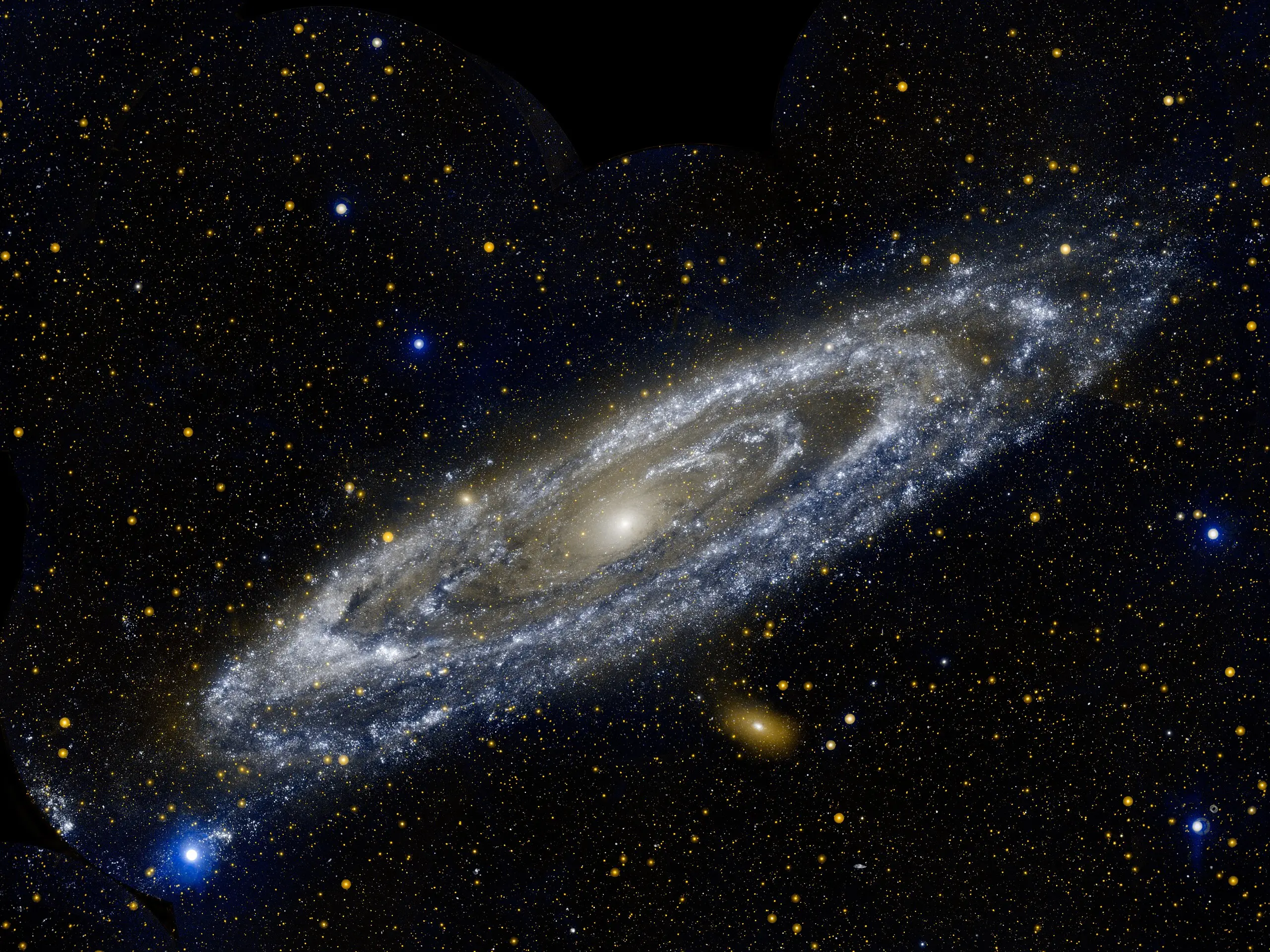
Interstellar Gas and Dust Hazards
Travelling for billions of years, the probes may encounter occasional dust particles. A single high-velocity collision could damage or destroy their structure. In a galactic merger, such environments may be more common, raising the risk.
Gravitational Deflection
As galaxies merge, gravitational forces will alter the trajectories of stars and smaller objects. Voyager 1 and 2 could be nudged into new orbits, potentially ejecting them from the merged galaxy altogether.
Long-Term Structural Stability
Without power, shielding, or maintenance, Voyager will gradually degrade. Micrometeoroid impacts, radiation, and atomic erosion will weaken their surfaces, making physical survival into the collision uncertain, though fragments may persist.
The Concept of Survival
“Survival” may not mean intact spacecraft. Instead, the Voyagers might endure as scattered remnants, orbiting debris, or even as lost fragments drifting through the merged Milkomeda galaxy. Their symbolic legacy, however, will remain as the first artefacts to leave the solar system.
)
)
)
)
)