Why people are protesting in Chile?

Violence breaks out
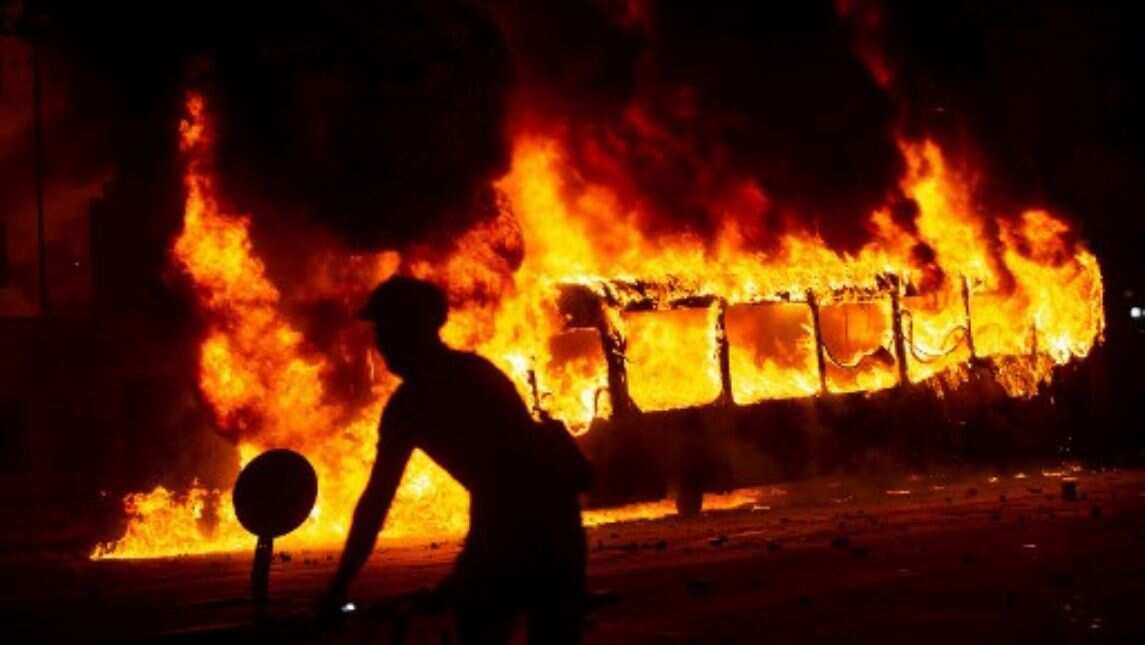
On October 18 violence broke out as protesters clashed with riot police over metro price hikes in the capital. The violence soon escalated into the night and several metro stations were hit with Molotov cocktails.

Metro network shut
Nearly all the 164 metro stations came under attack. 41 were destroyed, some completely charred. The whole network is shut down.
At least 16 buses were also torched. Around midnight President Sebastian Pinera declared a state of emergency and deployed troops into Santiago.

Buildings torched
On October 19 hundreds of soldiers patrol Santiago for the first time since Chile returned to democracy in 1990. There are also anti-government demonstrations in other cities such as Vina del Mar and Valparaiso.
Hooded demonstrators and riot police and soldiers clashed in several areas of Santiago, including outside the presidential palace.

Ticket price hike suspended
In Valparaiso a building belonging to Chile's oldest newspaper, El Mercurio, was set on fire.
Authorities reported more than 300 arrests and say 156 police and 11 civilians had been injured. Pinera suspended the ticket price hike and called for dialogue.

Police and military retaliate
Unrest continued on October 20 with two women burnt to death in the early hours in a blaze at a Walmart store in Santiago.
Police and the military fired tear gas and used water cannons against protesters in the capital, where nearly 10,000 police and military have been deployed.

1,462 people detained
Rioters set fire to a garment factory in the city's Renca suburb. Five bodies were recovered. Almost all public transport is paralysed in Santiago, with shops shuttered and flights cancelled.
Authorities report 103 serious incidents throughout the country with 1,462 people detained, 614 in Santiago and 848 elsewhere.

Curfew extended to nine other regions
"We are at war against a powerful, implacable enemy," Pinera told reporters after an emergency meeting.
Santiago's curfew is extended for a second night and the state of emergency imposed in nine other regions.
)
)
)
)
)