Why fixing a tiny scratch on the F-22 skin takes over 24 hours to cure

Fixing an F-22 stealth scratch requires scraping the skin, applying iron-rich putty, and baking it under heat lamps for 24 hours to restore radar invisibility.
Protecting Fragile Stealth Skin
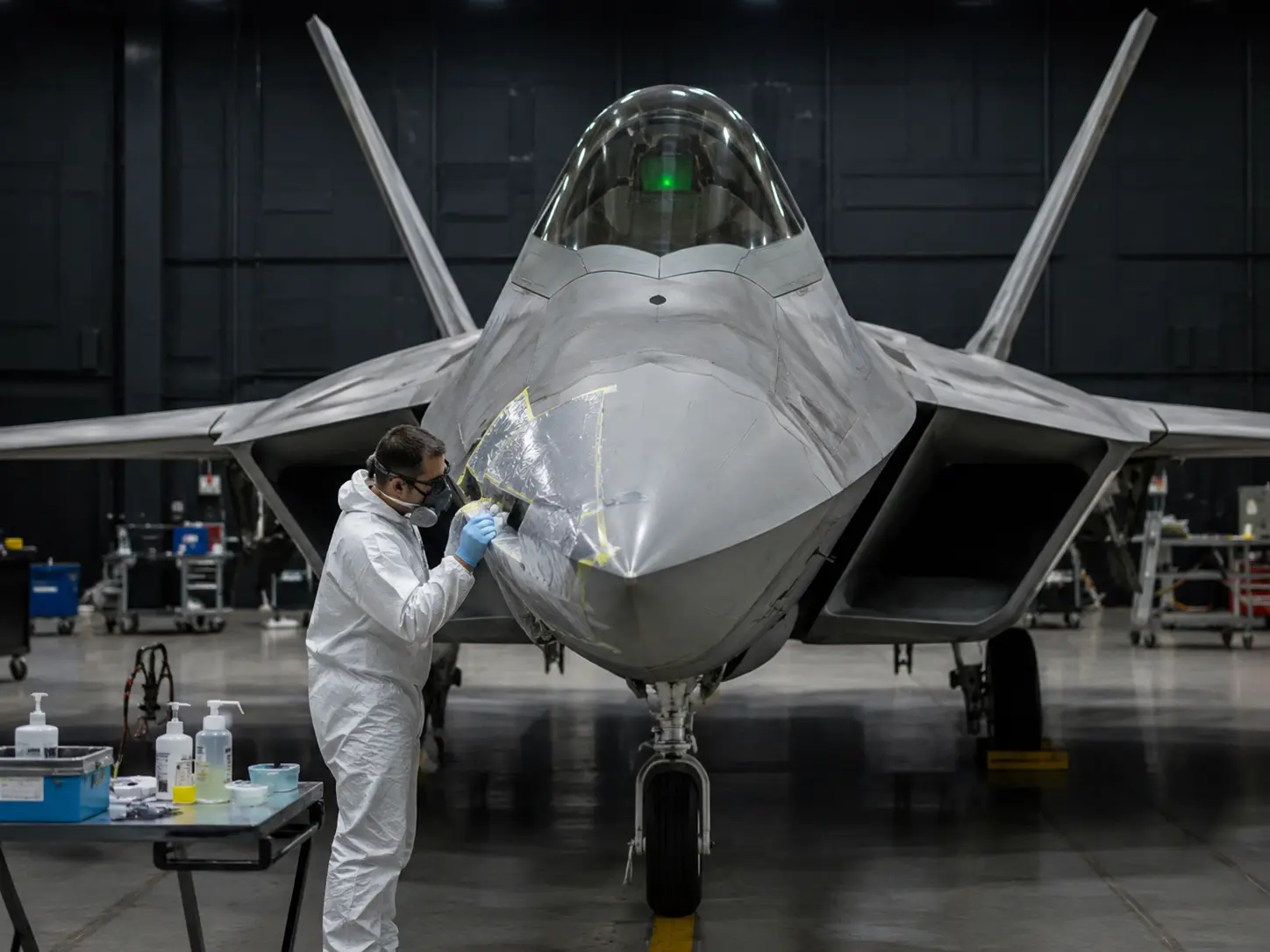
The F-22 Raptor relies on a specialised composite skin to shrink its radar signature to the size of a marble. Even a minor surface scratch disrupts this seamless exterior, turning the jagged edge into a reflector for enemy radar signals. Ground crews must repair these tiny blemishes immediately to ensure the fighter jet remains completely hidden from hostile air defence networks.
Scraping To The Bare Substrate
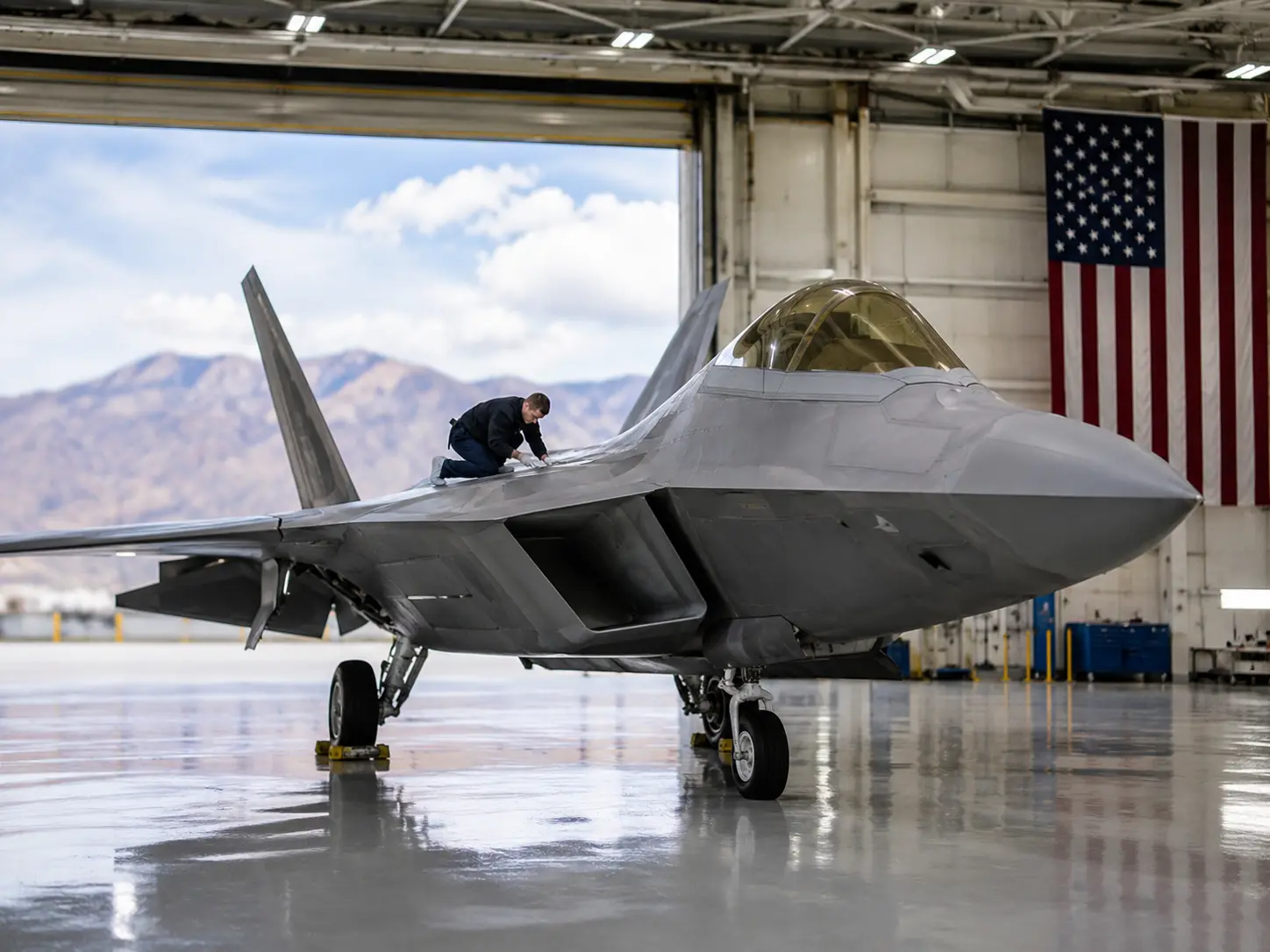
Mechanics cannot simply spray fresh paint over a damaged stealth coating. Technicians use specialised non-metallic tools to painstakingly scrape away the surrounding topcoat down to the bare composite substrate. This manual stripping ensures the fresh repair makes direct contact with the conductive base layer of the jet, preventing an internal electrical gap that would otherwise bounce radar waves back into the sky.
Applying Metallic Iron Putty
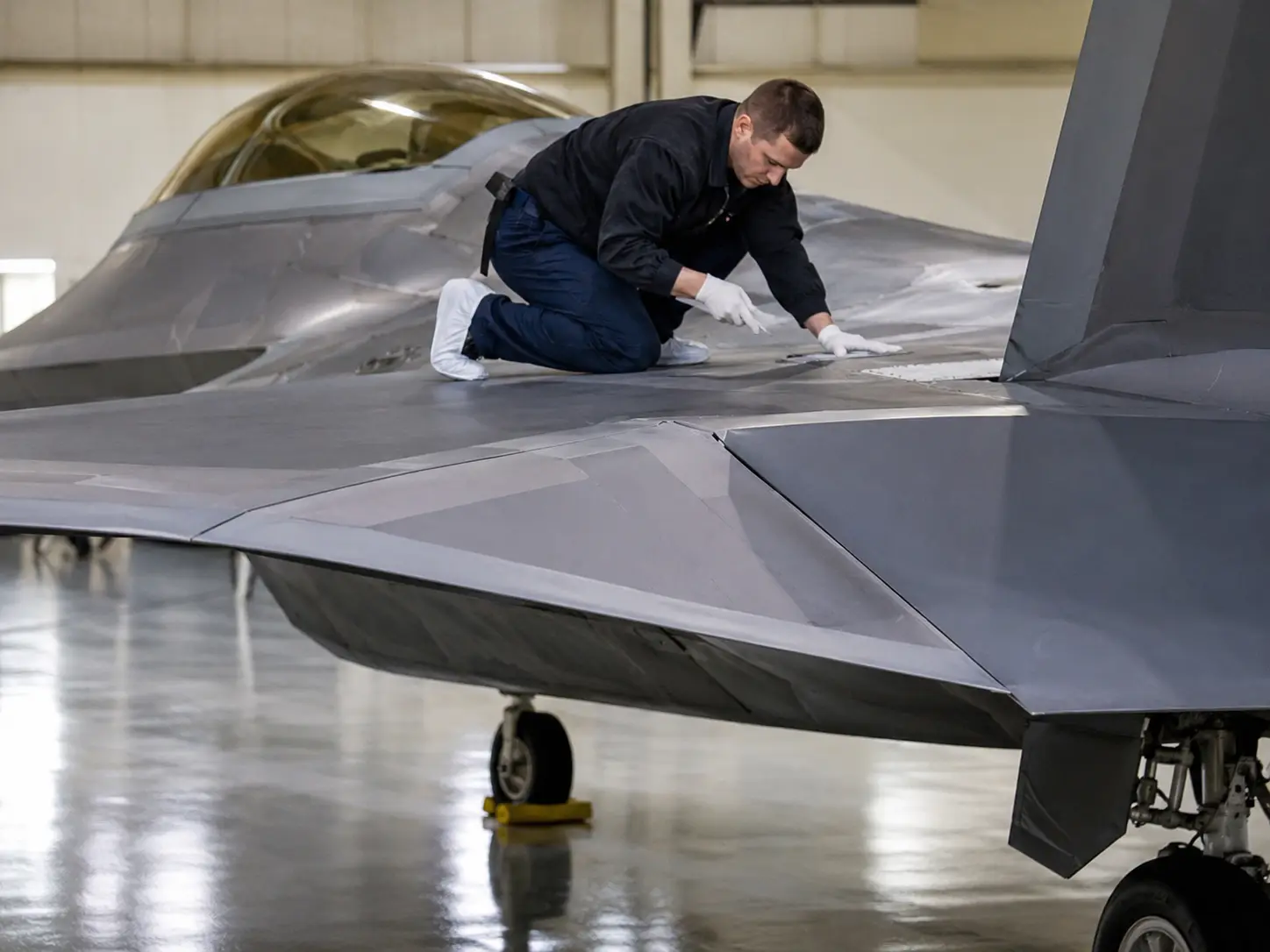
Once the damaged area is cleaned, maintenance crews apply a precise mixture of radar-absorbing composite putty. This thick chemical paste is loaded with microscopic iron particles designed to absorb and dissipate incoming radar energy as heat. Mechanics must carefully smooth the compound by hand so it sits completely flush with the surrounding fuselage skin.

Baking Under Industrial Heat Lamps
The liquid chemical putty requires exact thermal conditions to solidify properly. Technicians position industrial heating blankets and portable heat lamps over the patched area inside climate-controlled hangar bays. The jet must sit motionless under these controlled thermal lamps for roughly 24 hours to allow the volatile polymers to bond at a molecular level.

Testing Radar Reflectivity Levels
After the 24-hour baking cycle concludes, the repair is still not cleared for combat. Ground crews use portable handheld radar scanners to test the exact electromagnetic reflectivity of the freshly cured patch. If the sensor detects even a fractional per cent of signal leakage, mechanics must strip the entire area and restart the day-long process from scratch.
)
)
)
)
)