Which was the world’s first operational jet bomber built by the Nazis that failed to turn the tide of WWII?

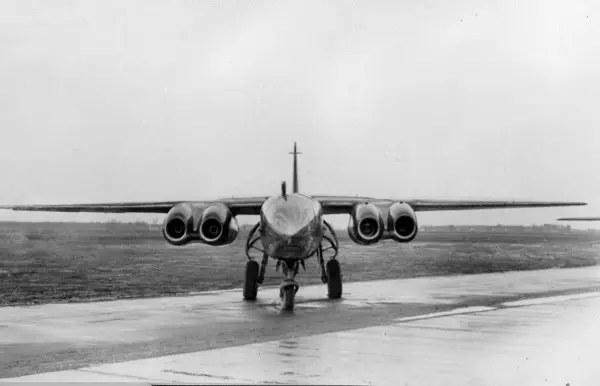
Initially planned as a reconnaissance aircraft (the Ar 234A), it evolved into the bomber variant Ar 234B, which carried up to 1,500 kg of bombs on external racks due to the slender fuselage that left no room for internal bays.
Origins and Ambitious Design
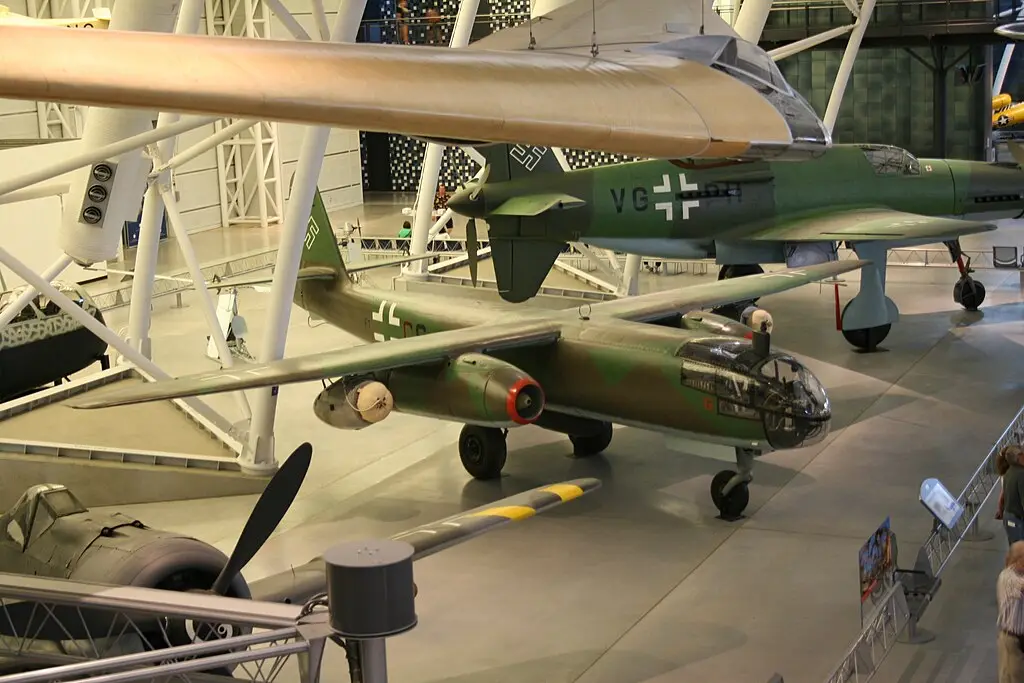
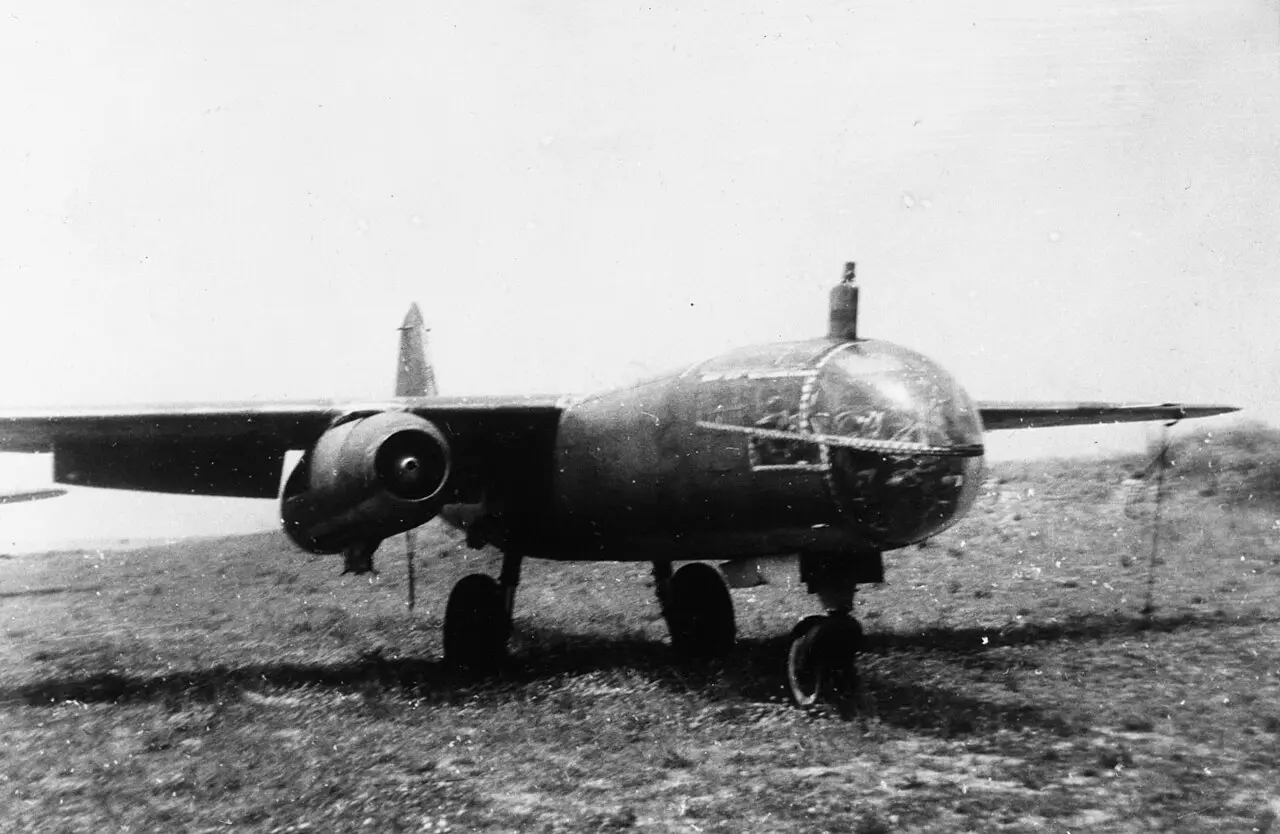
The Arado Ar 234 Blitz, aptly named ‘Lightning’, holds the distinction of being the world’s first operational turbojet-powered bomber and reconnaissance aircraft. Conceived in response to a 1940 request by Germany’s Ministry of Aviation for a high-speed jet reconnaissance plane, the design came solely from the Arado company, known internally as the E.370 project. Although development advanced quickly, progress was slowed by delays in the availability of the Junkers Jumo 004 engines, resulting in the maiden flight of the first prototype on 30 July 1943. Initially planned as a reconnaissance aircraft (the Ar 234A), it evolved into the bomber variant Ar 234B, which carried up to 1,500 kg of bombs on external racks due to the slender fuselage that left no room for internal bays.
Operational Debut and Unique Features
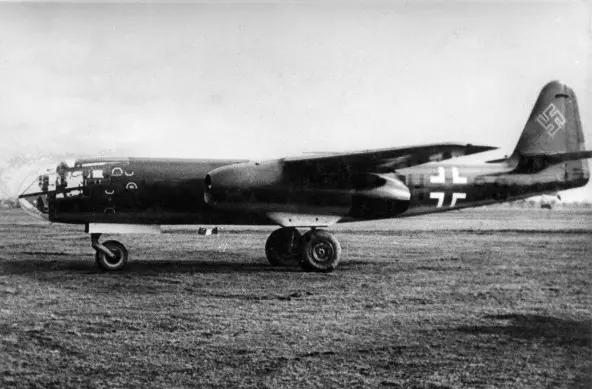
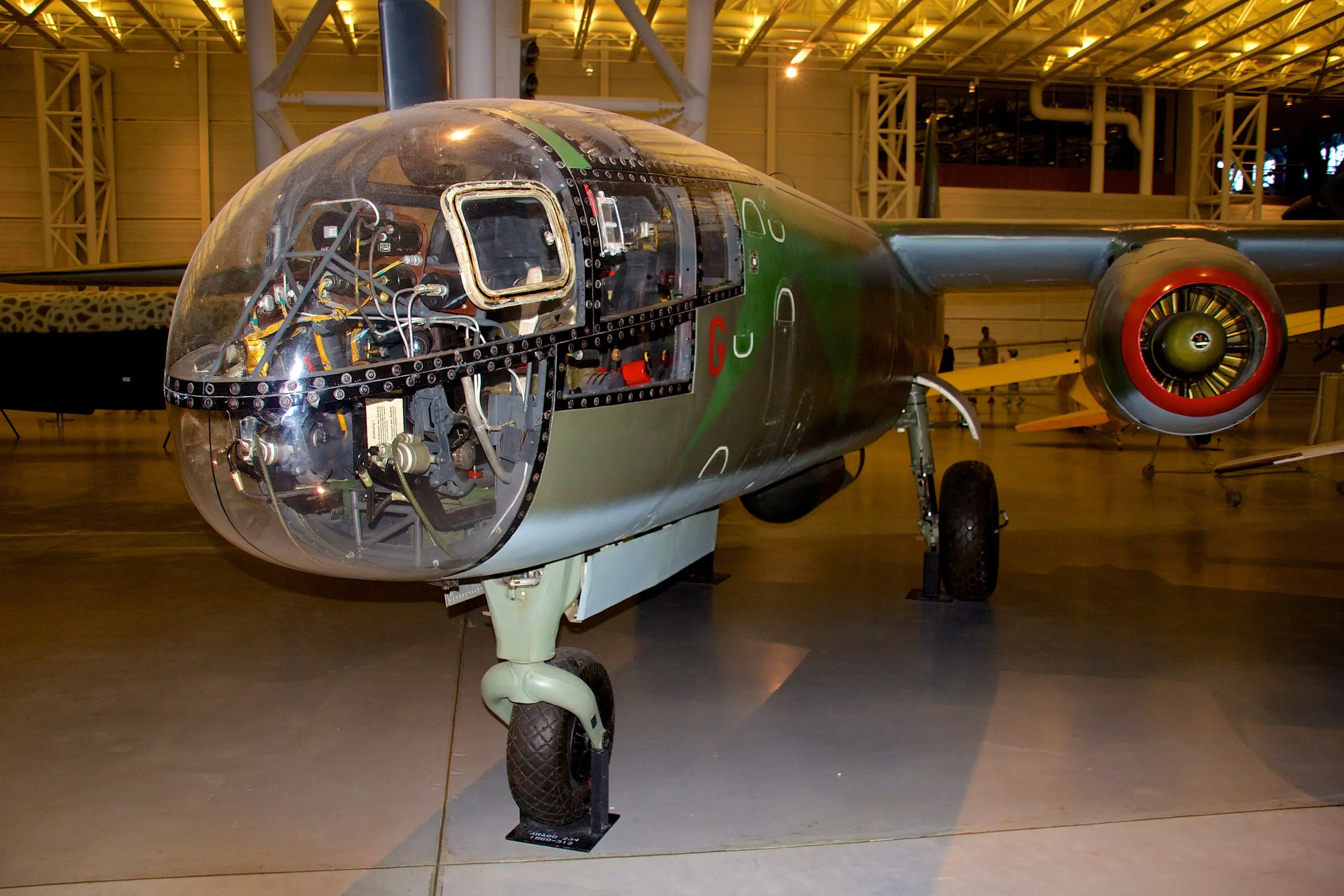
In service from late 1944, the Ar 234 Blitz introduced striking innovations: tricycle landing gear, a pressurised cockpit, autopilot-assisted bombing, and periscope sights for rear defence and bomb aiming. Its two Jumo 004 B4-1 turbojets propelled it to a top speed of around 456 mph, making it at least 100 mph faster than most Allied fighters, and virtually untouchable in level flight. The design’s single-seat layout meant the pilot also served as bombardier and navigator, a challenging workload offset by advanced instrumentation for its time.
Combat Use and Tactical Impact
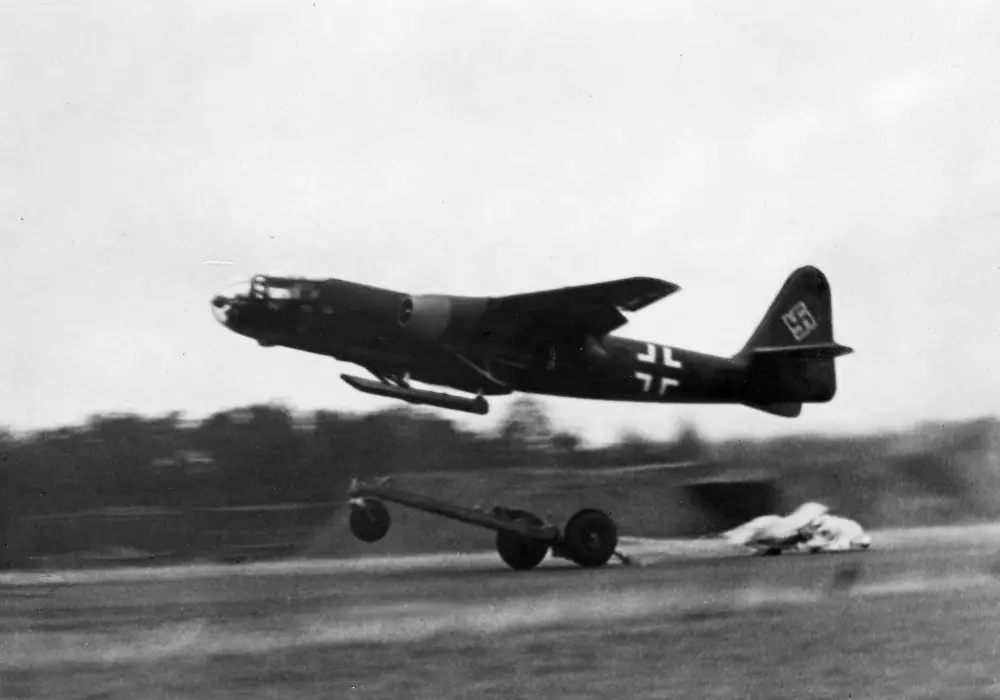
First deployed for reconnaissance, the Blitz proved invaluable, photographing Allied positions across Western Europe, including over Normandy in 1944. As a bomber, it saw action during the Ardennes Offensive and most notably in March 1945, attempting to destroy the Ludendorff Bridge at Remagen to halt the Allied advance into Germany. On 24 December 1944, nine Ar 234 B-2s led by Luftwaffe Captain Diether Lukesch made a historic bombing run on Liege, Belgium. Their speed and agility rendered interception by Allied fighters nearly impossible, Allied pilots could only target them during vulnerable takeoffs and landings.
Challenges and Limited Production
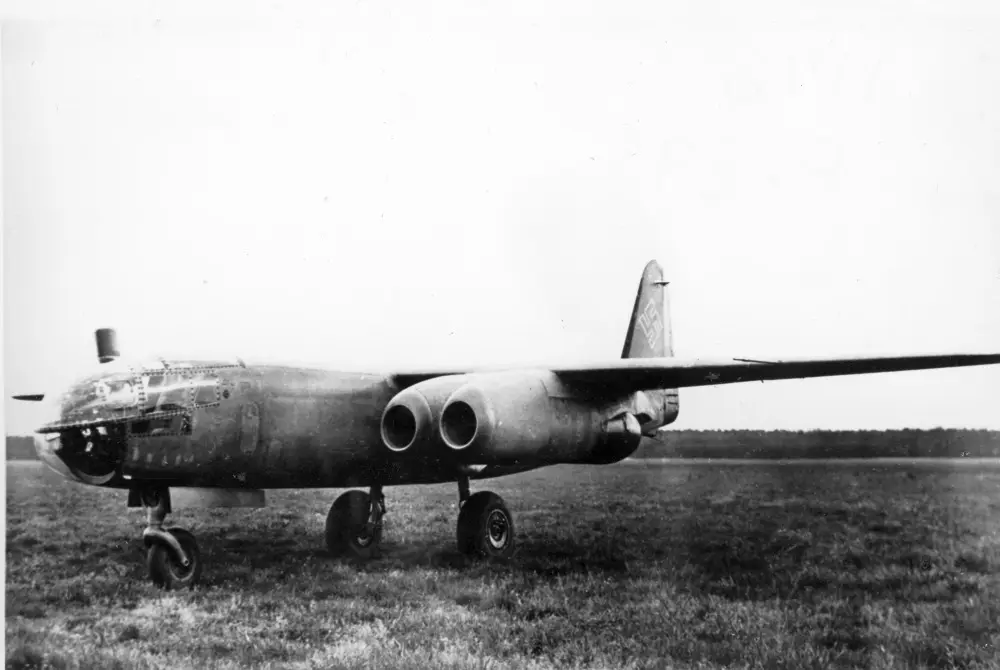
Despite its technological promise, the Blitz was produced in limited numbers, around 210 airframes, due to material shortages, competing demands for jet engines (particularly from the Messerschmitt Me 262 fighter programme), and the crippling effects of Allied bombing on German industry. Original plans called for the production of hundreds monthly, but these goals proved unreachable by late 1944. Development of further variants, including a night fighter and a four-engine heavy bomber, never progressed beyond prototype stages.
Service Life and Final Flights
Operational use continued into the chaotic final months of the Second World War. In April 1945, the Ar 234 became the last Luftwaffe aircraft to conduct reconnaissance over Britain. By then, fuel scarcity, engine failures, and relentless Allied advances meant most Blitz aircraft were destroyed on the ground, scuttled, or captured before the war’s end.
Legacy and Survivors
Only a single Ar 234 survives today, displayed at the Smithsonian National Air and Space Museum’s Udvar-Hazy Center in Virginia. Despite its brief combat career and minimal effect on the war’s outcome, the Ar 234 Blitz remains a milestone in aviation history: the world’s first operational jet bomber, whose speed and futuristic design foreshadowed the jet age.
A Success That Failed to Change the War
While the Ar 234 Blitz impressed with revolutionary design and performance, it was ultimately a technical success overshadowed by strategic failure. Deployed too late, built in too few numbers, and flying for a nation already losing the war, its contribution was striking yet fleeting. History remembers the Blitz not for what it achieved, but for what it might have achieved had it come sooner and in greater strength.
)
)
)
)
)