When will Voyager 1 go silent and what are NASA’s plans for its final days?

In August 2012 Voyager 1 crossed the heliopause, the boundary where the Sun’s solar wind gives way to the interstellar medium, the first time any craft had sampled that interface directly.
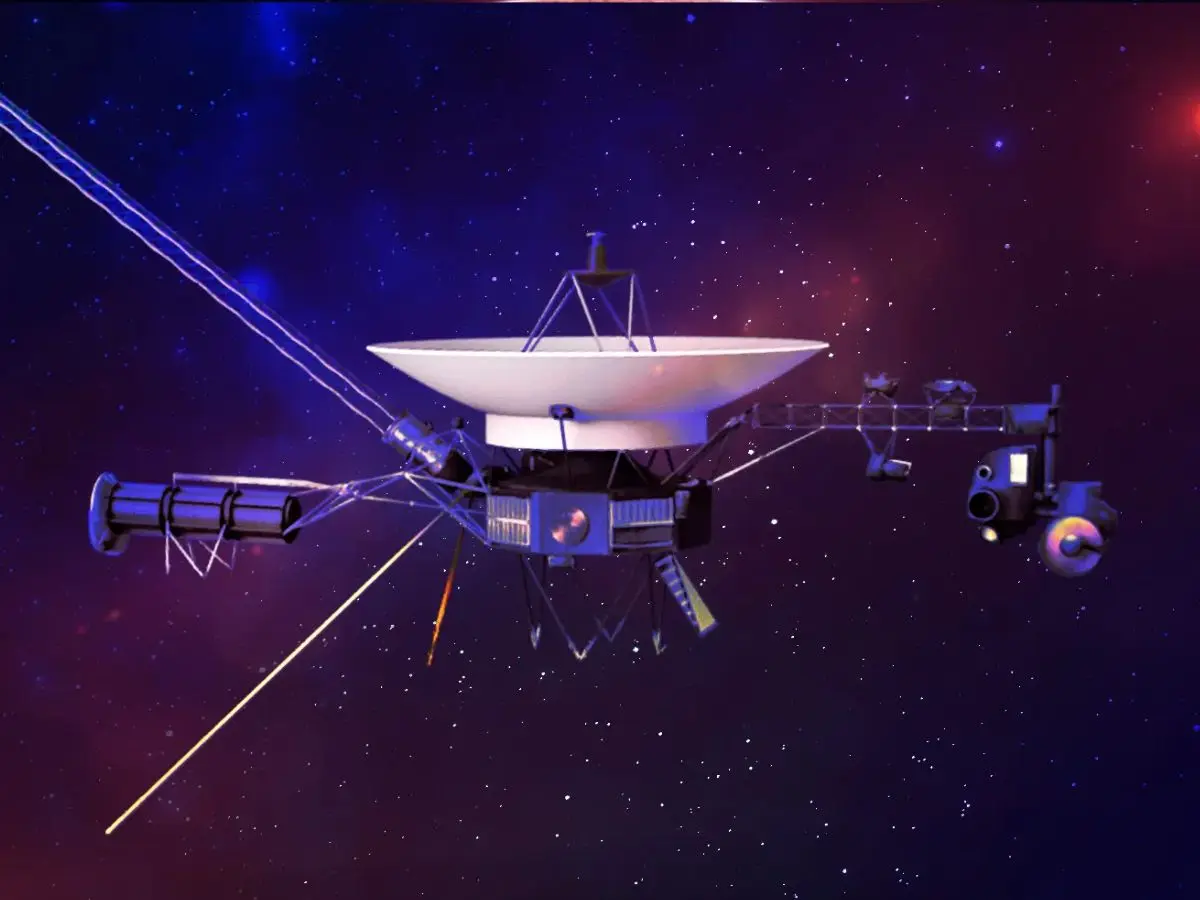
A mission nearing its sunset
Voyager 1 has been answering questions from the edge of interstellar space for 47 years, but its operational life is finite. Engineers at NASA’s Jet Propulsion Laboratory are now managing a carefully prioritised plan of power conservation, instrument shutdowns and occasional, high-risk fixes to keep the probe sending data for as long as possible. The question is not if it will go silent but when, and the agency expects to squeeze useful science out of the spacecraft into the early 2030s if systems hold.
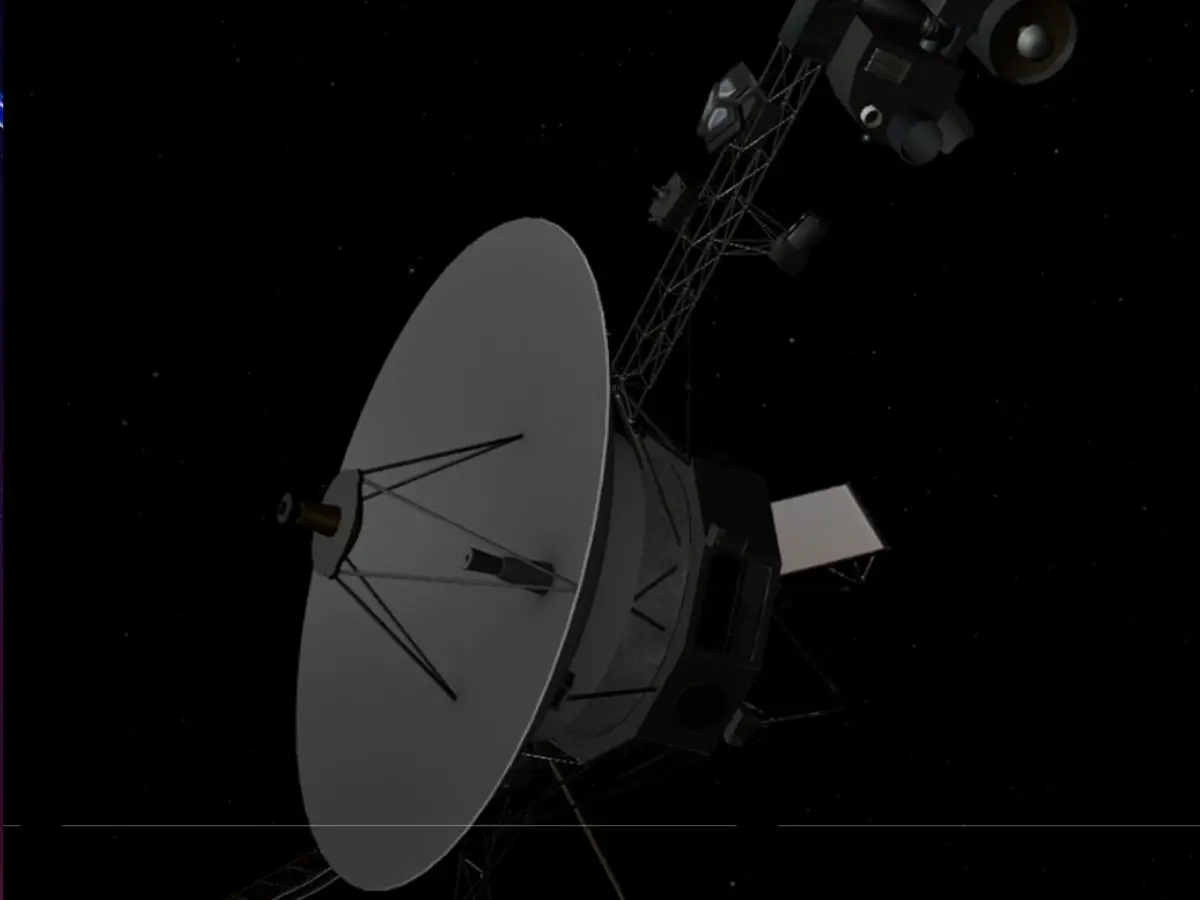
From planetary firsts to interstellar pioneer
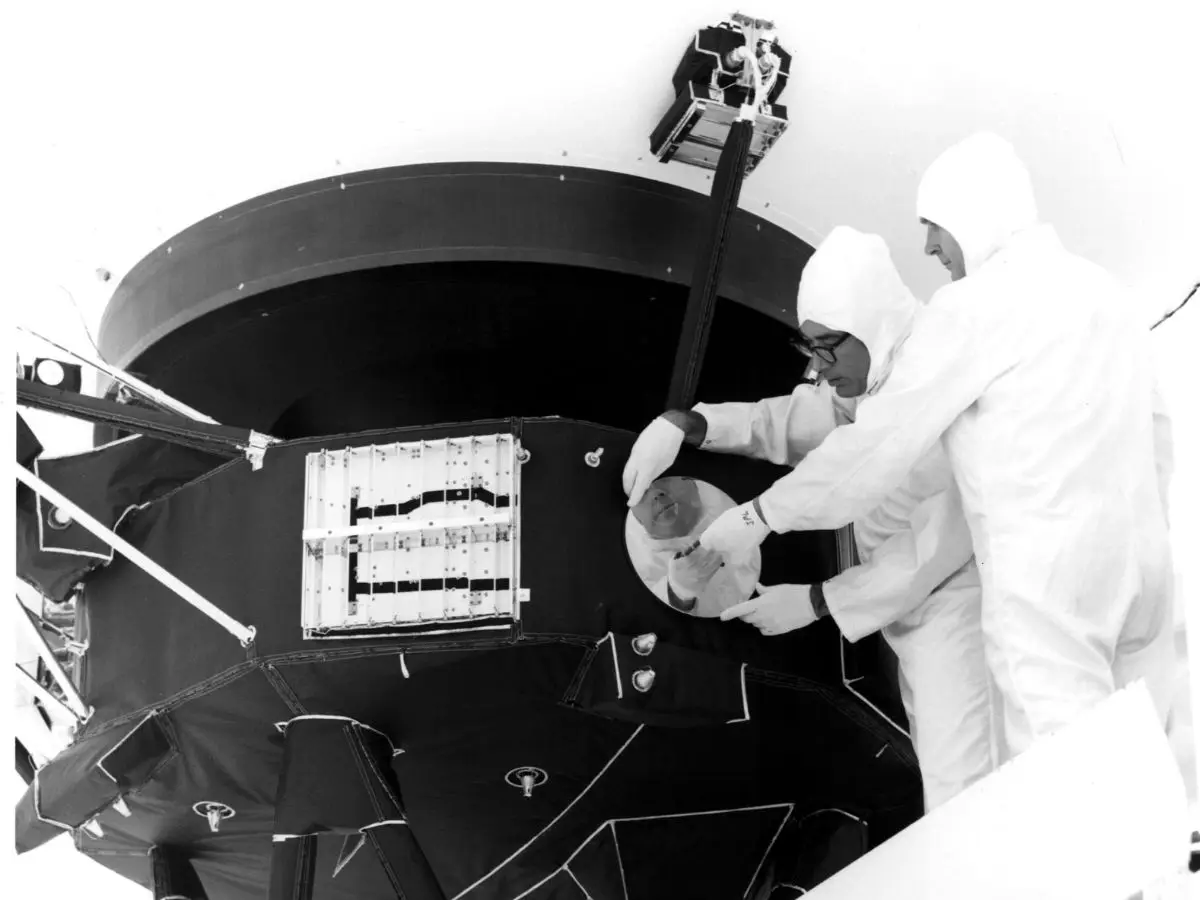
Launched on 5 September 1977, Voyager 1’s original brief was to visit the outer planets. It returned the first close images and detailed data of Jupiter and Saturn, revealed new moons and ring structure, and then headed outward to become the most distant human-made object. Those early discoveries established Voyager as one of the most successful exploratory missions in history.
Crossing the heliopause
In August 2012 Voyager 1 crossed the heliopause, the boundary where the Sun’s solar wind gives way to the interstellar medium, the first time any craft had sampled that interface directly. The transition was identified by sudden changes recorded by the spacecraft’s plasma-wave instrument, confirming that Voyager was measuring the space between the stars.
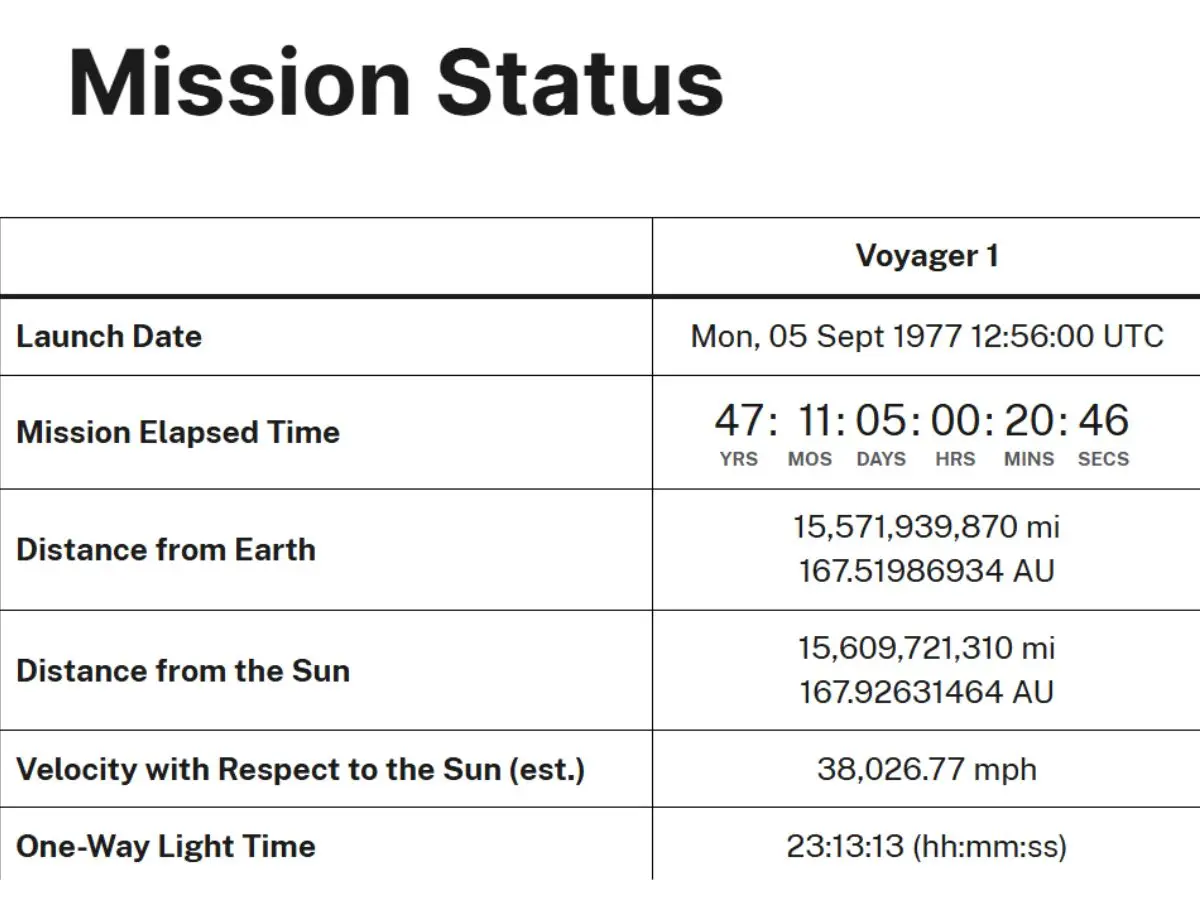
Where Voyager 1 is now
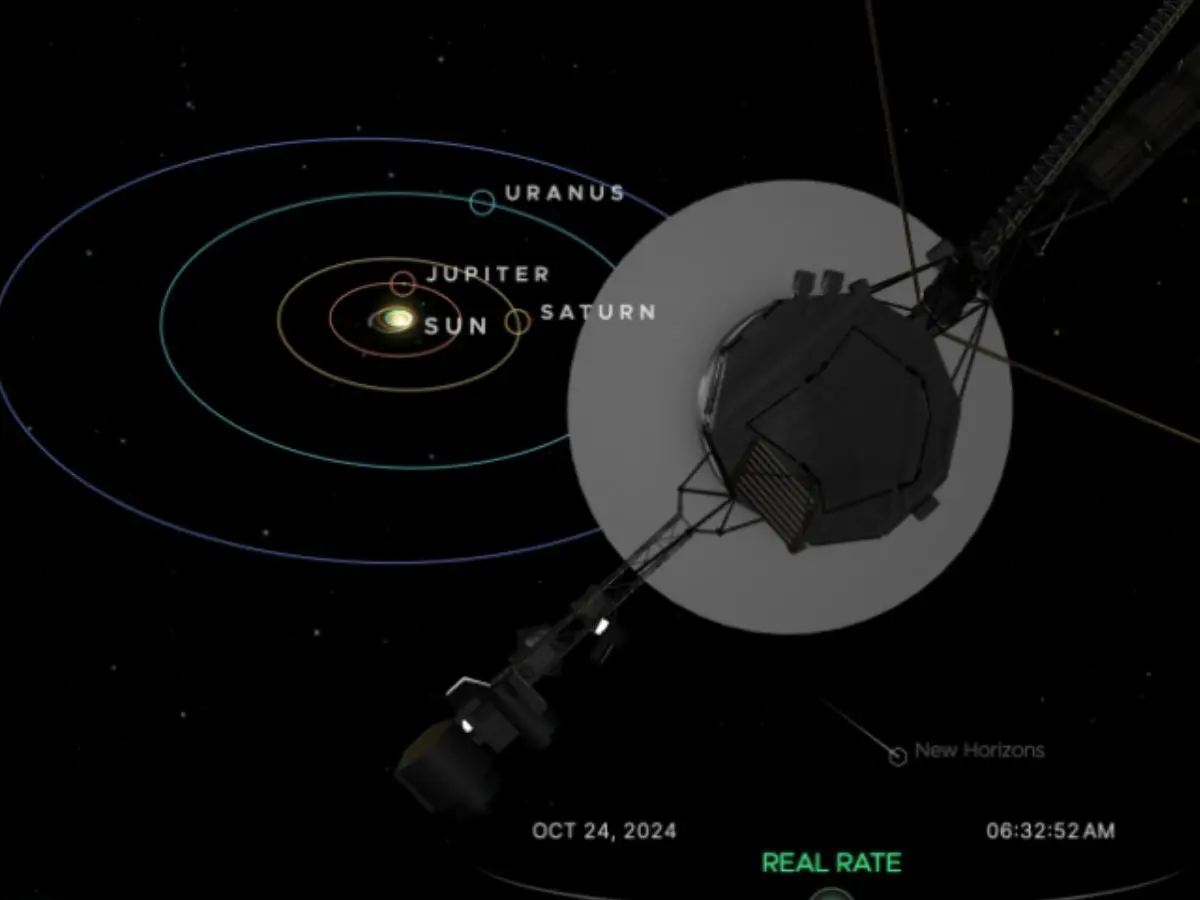
As of mid-2025 Voyager 1 is roughly 166–167 astronomical units from Earth, more than 24 billion kilometres, and receding at several kilometres per second. At that distance a one-way radio transmission takes about 23 hours, so every data packet and command is subject to nearly two days of round-trip delay. Real-time control is impossible; every contact requires careful planning and patience.

How Voyager still talks to Earth
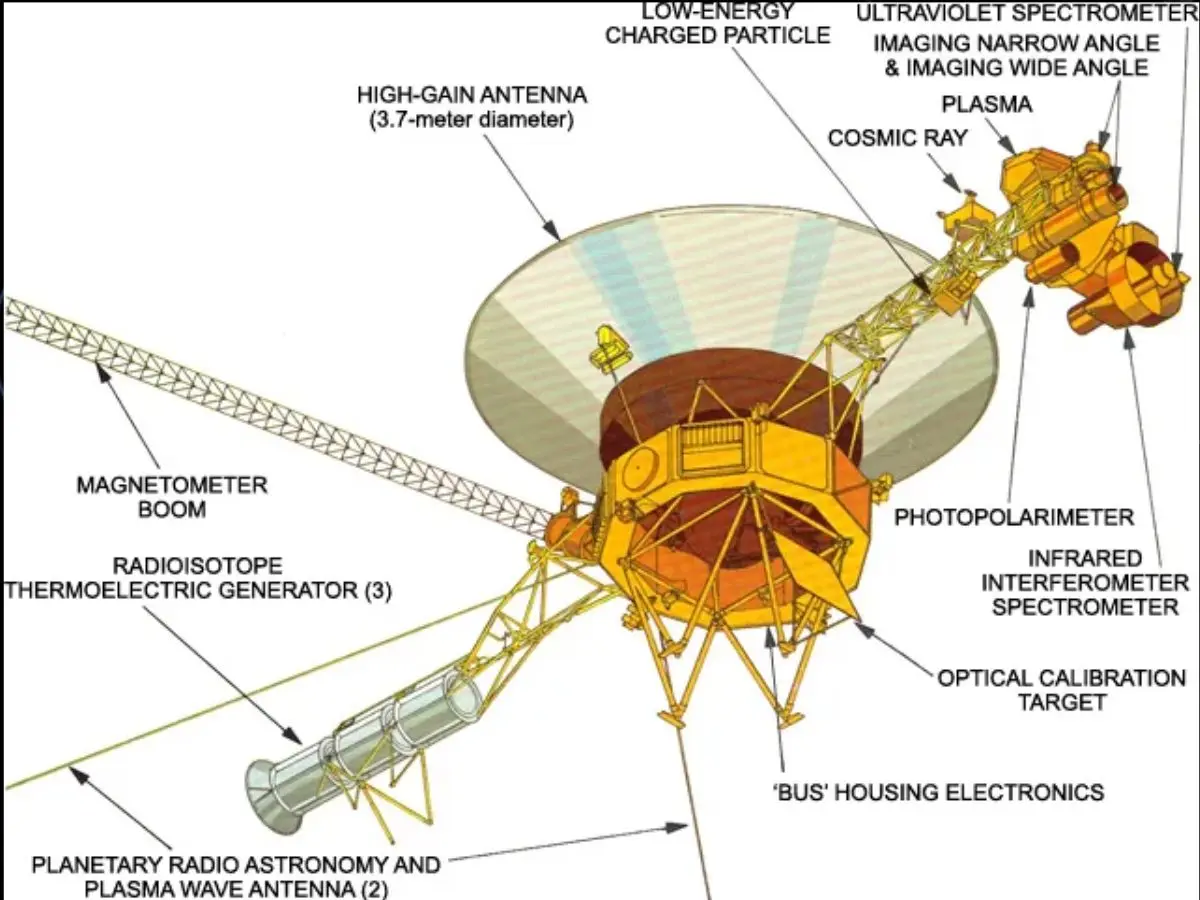
Communication depends on Voyager’s 3.7-metre high-gain antenna transmitting narrow, low-power X-band radio signals. Those signals are captured by NASA’s Deep Space Network, three arrays of huge dishes in California, Spain and Australia, which amplify and decode the faint transmissions. The probe transmits slowly and in short bursts, storing data onboard and sending it in low-rate streams that the DSN reconstructs into usable science and engineering telemetry.
Power decline and engineering triage
Voyager’s electricity comes from radioisotope thermoelectric generators (RTGs) that lose a few watts each year. To preserve power, mission teams have repeatedly switched off heaters and non-essential instruments; in late 2024 and early 2025 NASA powered down additional science experiments. Engineers have also performed daring workarounds, most recently reviving long-dormant thrusters, to ensure Voyager can keep its antenna pointed and maintain communication. These measures extend life but cannot stop the inevitable decay.
The final chapter: a managed fade to silence
NASA’s stated approach is pragmatic: retire instruments in stages to conserve power so that at least one meaningful instrument remains functional into the 2030s. No firm 'switch-off' date exists; silence will come when the RTGs can no longer power the transmitter or when a critical subsystem fails irretrievably. Until then, Voyager 1 will keep sending its faint but invaluable reports from interstellar space, a controlled wind-down of a mission that has already redefined human reach into the cosmos.
)
)
)
)
)