What's behind these strange stripes in Russia? NASA answers!

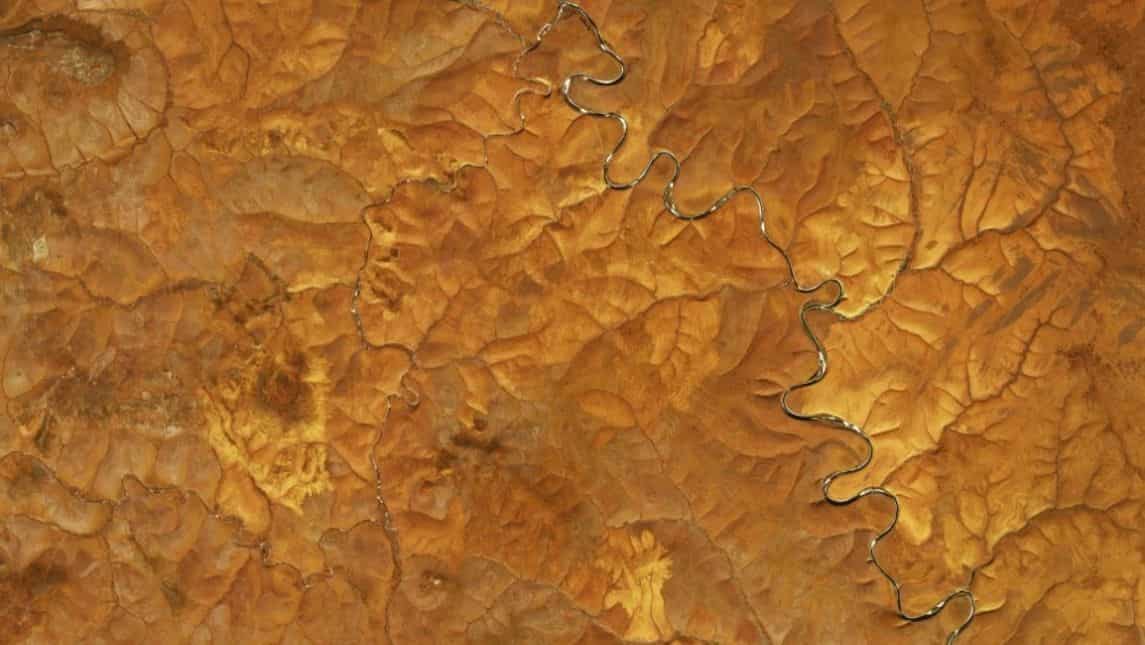
When is the pattern most visible?
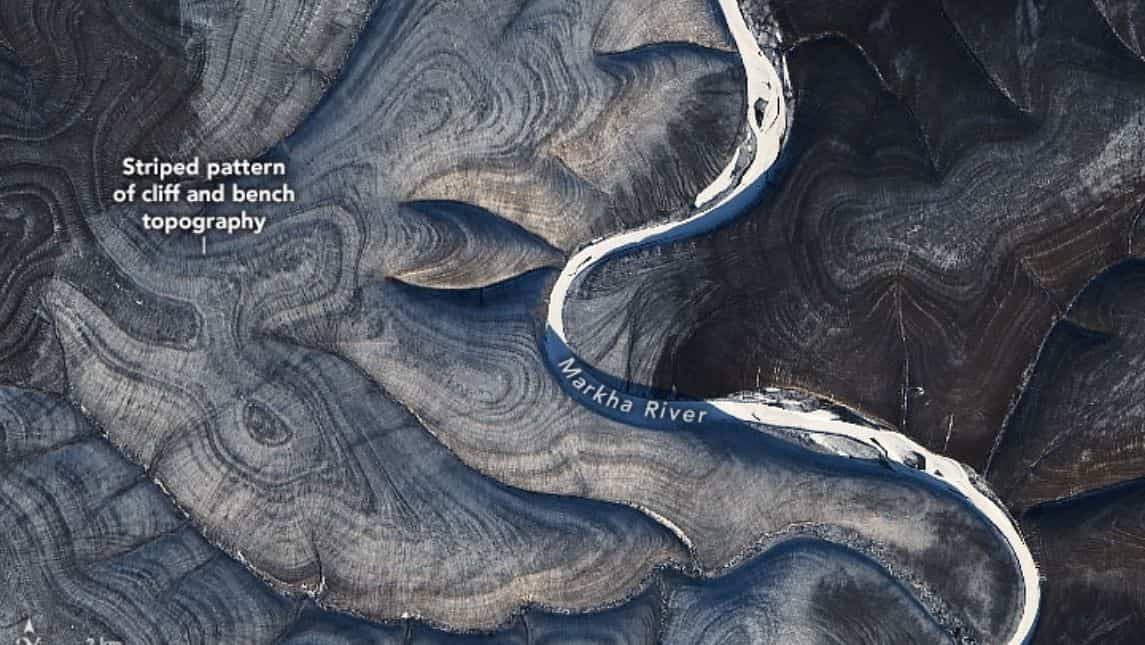
The ripple created around the river can be seen in all seasons, but becomes the most pronounced during winter days as the snow makes the pattern more visible. | Image courtesy: NASA Earth Observatory

Does the secret lie in permafrost?
Even though scientists are not sure, they believe that the ripple's mystery lies in the ice. The region in question in Siberia spends 9 per cent of the year covered in permafrost, which thaws briefly. | Image courtesy: NASA Earth Observatory
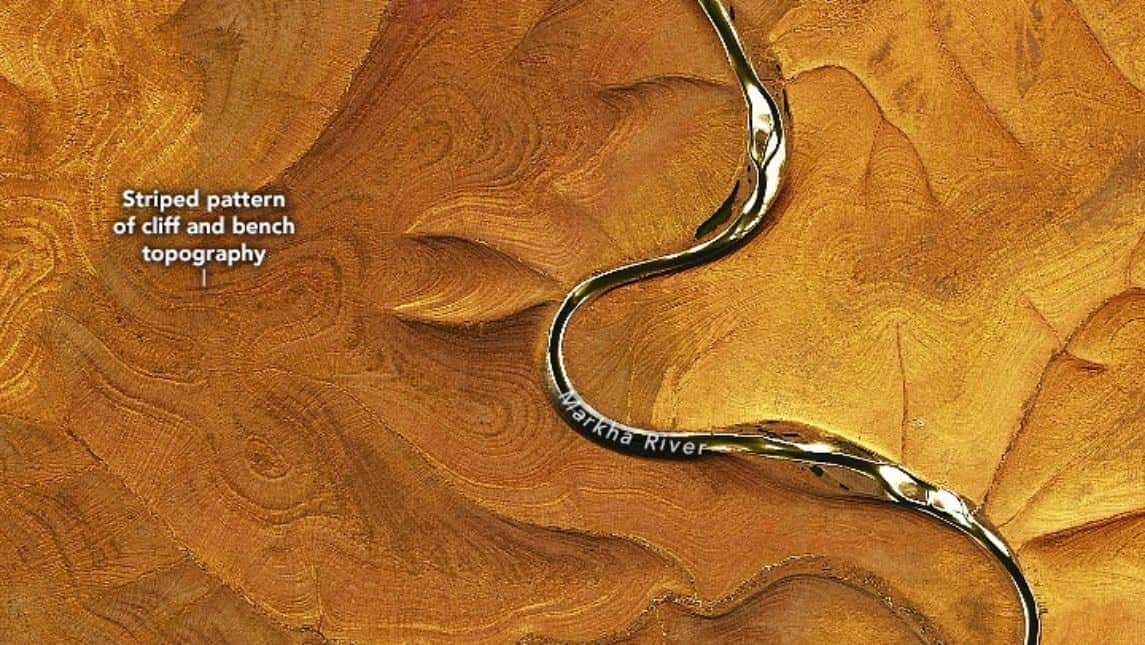
What is 'the cycle'?
Parts of land in this are are continuously freezing, thawing, and freezing again, which is known to leave imprints or designs on the ground. During this cycle, soils and stones naturally configure themselves. Case in point - stone circles in Norway. | Image courtesy: NASA Earth Observatory
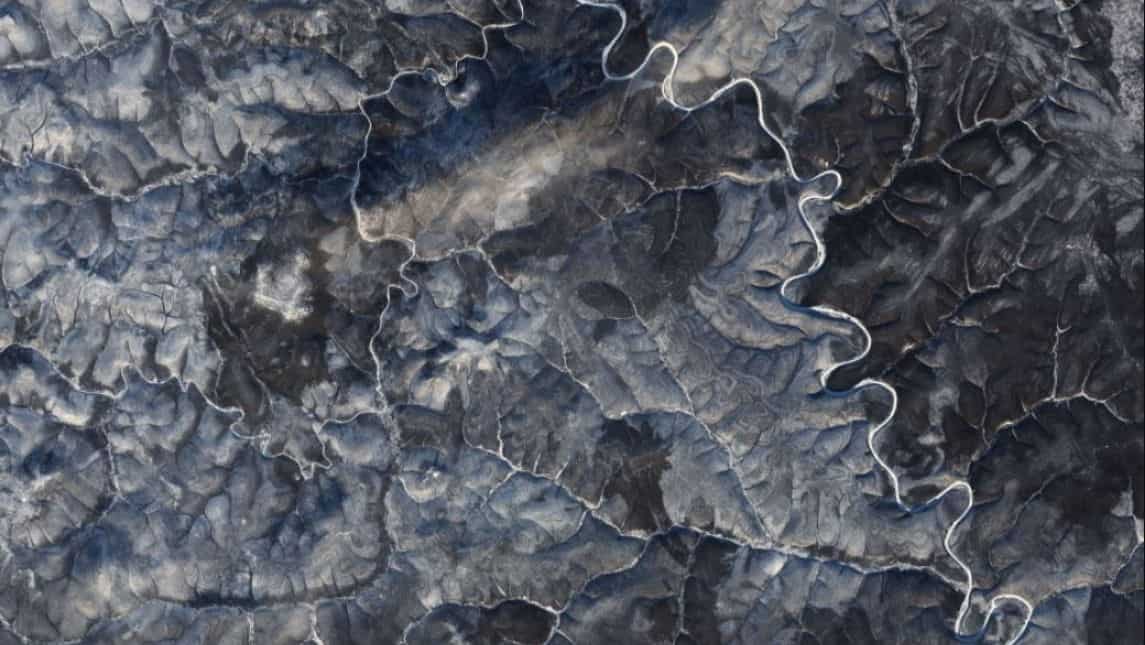
Could erosion be behind it?
According a the US Geological Survey, the patterns could be a result of erosion, for the stripes resemble a pattern found in sedimentary rocks, which is known as "layer cake geology". | Image courtesy: NASA Earth Observatory
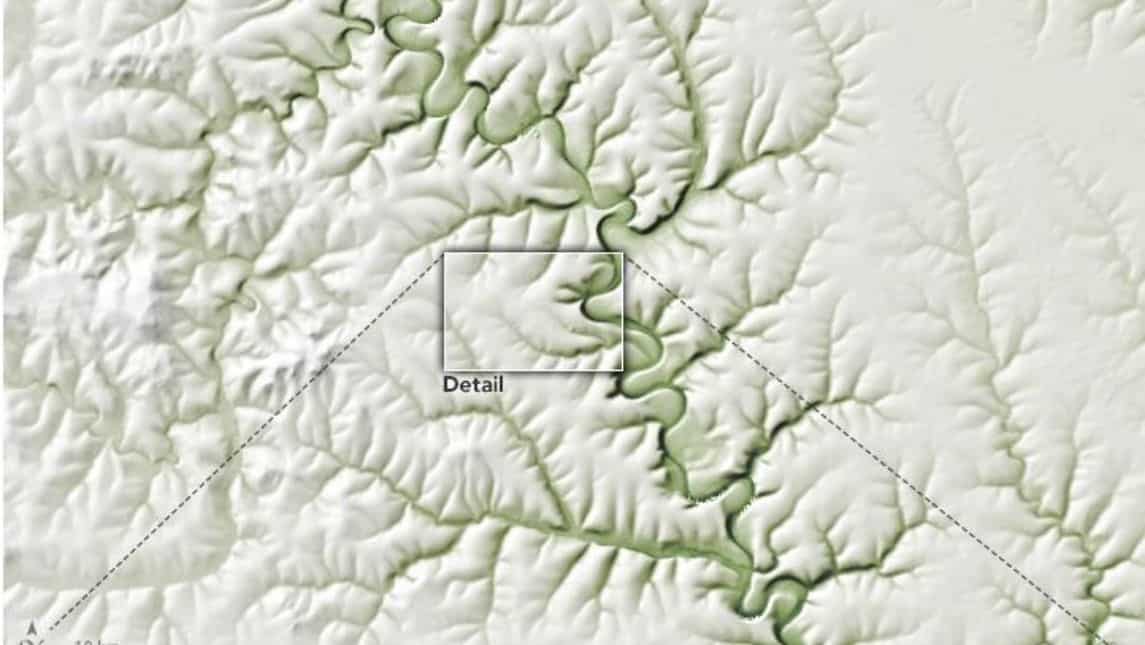
How could erosion have created these patterns?
When melted snow or rain flows downhill, pieces of sedimentary rocks are pushed into piles. Owing to this, layers of sediments that resembles slices of a cake may be revealed. A researcher from the US Geological Survey claimed that darker stripes represent steep areas, while lighter strips show flat areas. | Image courtesy: NASA Earth Observatory
Scientists back erosion
Based on the argument above, such sedimentary layering would be more apparent in winter, when snow lies on flat areas. This gives it the appearance of being light. After years of erosion, sediments gather along the river's banks. But scientists are wary of making up their minds too quickly! | Image courtesy: NASA Earth Observatory
)
)
)
)
)