What were Voyager 2’s greatest discoveries about our Solar System?

Voyager 2’s flyby of Uranus in January 1986 revealed that the planet’s magnetic field was unlike anything seen before.
A Journey Beyond the Known
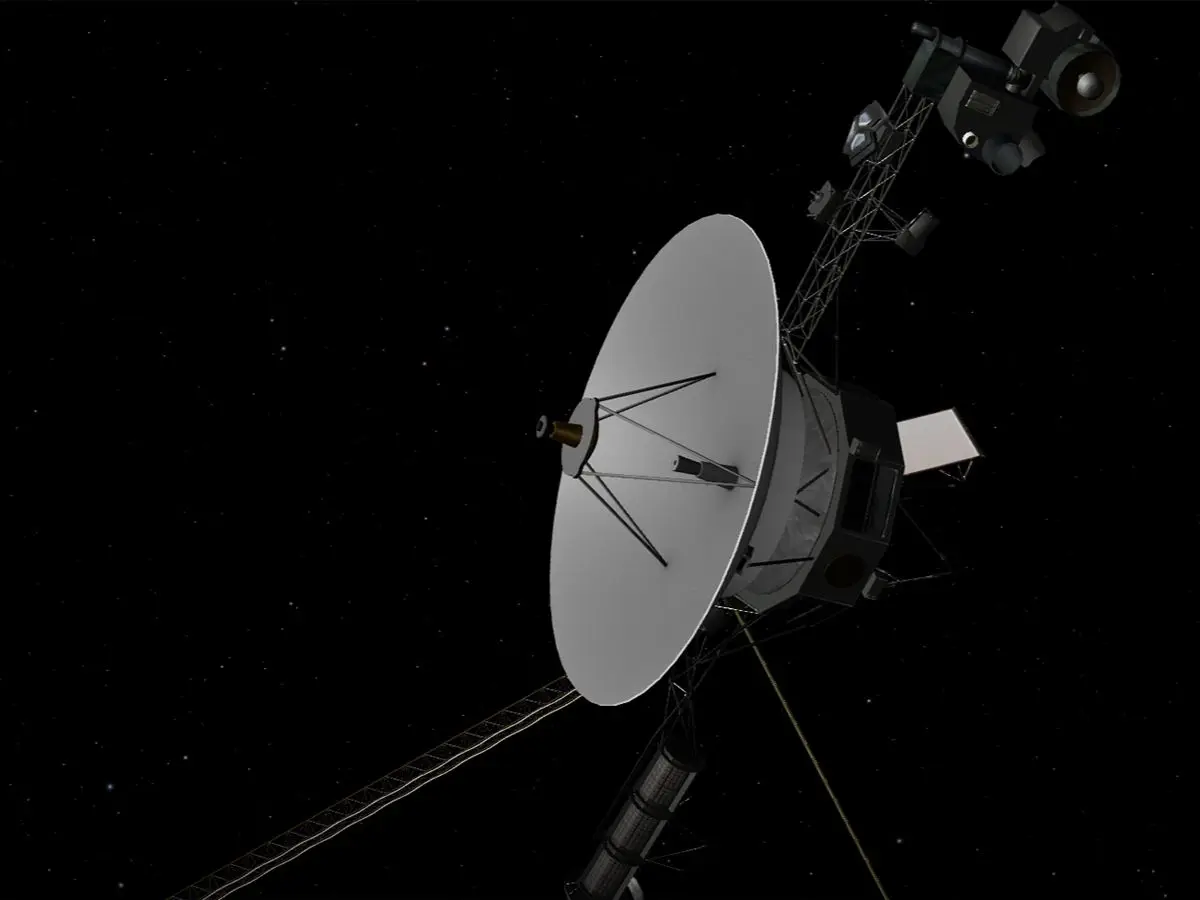
When Voyager 2 launched on August 20, 1977, its mission was to take advantage of a rare planetary alignment that would allow it to visit the outer planets in sequence. Over the following twelve years, it became the only spacecraft ever to encounter Uranus and Neptune, transforming two distant, mysterious discs into worlds with landscapes, weather systems, and dynamic histories. Its discoveries not only redefined these ice giants but also reshaped planetary science.
Uranus: A Tilted World
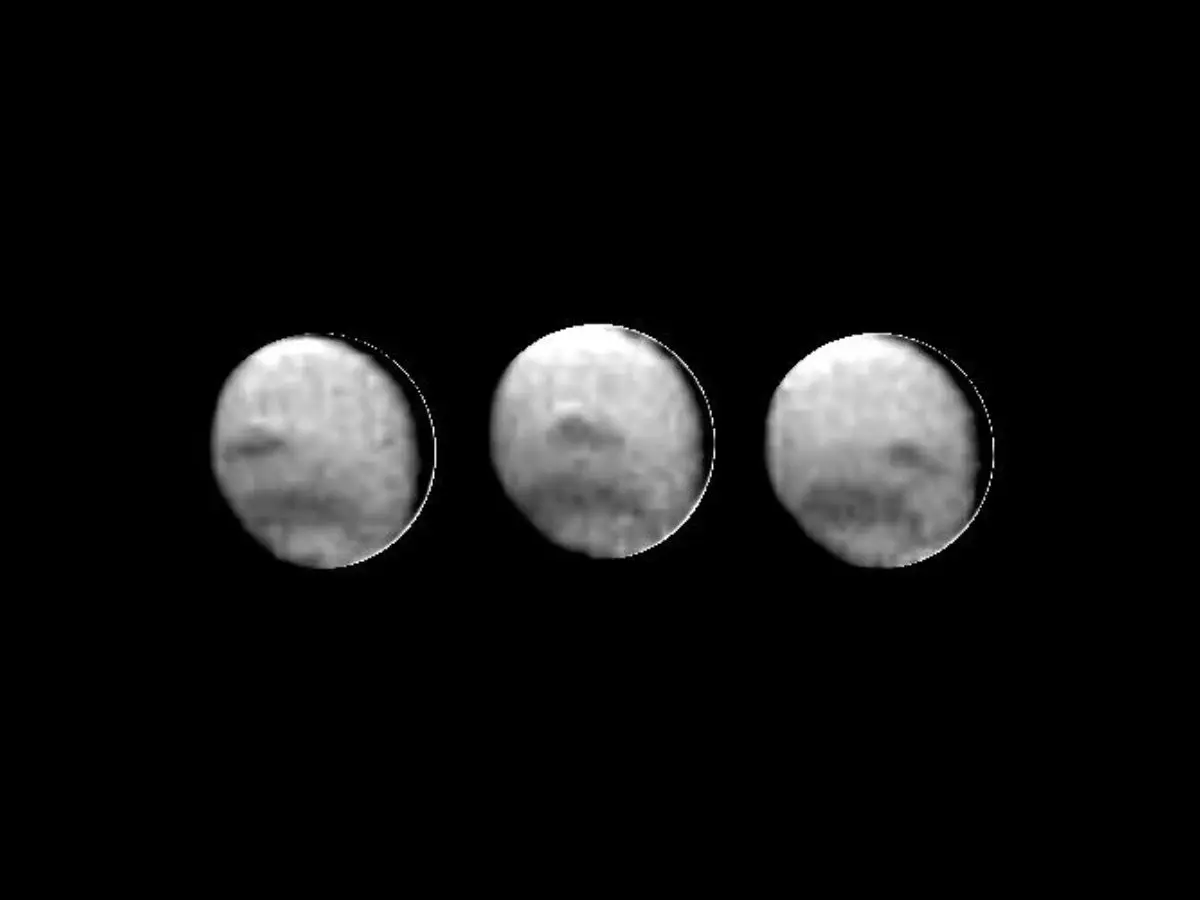
Voyager 2’s flyby of Uranus in January 1986 revealed that the planet’s magnetic field was unlike anything seen before. Instead of being aligned with its rotation, Uranus’s field was tilted by 59 degrees and displaced far from its centre. This gave the planet a magnetosphere that twisted and shifted in unusual ways as Uranus rotated on its side. The spacecraft also identified ten new moons and faint rings, expanding our knowledge of the planet’s complex system.
Miranda: A Moon of Extremes
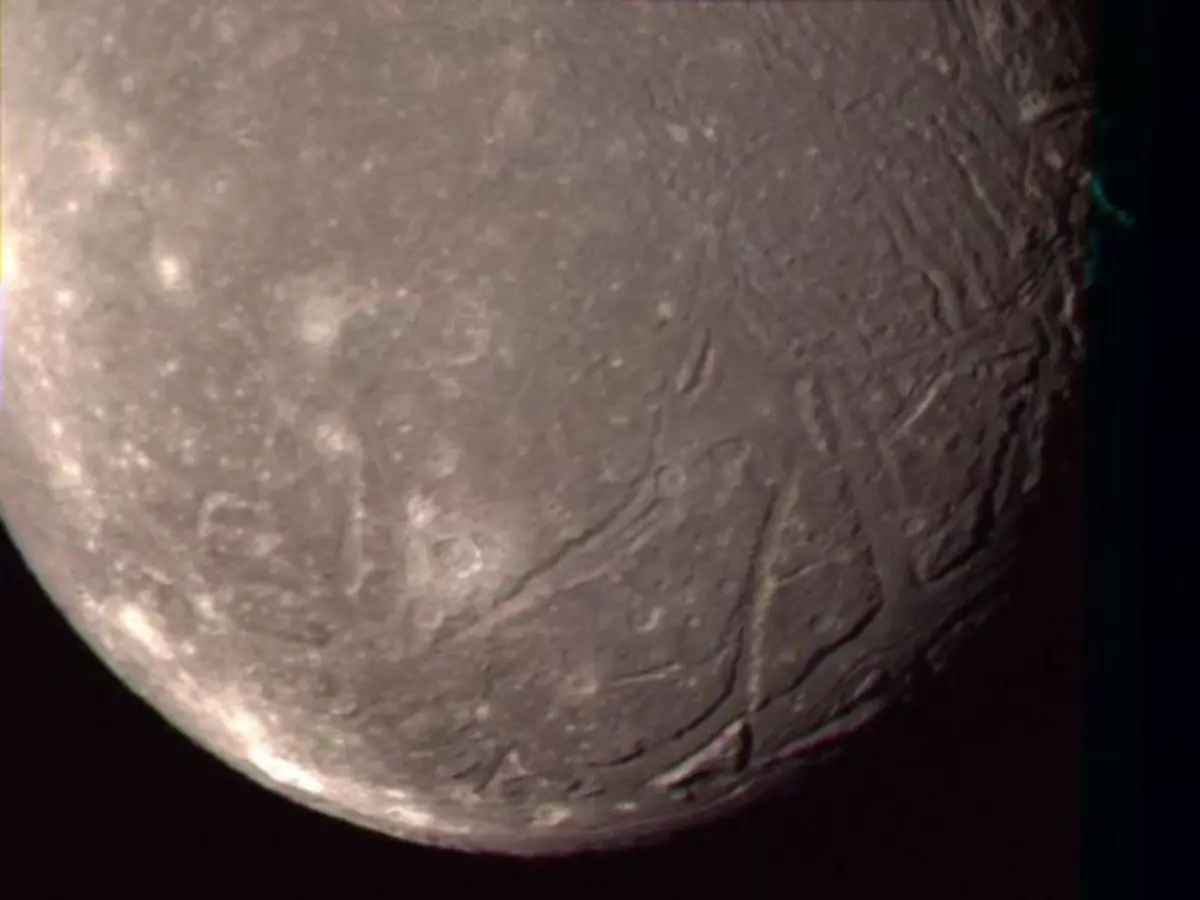
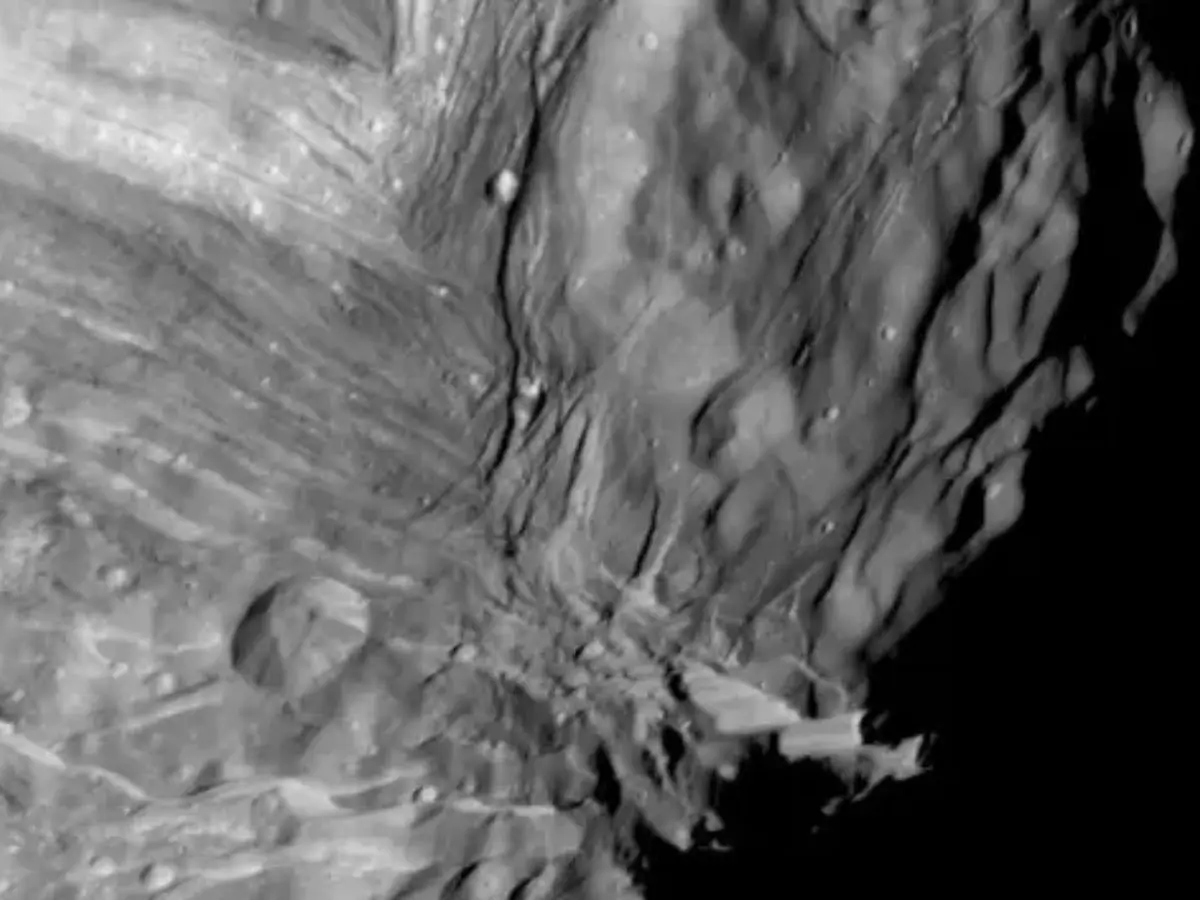
Among Uranus’s moons, Miranda stood out as a geological oddity. Voyager 2’s images showed a patchwork surface scarred with giant canyons, grooves, and cliffs rising up to 20 kilometres high—among the tallest known in the Solar System. Scientists believe Miranda’s surface may have been shattered and reassembled, offering clues about the violent processes that shaped the outer moons.
Neptune: Winds at the Edge of the Solar System
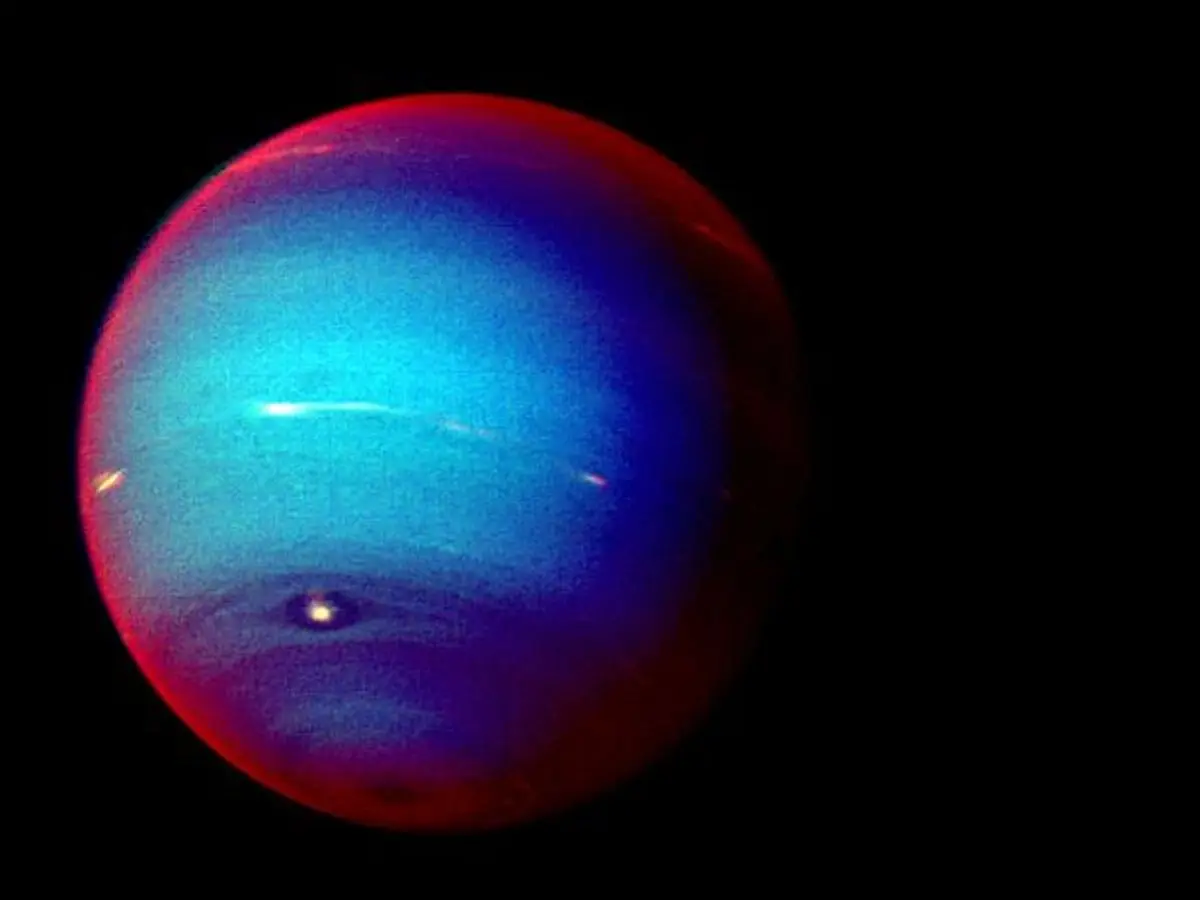
Voyager 2 reached Neptune in August 1989, capturing the first close-up views of the planet. To the surprise of scientists, Neptune was not calm but dynamic. The spacecraft revealed the Great Dark Spot, a storm system comparable in size to Earth, and measured supersonic winds reaching 2,100 kilometres per hour—the fastest winds ever recorded on any planet. These discoveries overturned the assumption that a planet so far from the Sun would be relatively inactive.
Triton: A Frozen World Alive
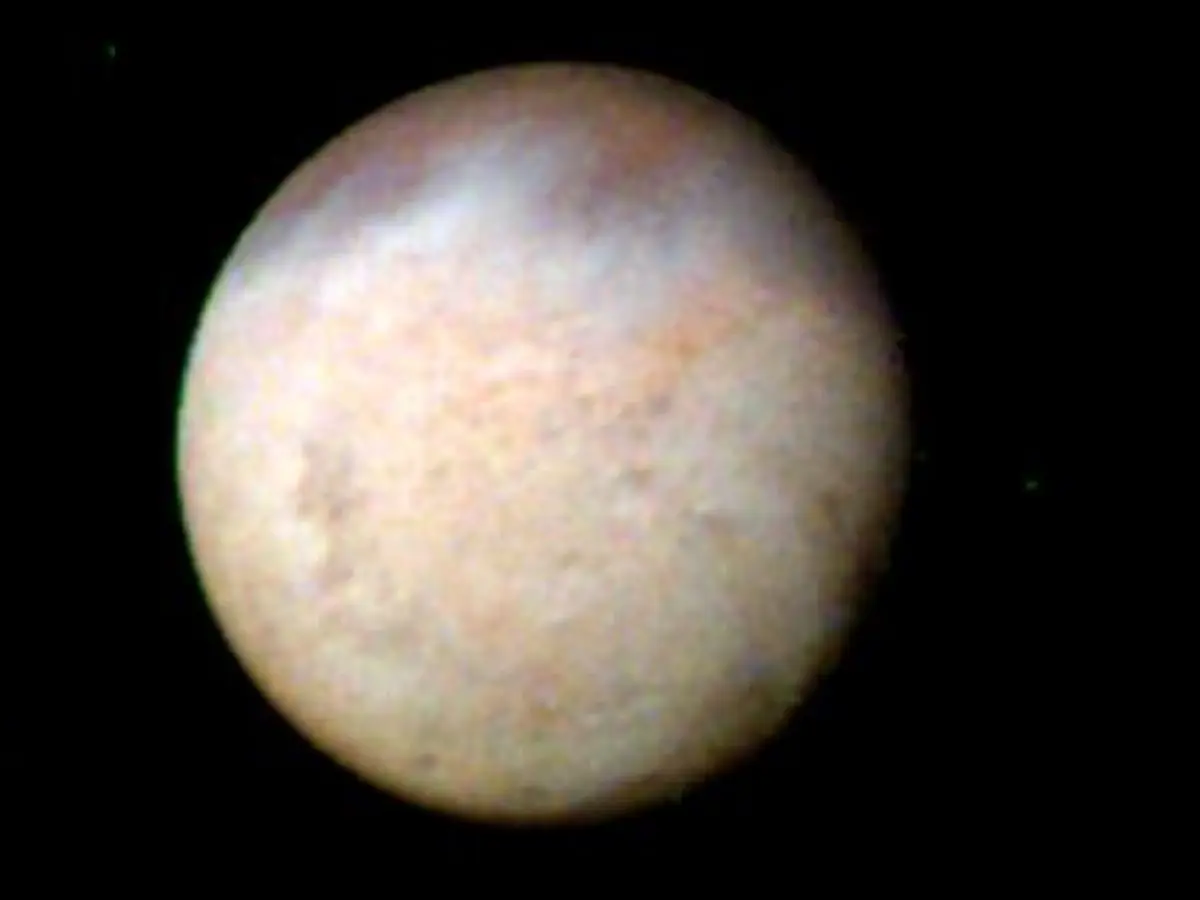
Neptune’s largest moon, Triton, produced Voyager 2’s most astonishing discovery. At surface temperatures near −235°C, scientists expected a geologically dead world. Instead, Voyager 2 detected active nitrogen geysers erupting up to eight kilometres into space. Triton’s smooth, relatively crater-free surface suggested continual resurfacing, while its retrograde orbit implied it had once been a Kuiper Belt object captured by Neptune. The revelations about Triton forced scientists to reconsider how icy worlds might remain active in the depths of the Solar System.
Rings of Ice Giants
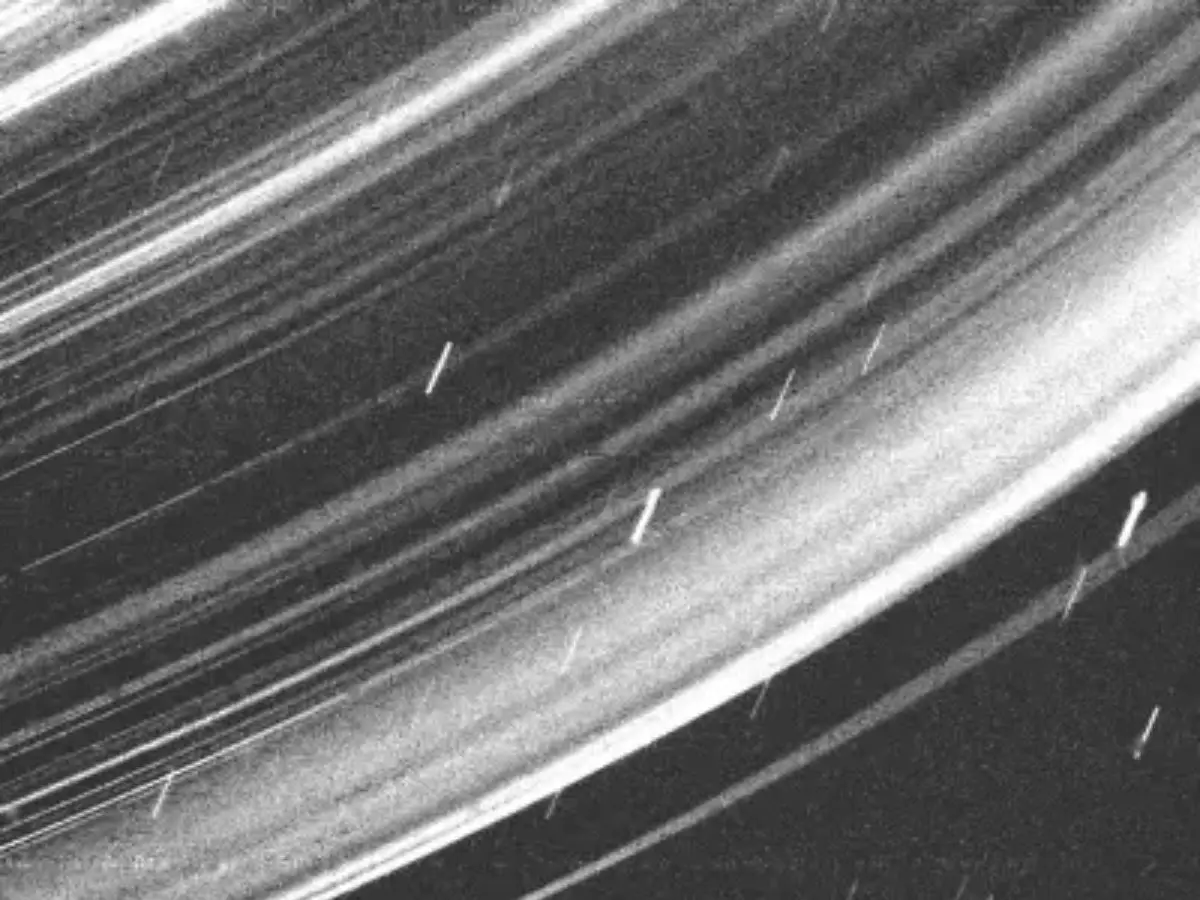
Before Voyager 2, Saturn’s rings were considered unique. The spacecraft revealed that both Uranus and Neptune also possess ring systems, though far darker and thinner. These dusty rings, likely remnants of shattered moons, offered new insights into the processes shaping planetary systems at the edge of the Sun’s influence.
A Legacy in Interstellar Space
Having completed its planetary tour, Voyager 2 continued its journey outward. In November 2018 it crossed the heliopause, becoming only the second spacecraft, after Voyager 1, to enter interstellar space. Today it continues to transmit data from more than 19 billion kilometres away, carrying the story of its discoveries and the Golden Record into the galaxy.
)
)
)
)
)