What is the F-22 really made of? The material mix behind a stealth jet like no other

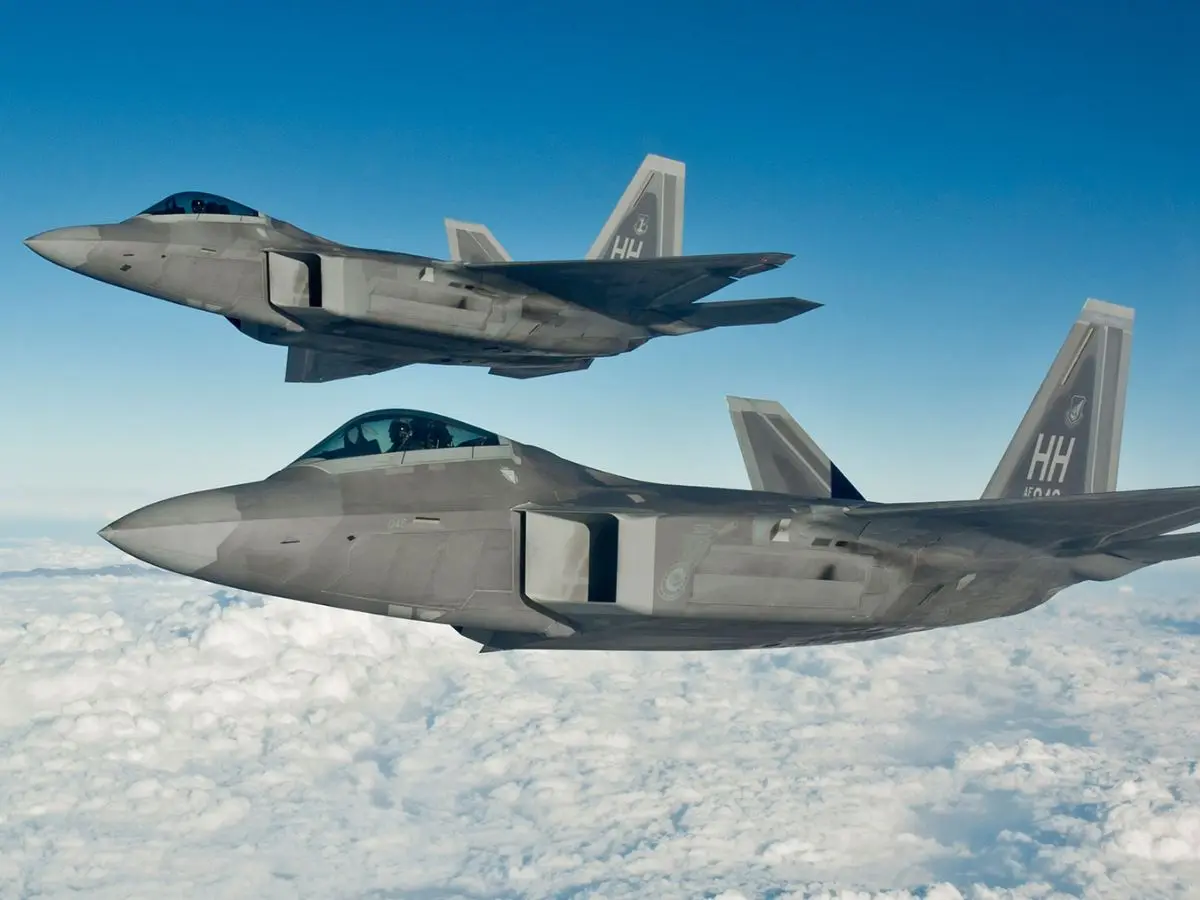
While composites account for around 24 per cent of the aircraft’s weight, they cover approximately 70 per cent of its external surface, an engineering choice that makes the Raptor both lighter and far more difficult to detect by radar.
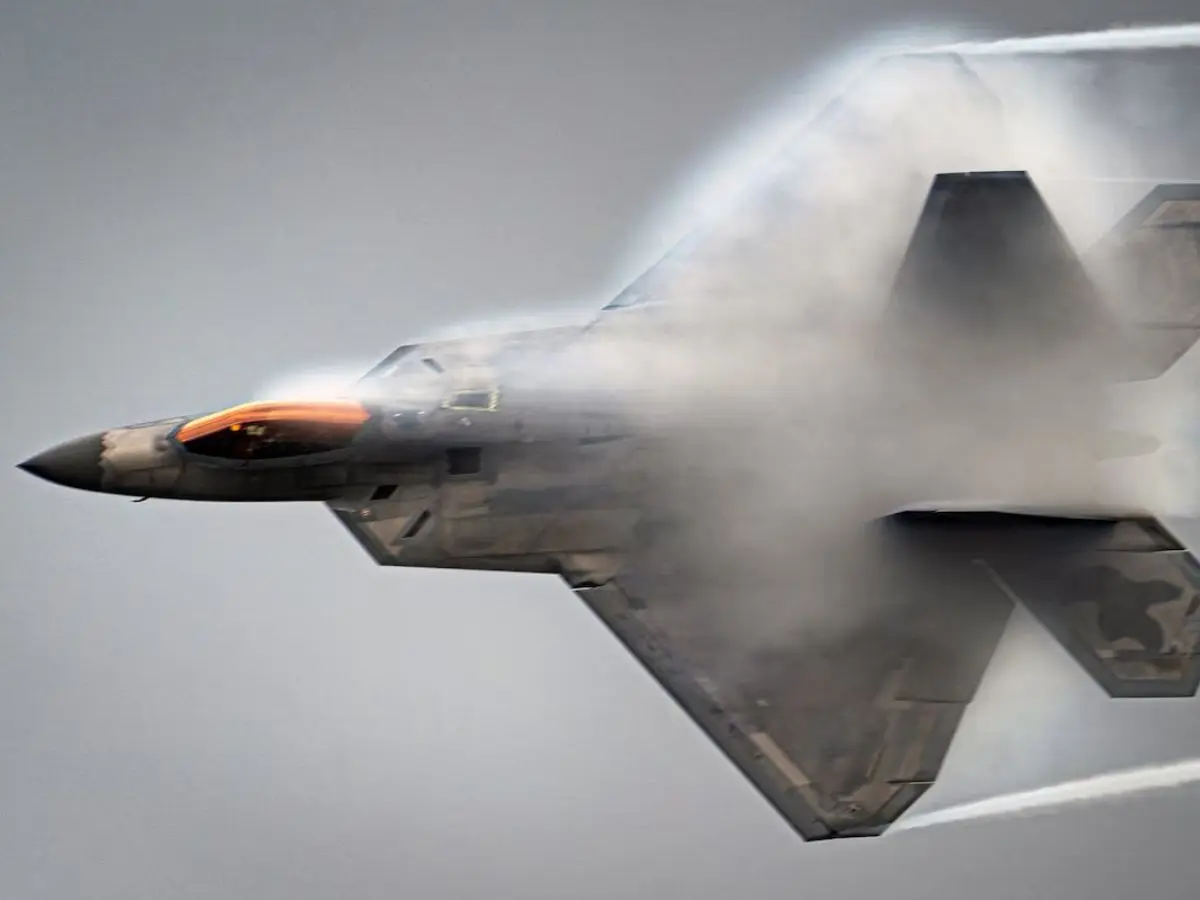
A stealth fighter shaped by its materials
The F-22 Raptor is not only defined by its stealth profile and unmatched agility, but also by what it is made of. The materials that form its skin and structure were carefully selected to reduce radar visibility, enhance manoeuvrability, and withstand extreme stresses at supersonic speed. Among these, composite materials play a central role. While composites account for around 24 per cent of the aircraft’s weight, they cover approximately 70 per cent of its external surface, an engineering choice that makes the Raptor both lighter and far more difficult to detect by radar.
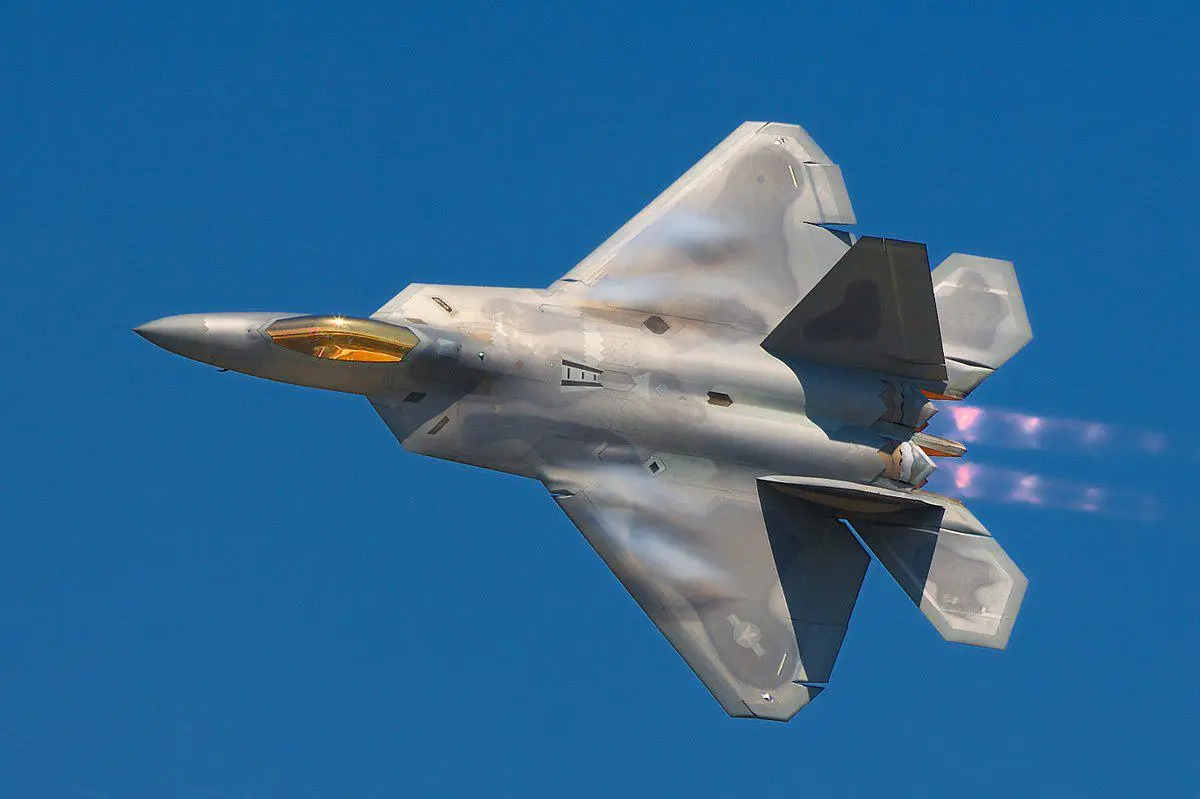
Titanium: The backbone of strength
Titanium is the single most significant element of the F-22’s structure, accounting for between 39 per cent and 42 per cent of its weight. It is particularly concentrated in the airframe, around the engines, and in load-bearing areas where extreme strength and heat resistance are essential. This metal’s high strength-to-weight ratio allows the jet to endure violent aerodynamic forces at speeds beyond Mach 2. Titanium also provides resistance against heat generated by friction at such velocities, giving the Raptor durability where aluminium or composites alone would fail.
Composites: Stealth through structure
Composites form 24 per cent of the aircraft’s total weight but dominate its skin, thanks to advanced carbon-fibre-reinforced polymers (CFRP) and bismaleimide/carbon fibre materials. These are typically configured in a honeycomb sandwich structure, a design that provides rigidity without significant weight penalties. Beyond structural efficiency, these composites play a defining role in stealth. Their electromagnetic properties minimise radar reflections, reducing the Raptor’s radar cross-section to roughly the size of a small object such as a marble. This combination of lightness, strength, and stealth made the F-22 the first operational fighter to use composites so extensively.
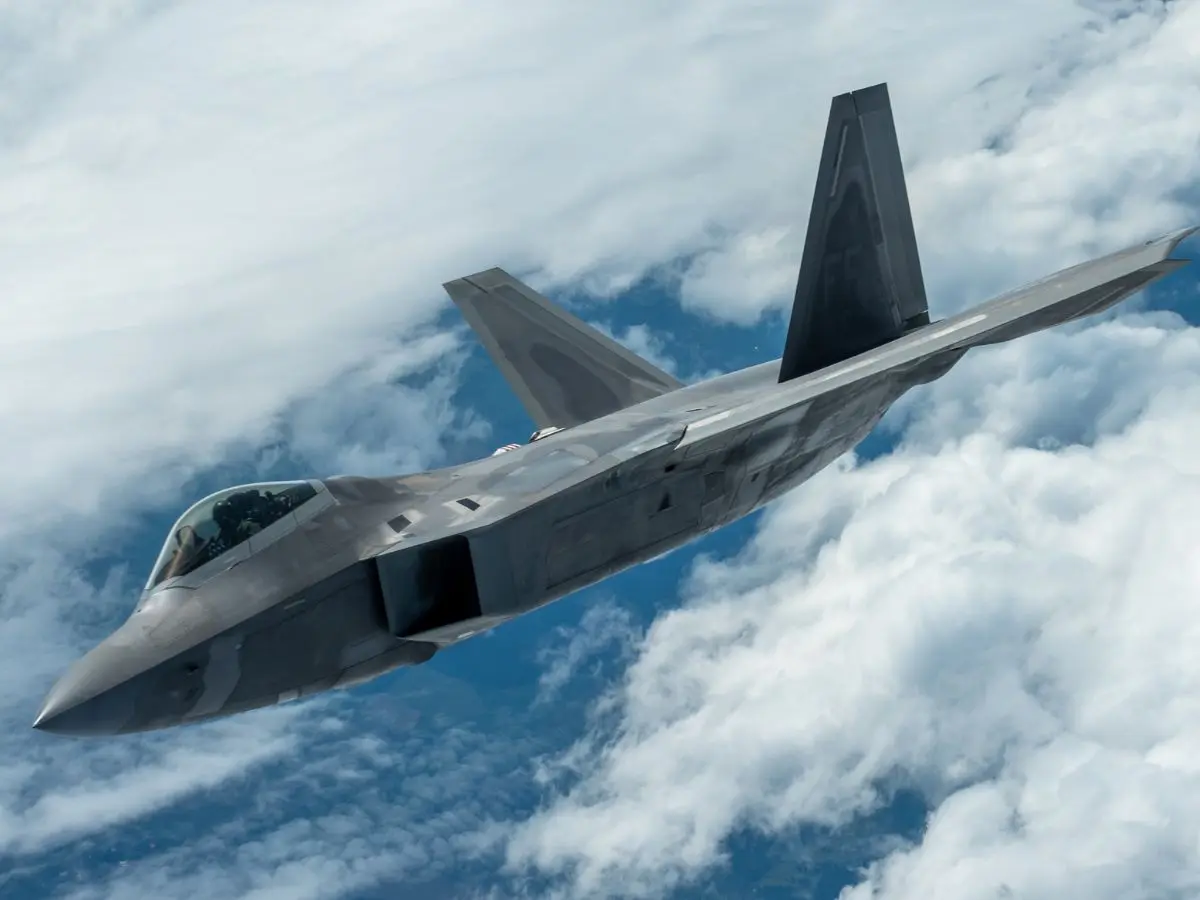
Aluminium and steel: reliable but limited
Aluminium makes up about 16 per cent of the Raptor’s structure. It is used mainly in non-critical areas where cost and ease of production take precedence over the superior qualities of titanium or composites. While lighter than steel and cheaper than titanium, aluminium is less heat-resistant and therefore unsuitable for the most demanding parts of the jet. Steel, by contrast, is deployed in much smaller quantities but is critical to specific systems, most notably the main landing gear, where sheer strength is required.
Radar-absorbing coatings and other materials
Around 21 per cent of the F-22’s structural composition is accounted for by other materials, including coatings and specialised alloys. Of particular importance is the radar-absorbing material (RAM) layered across its skin. This microwave-attenuating coating is a crucial component of the aircraft’s stealth design, ensuring that even if radar signals bounce off the surface structure, much of the energy is absorbed rather than reflected back to enemy sensors. These additional materials refine the stealth profile and durability of the jet.
A first in fighter design
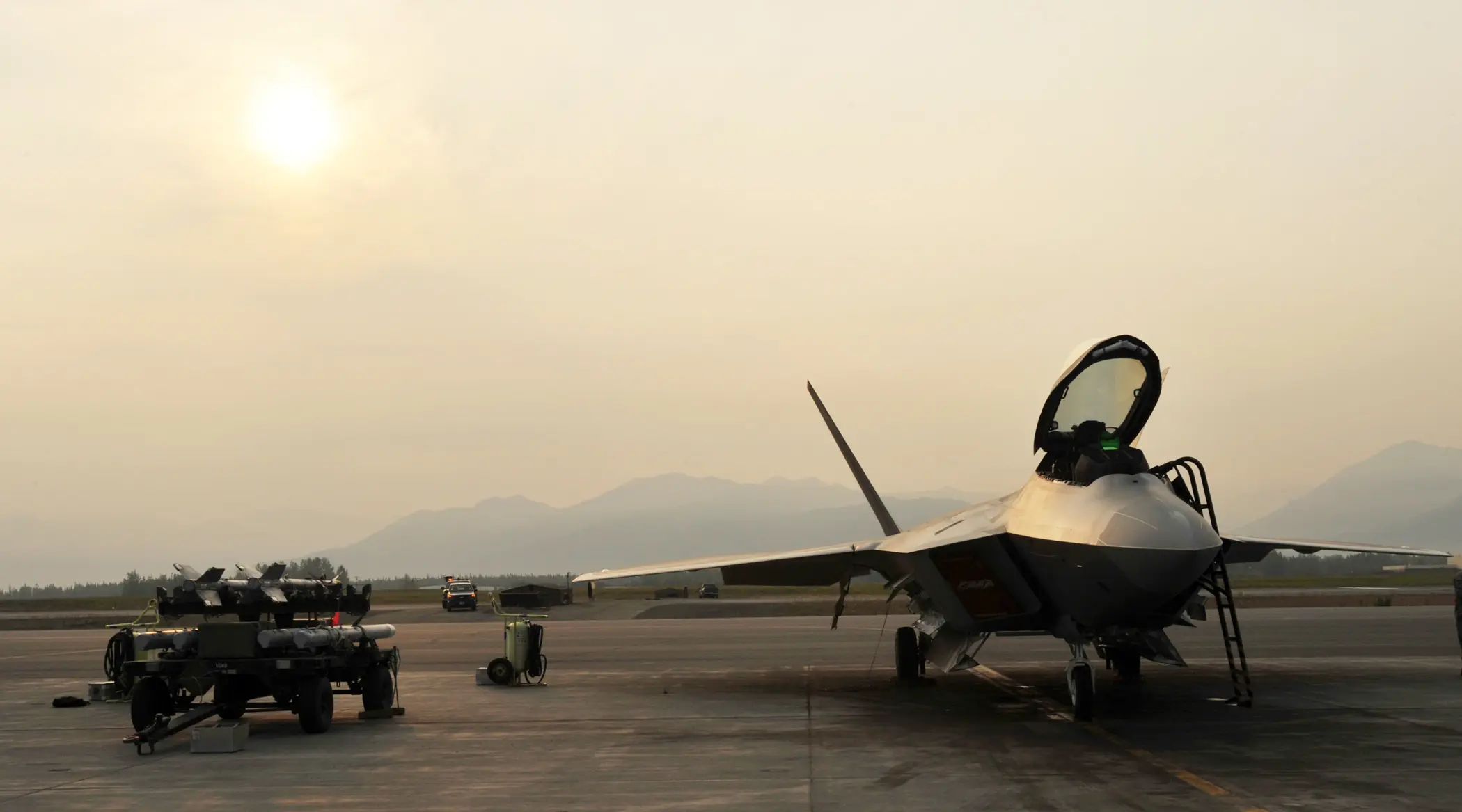
The Raptor’s heavy reliance on composites represented a turning point in military aviation. Before its introduction, fighters such as the F-16 relied on aluminium, with composites making up only about 2 per cent of structural weight. Even advanced Russian designs such as the Su-57 employ fewer composites than the F-22. The closest peer is the F-35 Lightning II, which contains about 35 per cent composites by weight. Yet the F-22 remains unique in covering such a high percentage of its external surface with carbon-based materials, an innovation that continues to shape the future of stealth aircraft.
Why the materials matter
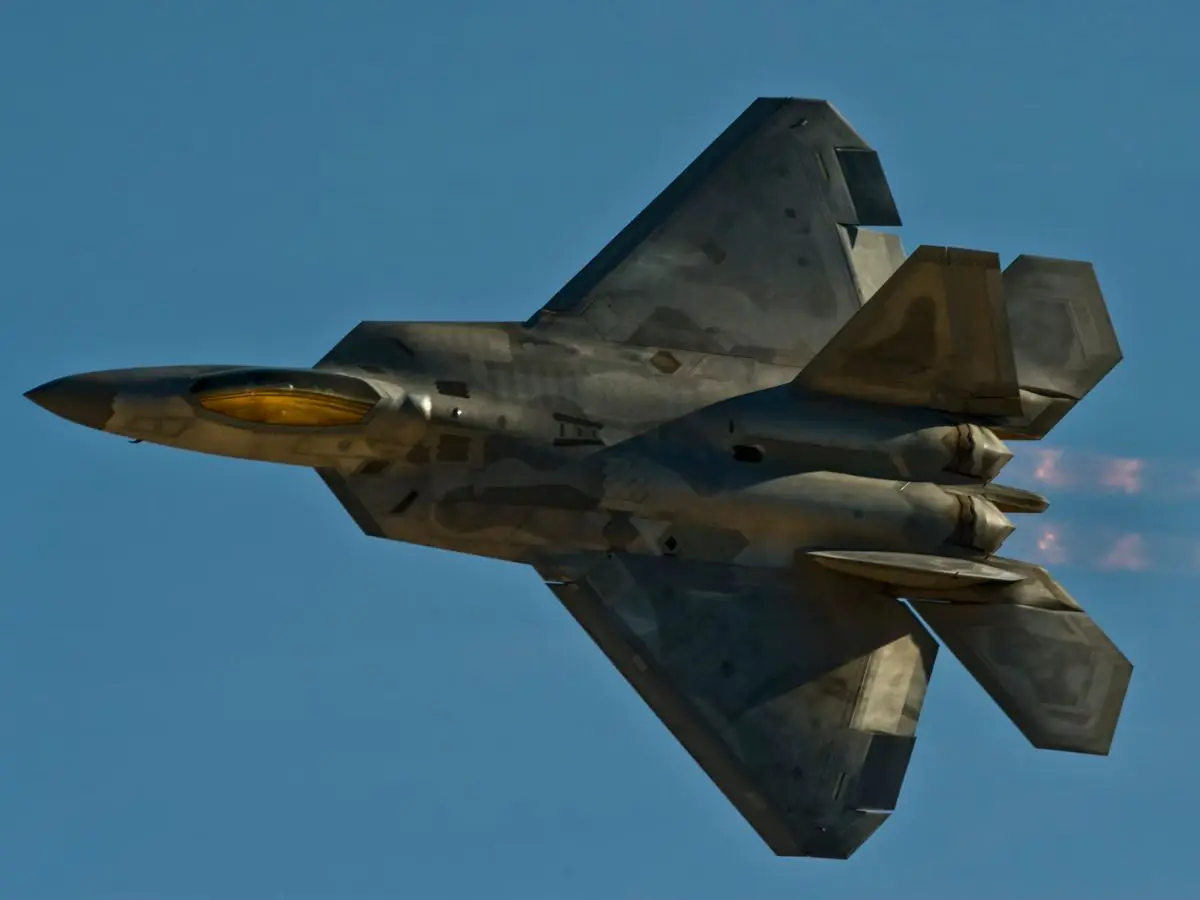
The F-22’s composition explains much of its performance. Its titanium skeleton delivers strength and resilience; its composite skin provides stealth and weight savings; its coatings absorb radar energy; and its aluminium and steel balance performance with cost and durability. Together, these materials create a fighter whose effectiveness lies not just in design but in the very substances it is built from.
)
)
)
)
)