What is an Einstein Ring? Understanding the science behind space’s strangest optical illusion discovered by JWST

Edited By Tarun Mishra
Published: Jun 07, 2025, 04:07 IST | Updated: Jun 07, 2025, 04:07 IST
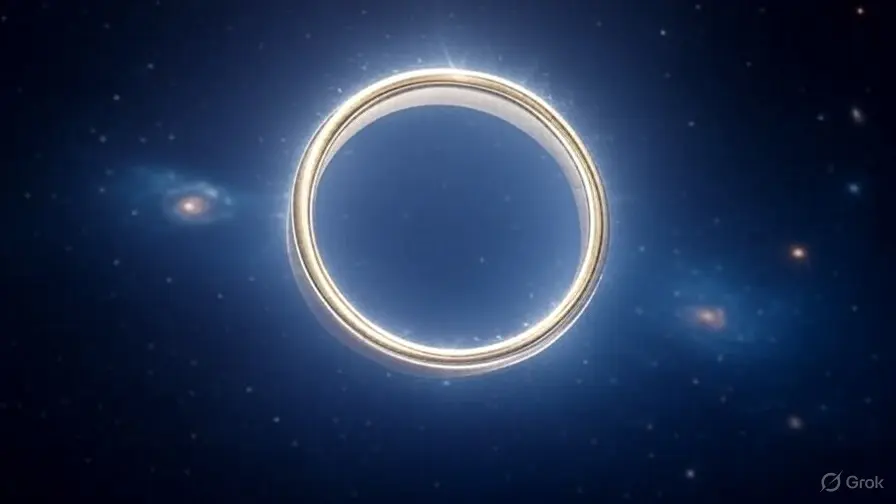
This phenomenon is a result of gravitational lensing, predicted by Einstein’s general theory of relativity. According to the theory, massive objects bend the space-time around them. When light from a background galaxy travels through this curved space, it gets deflected in such a way that it appears to wrap around the central object, forming a ring.
1 / 7
(Photograph: Grok)
What is an Einstein Ring?
An Einstein Ring is a rare astronomical illusion where the light from a faraway galaxy is bent into a circle by the gravitational pull of another massive object, such as a galaxy or black hole, lying directly between the distant light source and the observer on Earth
2 / 7
(Photograph: Planetary Society - S. Doyle/J. Spilker)
The Science Behind the Strangest Optical Illusion
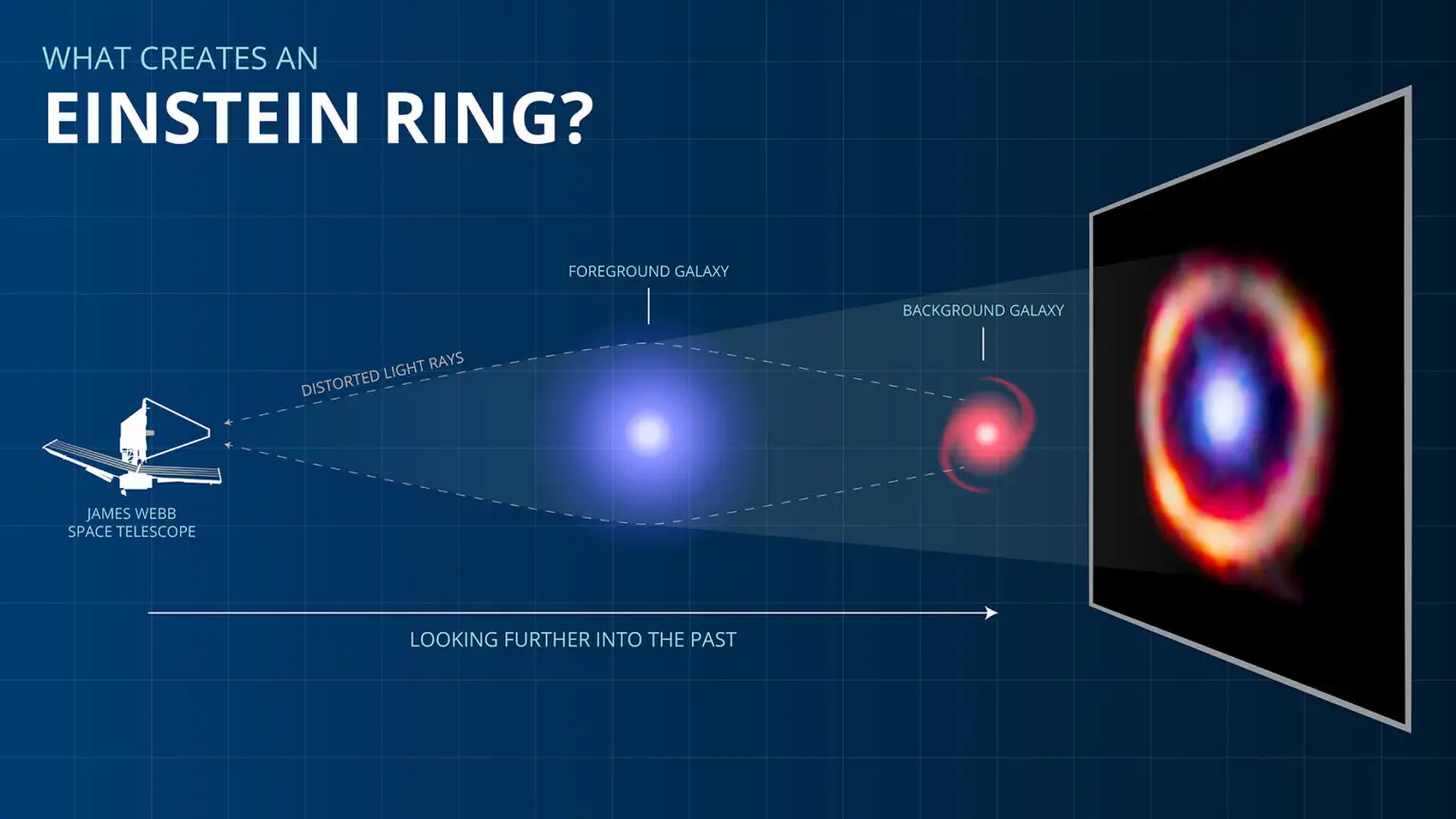
This phenomenon is a result of gravitational lensing, predicted by Einstein’s general theory of relativity. According to the theory, massive objects bend the space-time around them. When light from a background galaxy travels through this curved space, it gets deflected in such a way that it appears to wrap around the central object, forming a ring.
3 / 7
(Photograph: NASA)
James Webb Telescope Captures a Detailed Example
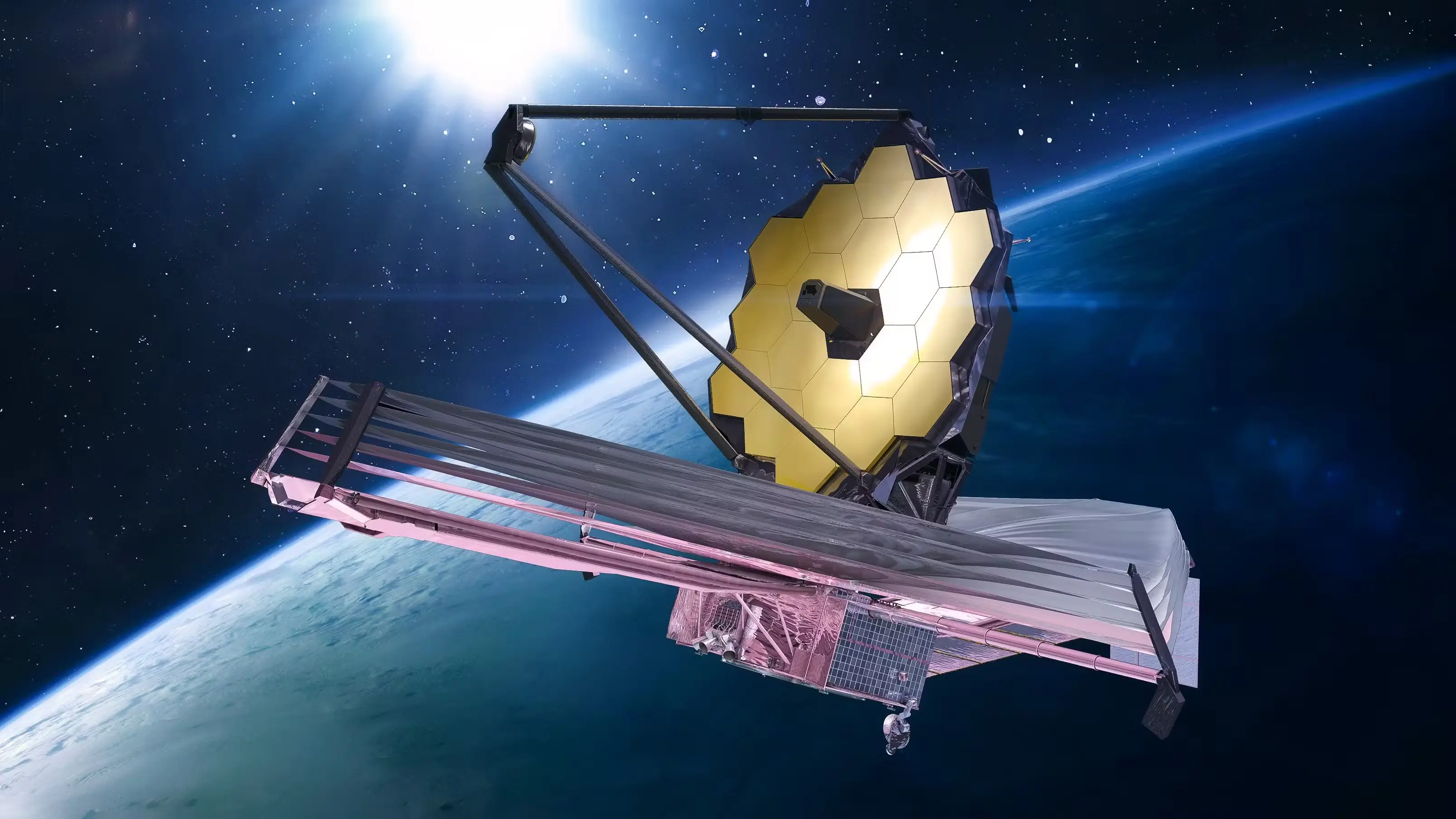
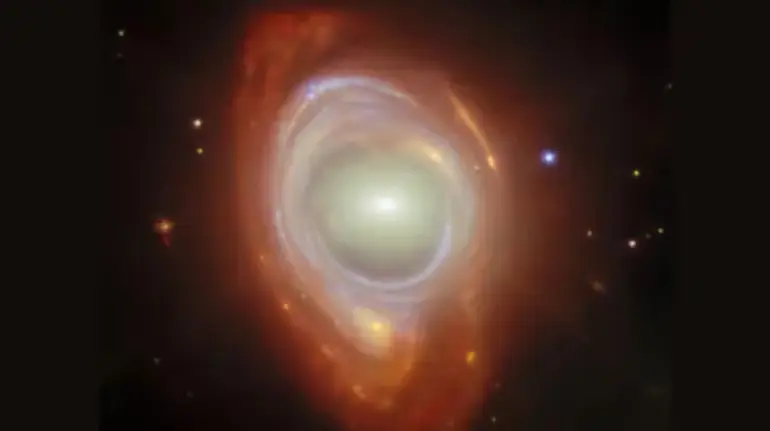
NASA’s James Webb Space Telescope recently imaged a near-perfect Einstein Ring. The light from a galaxy located 21 billion light-years away was bent by a foreground galaxy about 3 billion light-years from Earth. The result was a striking circular illusion, captured in fine detail thanks to Webb’s powerful infrared capabilities.
4 / 7
(Photograph: NASA/ESA)
Precise Alignment Creates the Ring
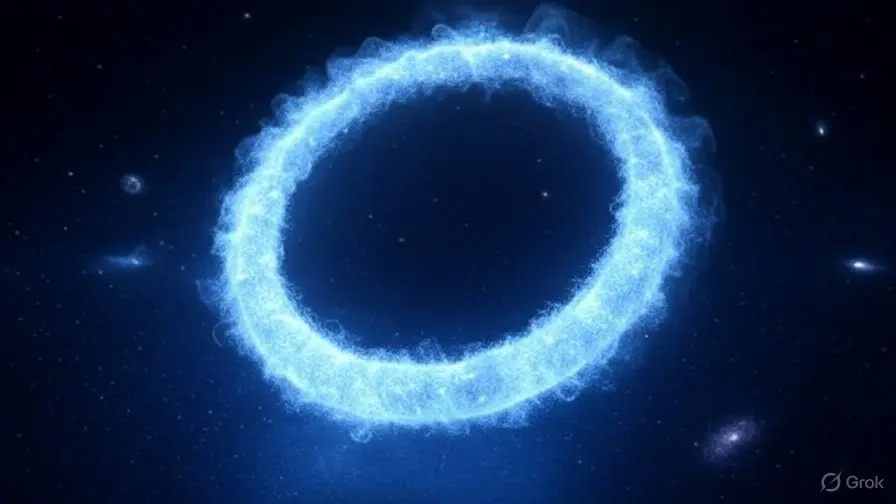
A full Einstein Ring appears only under perfect alignment: the distant galaxy (light source), the massive lensing object, and the observer must line up nearly exactly. Any deviation leads to arcs or distorted shapes instead of a full ring.
5 / 7
(Photograph: Grok)
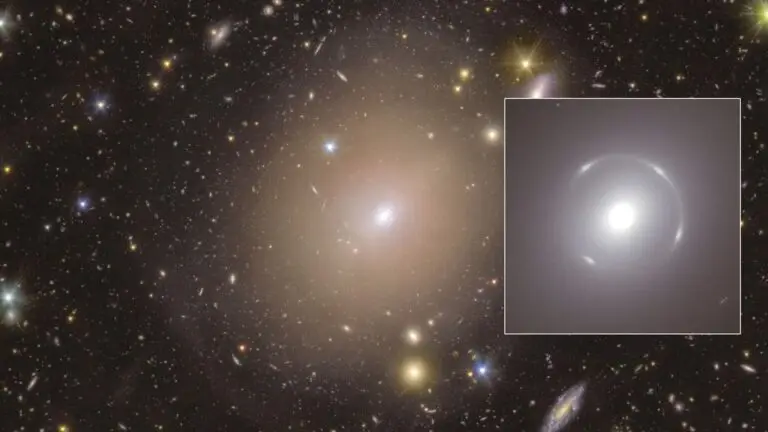
How Webb’s Technology Made It Possible
The telescope’s Near-Infrared Camera (NIRCam) and other advanced instruments allowed astronomers to detect extremely faint light and resolve fine structures that older telescopes would miss. Its sensitivity made the detailed observation of the Einstein Ring possible.
6 / 7
(Photograph: NASA/ESA)
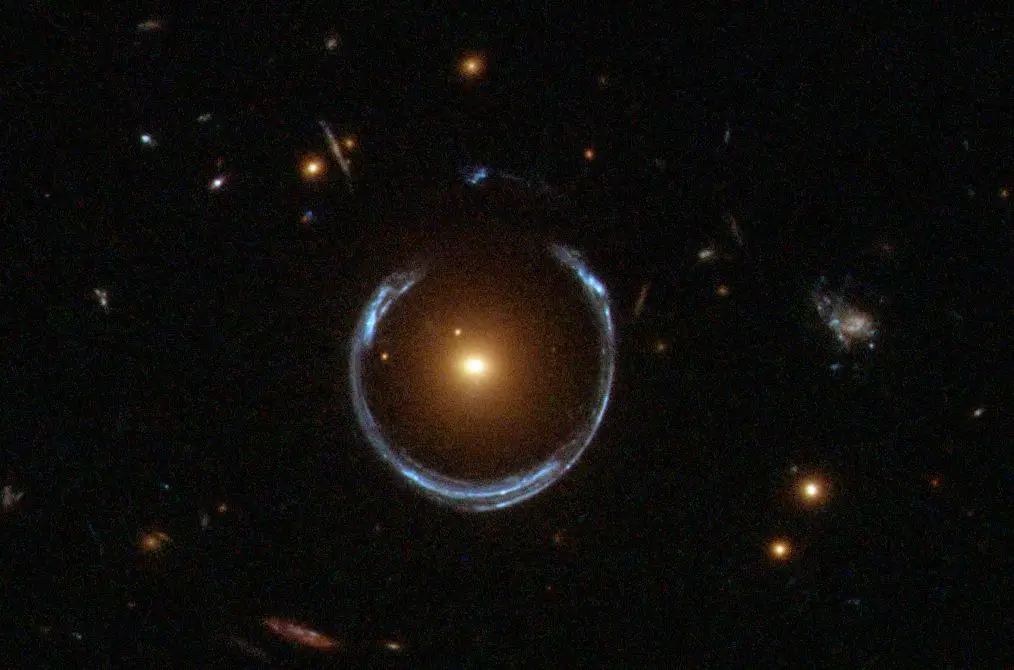
Why This Illusion Matters for Science
Einstein Rings act as natural magnifying lenses, letting scientists study very distant and faint galaxies. They also provide clues about dark matter, since the way light bends reveals how mass — visible and invisible — is distributed in the lensing object.
7 / 7
(Photograph: ESA/Hubble & NASA)
A Window Into the Early Universe
The Webb-captured Einstein Ring is not just a visual spectacle. It is a powerful scientific tool, offering insights into the formation of galaxies, the expansion of the universe, and the hidden matter that makes up most of the cosmos.
)
)
)
)
)