'600-650 rounds per min': What is AH-64E Apache, one of world’s most advanced multi-role combat helicopter

According to Boeing’s official website, there are more than 1,280 Apaches are in service across multiple nations, having accumulated over five million flight hours of which, 1.3 million are in combat.

A Combat-Proven Backbone of Modern Warfare
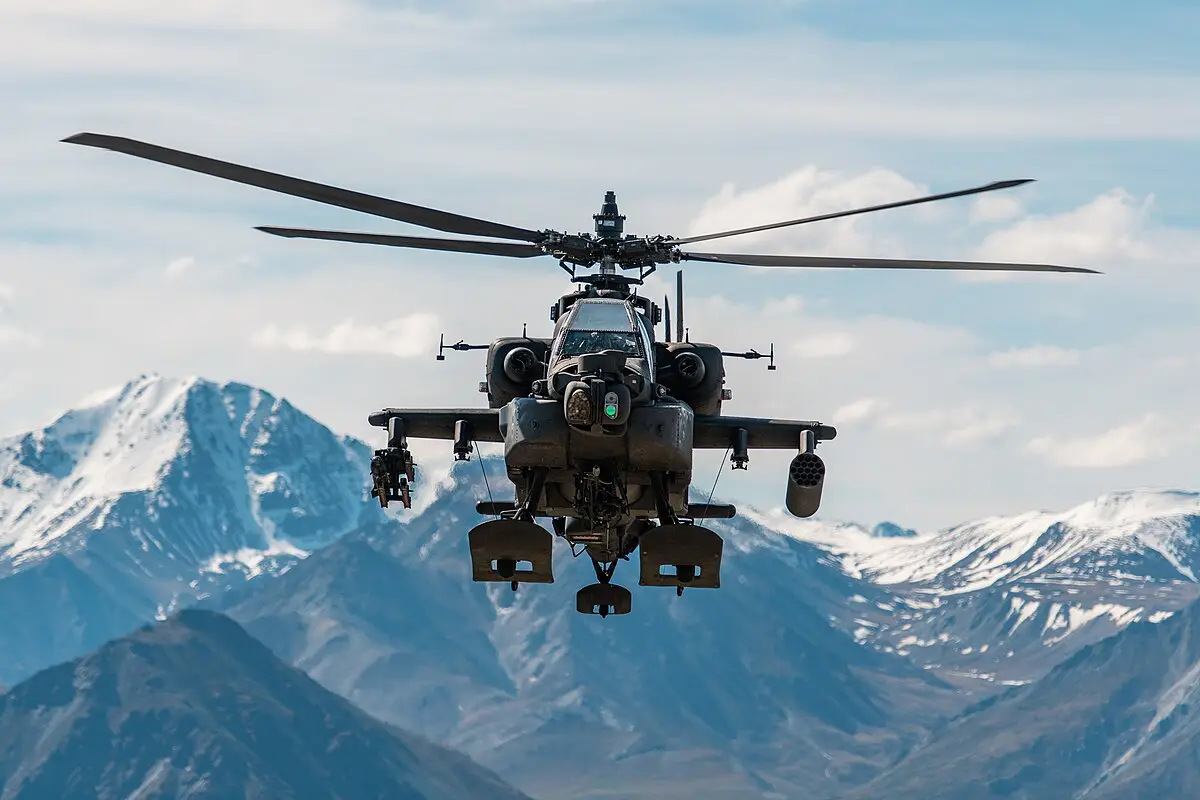
For four decades, the Boeing Apache has defined the standards for attack helicopters worldwide. According to Boeing’s official website, there are more than 1,280 Apaches are in service across multiple nations, having accumulated over five million flight hours of which, 1.3 million are in combat. The AH-64E, the latest and most advanced variant, is described by Boeing as 'the world’s most advanced and proven attack helicopter' and remains the backbone of the US Army’s attack helicopter fleet. With production secured until at least 2028 and operational relevance planned well into the 2060s, the Apache continues to evolve in step with modern multi-domain warfare.
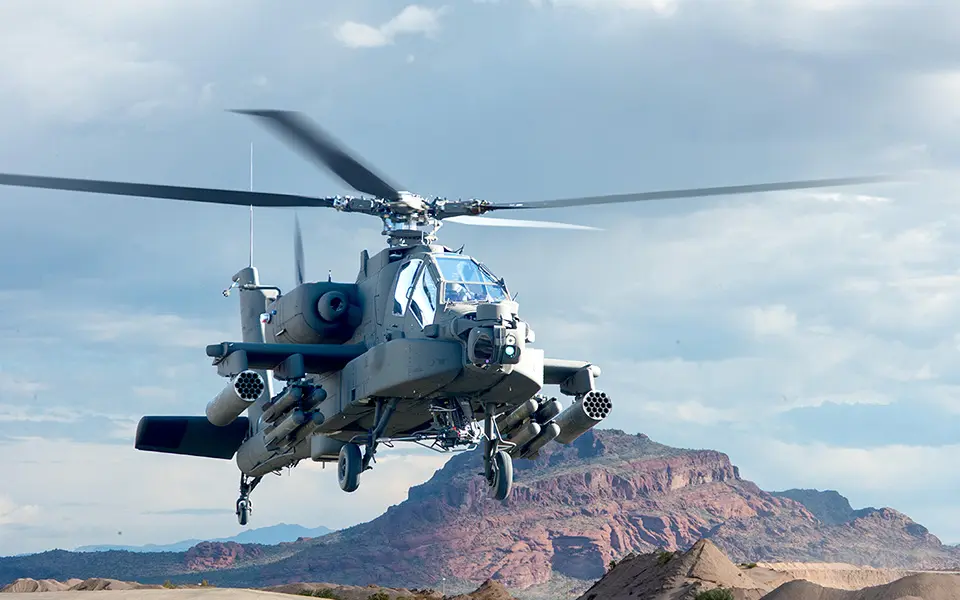
The Evolution to the AH-64E
The AH-64E helicopters were introduced as the most modern configuration and were designed explicitly for the Multi-Domain Operations (MDO) battlefield. Boeing notes that the E-model integrates network-centric capabilities, enhanced sensors, upgraded software and improved weapons performance. The Version 6 (v6) configuration improves interoperability further enabling the Apache to operate seamlessly alongside ground and air assets in environments which are complex and contested.
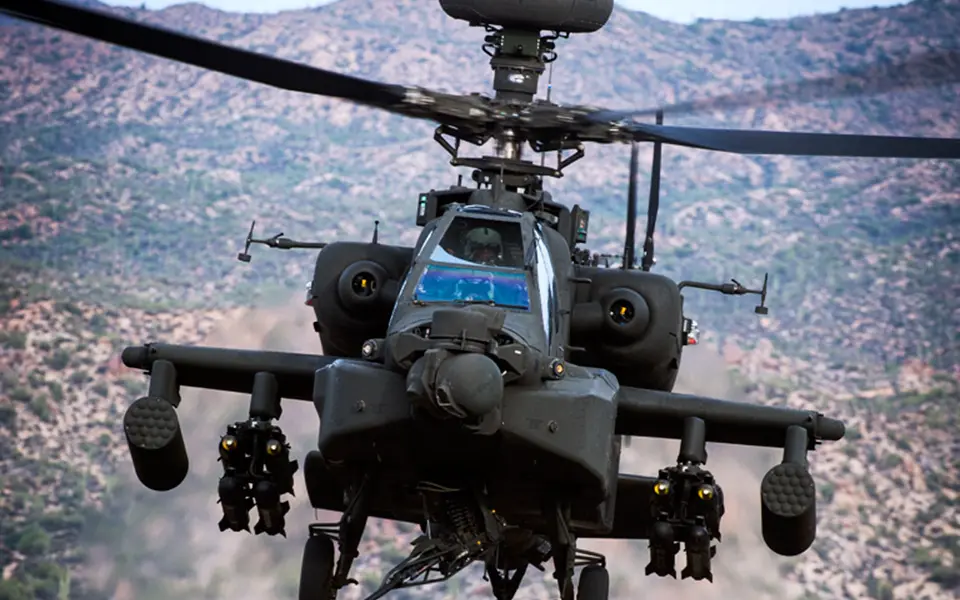
Why the AH-64E Stands Apart
Boeing highlights the AH-64E’s use of layered onboard and offboard sensors, long-range weapons and real-time data sharing, all essential to dominating modern joint missions. This system architecture ensures pilots receive precise targeting information, allowing rapid engagement and improved survivability. It is also capable of controlling unmanned aerial vehicles(UAVs).
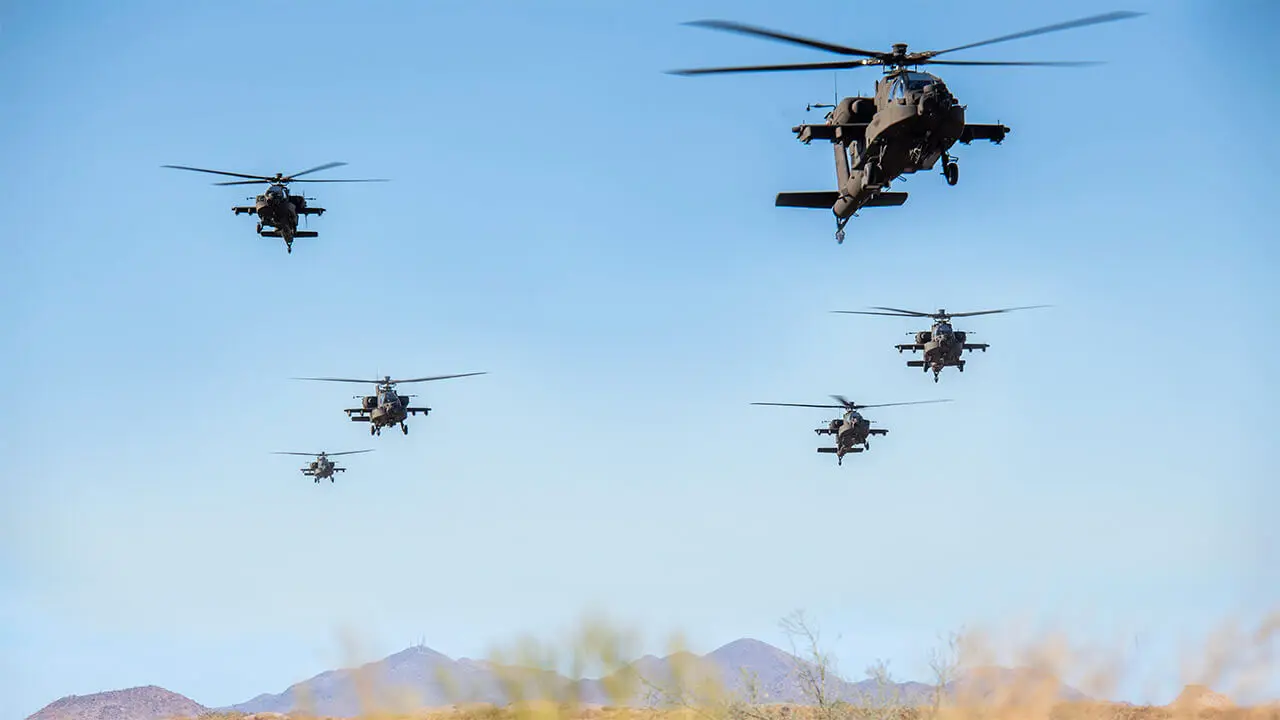
Lethality and Endurance
The AH-64E’s firepower remains central to its reputation. The lethality of the helicopter also lies in the fact that these can carry 16 Hellfire missiles, 76 2.75-inch rockets and 1,200 rounds for its 30mm chain gun, which fires up to 650 rounds per minute. The helicopter also features advanced digital connectivity, T700-GE-701D engines and upgraded transmission components for greater power and endurance.
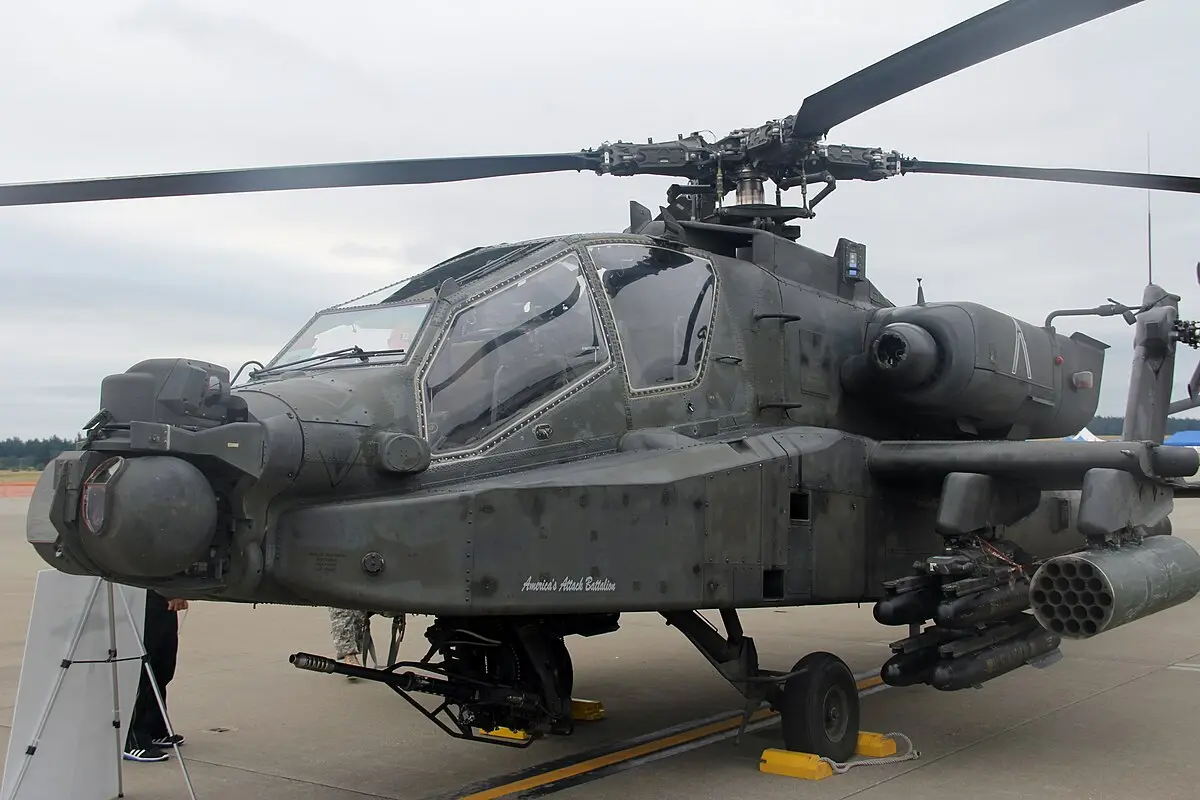
The Modernised Apache
Boeing explains that the Modernised Apache programme builds on the AH-64E platform, introducing a next-generation architecture that enhances reach, lethality and survivability. This iteration remains low-risk and cost-efficient due to its reliance on mature Apache systems already in production.
Modular Open Systems Architecture (MOSA)
It has the maximum operating weight of 23,000 lb or 6,838 kgs. A key feature of the Apache’s future growth is its MOSA-enabled framework. According to Boeing, this allows rapid integration of new sensors, weapons and computing systems, a critical advantage as threats evolve. The flexibility ensures the Apache remains a relevant frontline asset well beyond the 2050s.
A Global Operator Base: From the US to India and Beyond
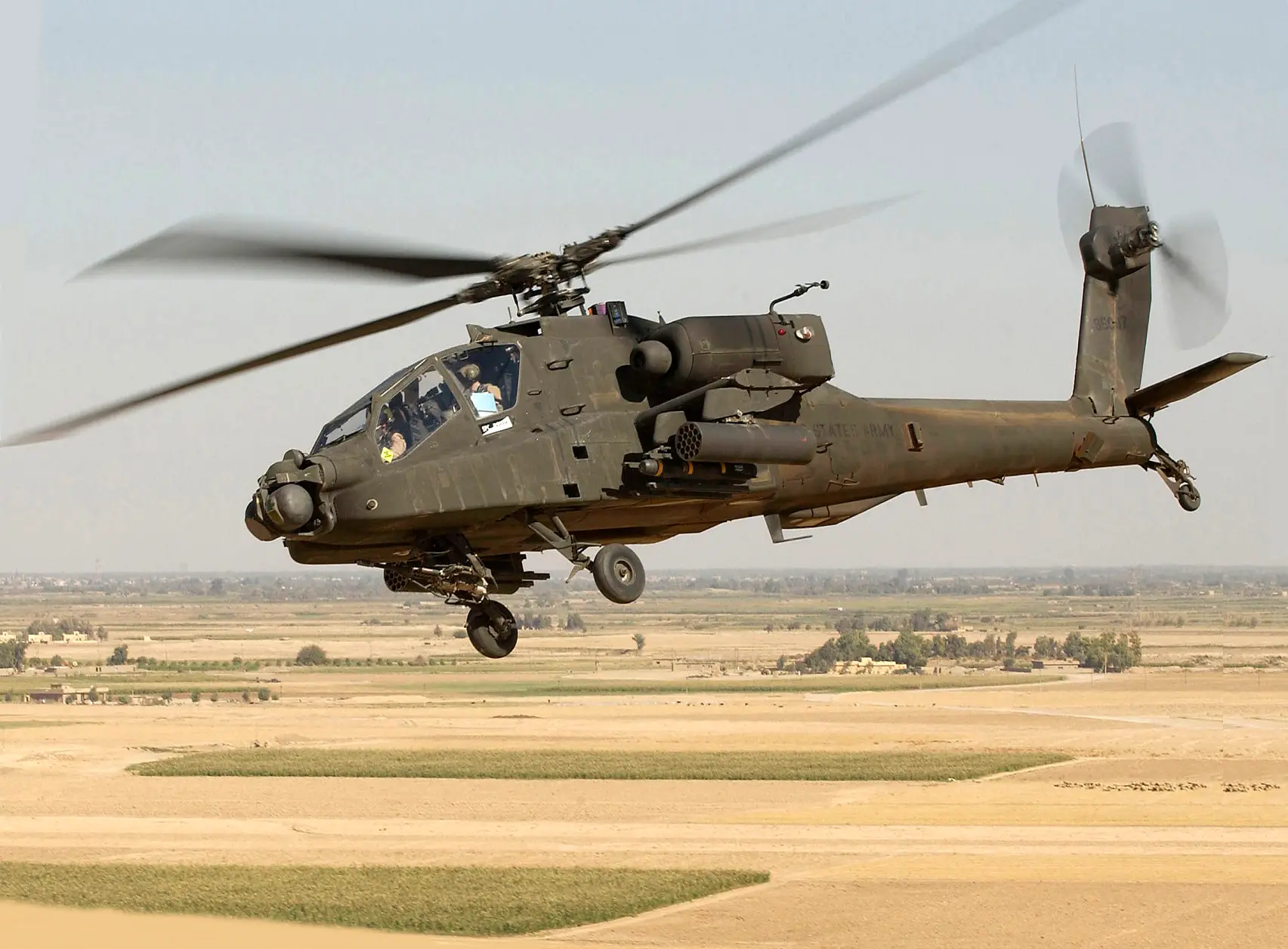
Since the first AH-64A delivery in 1984, Boeing has supplied more than 2,700 Apaches to customers including India, Egypt, Israel, Japan, the Netherlands, Saudi Arabia, Singapore, the UAE and the UK. Boeing’s joint venture with Tata Advanced Systems in Hyderabad manufactures Apache fuselages, reinforcing long-term global support. In July 2025, India received the first three of the six AH-64E Apache attack helicopters from Boeing.
)
)
)
)
)