What if Voyager 1 falls into a black hole?

Inside the event horizon, tidal forces would tear Voyager 1 apart. This dramatic process, often called “spaghettification,” means the spacecraft would be stretched and compressed until it becomes a stream of particles spiralling into the singularity.

Voyager 1: Humanity’s Farthest Explorer
Launched in 1977, Voyager 1 is the most distant human-made object in space, now more than 24 billion km from Earth. It carries instruments, a fading power source, and the Golden Record, humanity’s time capsule for extraterrestrials.
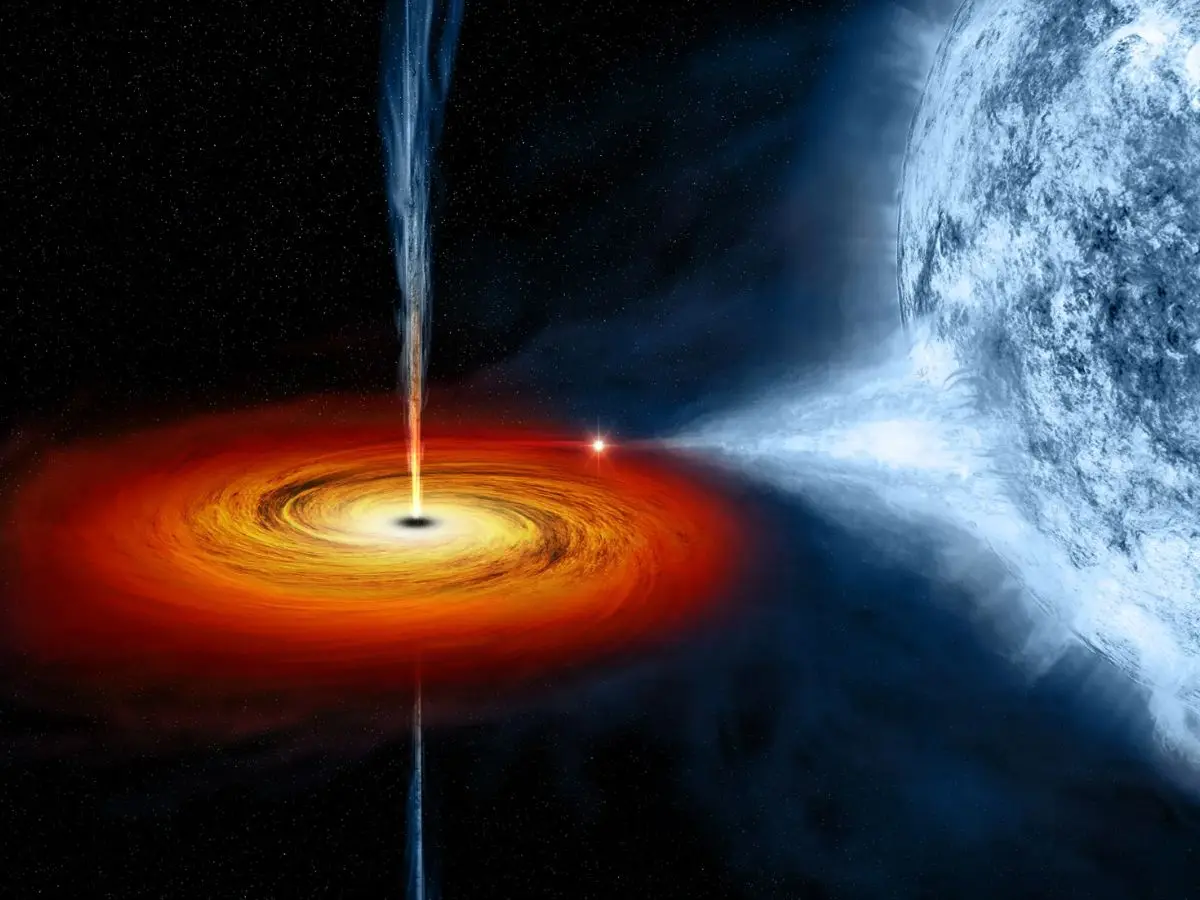
Black Holes: The Universe’s Gravity Traps
A black hole is a region where gravity is so strong that nothing, not even light, can escape. If Voyager 1 ever wandered close to one, its fate would be sealed and it would be pulled in and never come back.

The Point of No Return: Event Horizon
As Voyager 1 approaches a black hole, it would cross the “event horizon,” the invisible boundary beyond which escape is impossible. From Earth’s perspective, the spacecraft would appear frozen at the edge, slowly fading as its signals stretch out and redshift into nothingness.

Spaghettification: The Stretching Effect
Inside the event horizon, tidal forces would tear Voyager 1 apart. This dramatic process, often called “spaghettification,” means the spacecraft would be stretched and compressed until it becomes a stream of particles spiralling into the singularity.

Golden Record’s Cosmic Silence
The famous Golden Record carrying music, greetings, and Earth’s sounds, would vanish too. It would never reach alien hands, instead becoming lost in the black hole’s singularity, where our cultural time capsule is crushed into oblivion.

Information Paradox: Does Anything Survive?
The big question in physics is whether information is truly lost in black holes. Some theories suggest traces of Voyager’s data might linger as “Hawking radiation.” If true, even a piece of human legacy could leak back into the universe, though scrambled beyond recognition.
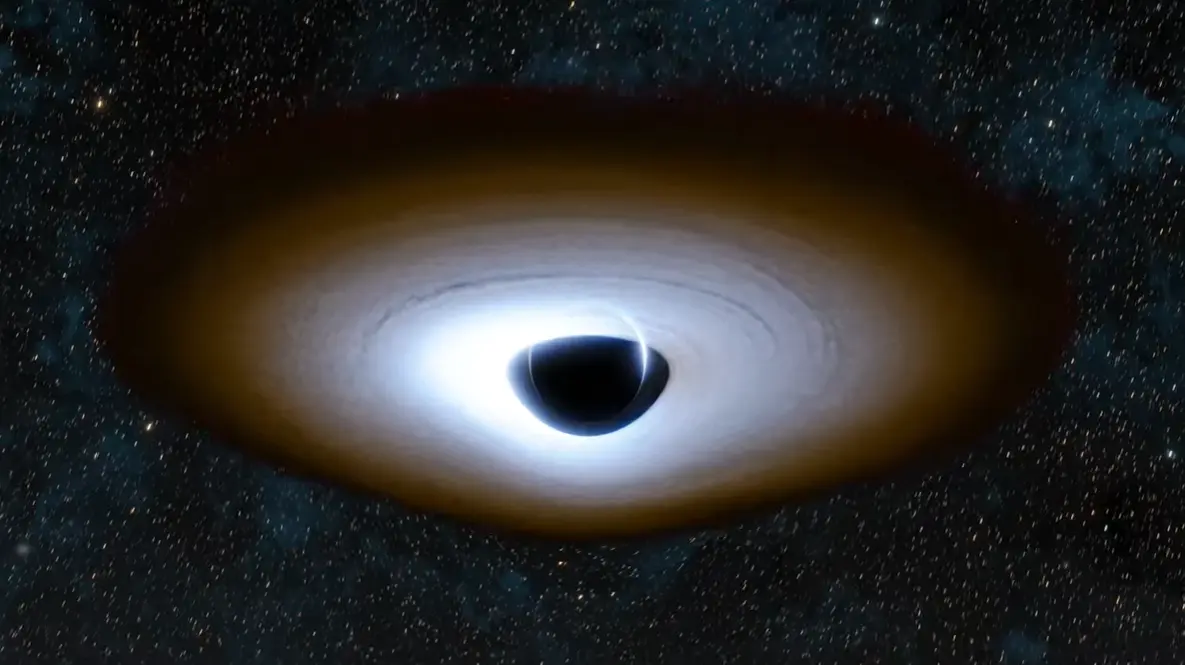
A Symbolic End to Humanity’s First Messenger
While practically impossible in the near future (since Voyager isn’t on course toward a black hole), imagining this fate highlights the fragility of human creations in a vast, hostile cosmos. Voyager’s journey, whether ending in silence or swallowed by darkness, remains a powerful symbol of humanity’s reach for the stars.
)
)
)
)
)